Why You’ll Love This Whole Roasted Chicken
There is something truly magical about pulling a golden brown, perfectly crispy whole roasted chicken from the oven. The aroma fills your kitchen, and the anticipation of that first juicy bite makes all the effort worthwhile. This whole roasted chicken recipe has become a beloved staple in my home, and I am thrilled to share it with you.
This dish brings together everything home cooks love about comfort food. It is simple to prepare, incredibly flavorful, and feeds a crowd without breaking the bank. Whether you are cooking for a Sunday family dinner, meal prepping for the week ahead, or hosting friends for a special gathering, this recipe delivers restaurant-quality results right in your own kitchen.
A Recipe for Every Occasion
One of the best things about roasting a whole chicken is its incredible versatility. The leftovers transform into completely new meals throughout the week. Shred the meat for tacos, slice it for sandwiches, or toss it into a fresh salad. The possibilities are endless, making this recipe a smart choice for busy families and meal planners.
The health benefits are equally impressive. According to the nutritional guidelines from the National Chicken Council, chicken remains one of the most popular protein sources for good reason. Packed with lean protein, essential vitamins, and minerals, this recipe nourishes your body while satisfying your taste buds.
What Makes This Recipe Special
- Ease of preparation: Just 10 minutes of hands-on prep time and your oven does the rest of the work for you.
- Health benefits: Packed with lean protein, vitamins from fresh herbs and vegetables, and healthy fats, this recipe fits perfectly into keto, gluten-free, and balanced diets.
- Incredible flavor: The combination of butter, garlic, fresh thyme, and lemon creates layers of flavor that soak into every bite.
- Crowd-pleaser: Crispy golden skin and juicy, flavorful meat that the whole family will request again and again.
- Budget-friendly: Whole chickens cost significantly less per pound than pre-cut pieces, giving you more value for your money.
Jump to:
- Why You’ll Love This Whole Roasted Chicken
- A Recipe for Every Occasion
- What Makes This Recipe Special
- Ingredients
- For the Chicken and Roasting Vegetables
- For the Butter Herb Mixture
- For the Cavity
- Why These Ingredients Work Together
- Step-by-Step Instructions
- Step 1: Prepare Your Oven and Pan
- Step 2: Make the Butter Herb Mixture
- Step 3: Prepare the Chicken
- Step 4: Season Under the Skin
- Step 5: Stuff the Cavity
- Step 6: Season and Oil the Skin
- Step 7: Roast the Chicken
- Step 8: Rest Before Carving
- Step 9: Serve and Enjoy
- Tips and Tricks for Perfect Results
- Before Cooking
- During Cooking
- After Cooking
- Nutritional Information and Health Benefits
- Preparation Time
- Delicious Ways to Use Leftovers
- Meal Ideas for Leftover Chicken
- Frequently Asked Questions
- How long does it take to roast a whole chicken?
- What temperature should I roast a whole chicken at?
- Should you roast a chicken covered or uncovered?
- How do you keep a whole roasted chicken moist?
- What is the safe internal temperature for a whole roasted chicken?
- Whole Roasted Chicken
- Ingredients
- Notes
- Nutrition
- Did you make this recipe?
Ingredients
This whole roasted chicken recipe uses simple, wholesome ingredients that you likely already have in your pantry. The magic happens when these everyday staples come together in the oven, transforming into something extraordinary. Here is everything you will need to create this delicious meal.
For the Chicken and Roasting Vegetables
- 1 large carrot, halved lengthwise and cut into thirds
- 1 stalk celery, cut into large thirds
- 1 whole chicken (2 to 4 pounds), giblets removed and patted dry
For the Butter Herb Mixture
- 1/4 cup unsalted butter, melted
- 3 cloves garlic, finely minced
- 1/2 teaspoon fresh thyme
- 1/2 teaspoon grated lemon zest
- 3 tablespoons olive oil
- Salt to taste
- Freshly cracked black pepper to taste
For the Cavity
- 1 head garlic, top sliced off
- 1/2 yellow onion, cut into 2 large pieces
- 1 lemon, cut in half
- 4 to 6 sprigs fresh thyme
Why These Ingredients Work Together
Each ingredient plays a specific role in creating the perfect roasted chicken. The carrot and celery create a natural roasting rack that keeps the chicken elevated while adding subtle vegetable flavors to the pan juices. The butter mixture, spread under the skin, bastes the meat from within while creating that gorgeous golden exterior we all crave.
Garlic is the real star here, appearing in both the butter mixture and the cavity. The proven health benefits of garlic include immune support and anti-inflammatory properties, plus it adds incredible depth of flavor. When the garlic head roasts inside the cavity, it mellows into a sweet, buttery richness that infuses the meat.
Step-by-Step Instructions
Follow these simple steps to achieve perfectly roasted chicken with crispy skin and juicy meat every single time. The process is straightforward, and I will walk you through each step to build your confidence in the kitchen.
Step 1: Prepare Your Oven and Pan
Preheat your oven to 400°F. This temperature is ideal for achieving crispy skin while keeping the meat moist. While the oven heats, arrange the carrot and celery pieces in an oven-safe skillet or roasting pan. These vegetables serve two purposes: they create a rack for the chicken to rest on, and they add flavor to the pan juices that you can later use for gravy.
Step 2: Make the Butter Herb Mixture
In a small bowl, combine the melted unsalted butter, finely minced garlic, fresh thyme, grated lemon zest, salt, and freshly cracked black pepper. Mix everything together until well combined. This aromatic mixture will go both under the skin and inside the cavity, infusing the meat with incredible flavor.
Step 3: Prepare the Chicken
Dry the chicken thoroughly with paper towels, both inside and out. This step is crucial for achieving crispy skin, so do not skip it! Position the chicken breast-side up on top of the vegetables in your pan. The vegetables will hold the chicken slightly elevated, allowing hot air to circulate underneath for even cooking.
Step 4: Season Under the Skin
Using your fingers, gently loosen the skin from the breast meat, being careful not to tear it. Spread about two-thirds of the butter mixture evenly under the skin, directly on the meat. This technique bastes the chicken from within and keeps the breast meat incredibly moist. Spread the remaining butter mixture inside the cavity.
Step 5: Stuff the Cavity
Fill the cavity with the garlic head (top sliced off), onion pieces, lemon halves, and fresh thyme sprigs. These aromatics steam inside the chicken during roasting, releasing flavor from the inside out. Tie the drumsticks together with kitchen twine if desired, which helps the chicken cook evenly and makes for a beautiful presentation.
Step 6: Season and Oil the Skin
Brush the olive oil evenly over the entire surface of the chicken skin. Season generously with salt and freshly cracked black pepper. Do not be shy with the seasoning, as some will fall off during cooking and the salt helps create that gorgeous crispy texture.
Step 7: Roast the Chicken
Place the pan on the middle rack of your preheated oven. Roast for 1 hour 15 minutes to 1 hour 30 minutes, basting with the pan juices every 30 minutes. Basting helps the skin brown evenly and adds extra flavor. The chicken is done when an instant-read thermometer inserted into the thickest part of the thigh (without touching bone) registers 165°F.
Step 8: Rest Before Carving
Remove the chicken from the oven and transfer it to a cutting board. Let it rest for 10-15 minutes before carving. This resting period allows the juices to redistribute throughout the meat, so they do not run out when you carve. This step is essential for juicy, tender results.
Step 9: Serve and Enjoy
Carve the chicken and arrange on a platter. Spoon some of the pan juices over the meat for extra flavor and moisture. The pan juices can also be used to make a quick gravy by thickening them with a little flour or cornstarch. Serve with your favorite sides and watch your family and friends fall in love with this recipe.
Tips and Tricks for Perfect Results
Over the years, I have discovered several techniques that take a roasted chicken from good to absolutely spectacular. These tips will help you achieve consistently delicious results.
Before Cooking
- Bring chicken to room temperature: Let your chicken sit out on the counter for 10-15 minutes before prepping. This helps it cook more evenly throughout.
- Dry the chicken thoroughly: Pat the chicken dry inside and out with paper towels. Moisture is the enemy of crispy skin, so take your time with this step.
- Salt generously: Season the chicken inside and out with salt before adding the butter mixture. This draws out moisture and seasons the meat throughout.
During Cooking
- Use a meat thermometer: Do not rely on time alone. Check with a meat thermometer to hit 165°F without drying out the meat.
- Baste regularly: Every 30 minutes, spoon the pan juices over the chicken. This promotes even browning and adds flavor.
- Watch the skin: If the skin is browning too quickly, especially for larger birds, lightly tent a piece of foil over the chicken.
After Cooking
- Rest the chicken: Letting the chicken rest for 10-15 minutes allows the juices to redistribute for maximum tenderness.
- Save the carcass: After carving, save the bones to make homemade chicken stock. It is free and tastes better than store-bought.
- Use those pan juices: The flavorful liquid left in the pan makes an incredible gravy or sauce.
Nutritional Information and Health Benefits
This whole roasted chicken recipe is not only delicious but also nutritious. Understanding what you are serving your family helps you make informed choices about your meals.
| Nutrient | Benefit |
|---|---|
| Protein | Essential for muscle growth, repair, and immune function |
| B Vitamins | Support energy metabolism and nervous system health |
| Selenium | Important antioxidant that supports thyroid function |
| Phosphorus | Essential for bone and teeth health |
| Healthy Fats | From butter and olive oil, supports nutrient absorption |
Recipe Facts:
- Serves 6 people generously
- Gluten-free as written
- Keto-friendly with high protein and moderate fat content
- Contains vitamins from herbs, lemon, and aromatic vegetables
The nutritional content varies based on portion sizes and specific ingredients used. For those watching their sodium intake, you can reduce the added salt and rely more on the herbs and aromatics for flavor.
Preparation Time
One of the best things about this recipe is how little active cooking time it requires. Here is the time breakdown so you can plan accordingly:
- Prep time: 10 minutes of hands-on work
- Cook time: 75-90 minutes in the oven
- Total time: 1 hour 25 minutes to 1 hour 40 minutes
During the cooking time, you are free to prepare side dishes, set the table, or simply relax. The oven does all the work for you, and the wonderful aroma will let you know when dinner is getting close.
If you are planning a complete meal, this chicken pairs beautifully with roasted vegetables, mashed potatoes, or a simple green salad. For a sweet ending to your meal, consider serving something light and refreshing like a creamy strawberry milkshake for dessert.
Delicious Ways to Use Leftovers
One of the greatest advantages of cooking a whole roasted chicken is the leftover potential. With some planning, one chicken can provide several meals throughout the week, saving you time and money.
Meal Ideas for Leftover Chicken
- Chicken Salad: Mix diced chicken with mayonnaise, celery, and grapes for a classic lunch option
- Chicken Soup: Use the carcass to make stock, then add leftover meat, vegetables, and noodles
- Tacos or Quesadillas: Shred the meat and season with cumin and chili powder
- Chicken Pot Pie: Combine with vegetables and gravy under a flaky crust
- BBQ Chicken Sandwiches: Mix with barbecue sauce and serve on buns with coleslaw
When storing leftovers, remove the meat from the bones and refrigerate in an airtight container for up to 4 days. The carcass can be frozen for later use in making stock.
Frequently Asked Questions
How long does it take to roast a whole chicken?
Roasting time for a whole chicken depends on its size and oven temperature. For a 4-5 pound chicken at 425°F (220°C), plan for 60-75 minutes. A good rule is 20 minutes per pound plus 20 extra minutes. Start checking at the 50-minute mark with an instant-read thermometer—aim for 165°F (74°C) in the thickest part of the thigh without touching bone. Factors like starting from room temperature or brining can shave off 5-10 minutes. Always preheat your oven fully and use a rack in a roasting pan for even air circulation. Let it rest 10-15 minutes post-roast to redistribute juices. This ensures juicy meat and crispy skin every time. (92 words)
What temperature should I roast a whole chicken at?
Roast a whole chicken at 425°F (220°C) for crispy skin and even cooking. This high heat promotes browning via the Maillard reaction while keeping the interior moist. Place the chicken breast-side up on a rack over a roasting pan to allow fat to drip and air to circulate. Pat dry before seasoning with salt, pepper, and herbs inside and out. If your oven runs hot, drop to 400°F (200°C) for larger birds over 6 pounds. Insert a thermometer early—pull at 160°F (71°C) in the breast as carryover cooking hits 165°F (74°C). Baste once halfway with pan juices for extra flavor. Avoid lower temps like 350°F unless slow-roasting, as they risk rubbery skin. (112 words)
Should you roast a chicken covered or uncovered?
For that golden brown crispy skin, you’ll need to roast your chicken uncovered instead of covered. If you roast a much larger chicken that needs more oven time, you may find that the skin on the chicken starts to become too brown. If that happens, you can lightly tent a piece of foil over the chicken to prevent it from burning. Uncovered roasting at 425°F allows moisture to escape from the skin while the high heat crisps it up in about 60-75 minutes for a 4-5 pound bird. Position on a rack for airflow, and pat dry beforehand. This method yields restaurant-quality results without sogginess. (98 words)
How do you keep a whole roasted chicken moist?
The trick to keeping your chicken moist when roasting is to use a meat thermometer. If your chicken is dry, it likely means that it is overcooked. Using an instant read meat thermometer will ensure you’re not overcooking your chicken so that it comes out moist and juicy every single time. Additional tips: Bring the chicken to room temperature first (30-60 minutes out of fridge), brine for 1-4 hours in saltwater, or dry-brine overnight with salt under the skin. Stuff the cavity loosely with aromatics like lemon and herbs for steam. Baste midway and rest 10-15 minutes tented loosely. Target 165°F thigh temp precisely. (104 words)
What is the safe internal temperature for a whole roasted chicken?
The safe internal temperature for a whole roasted chicken is 165°F (74°C) in the thickest part of the thigh, closest to the body without touching bone. Breast meat hits this at 160°F (71°C) due to carryover cooking during a 10-15 minute rest. Use an instant-read thermometer inserted post-roast for accuracy—don’t rely on time or juices alone, as oven variances occur. Juices should run clear, not pink. Per USDA guidelines, this kills bacteria like salmonella. For crispier skin, roast to 160°F then rest; the temp rises 5°F. Always wash hands and tools after handling raw poultry. (96 words)
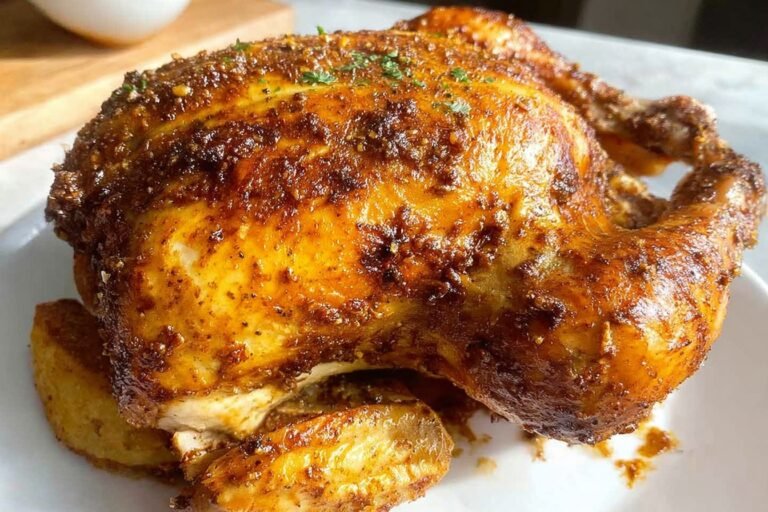
Whole Roasted Chicken
🐔 Juicy whole roasted chicken with shatteringly crispy skin—flavor-packed family feast.
🍋 Lemon-thyme infused, foolproof roast ready in 90 minutes; gluten-free perfection.
- Total Time: 1 hour 45 minutes
- Yield: 6 servings
Ingredients
Notes
🧽 Pat chicken very dry for maximum crispiness.
🌡️ Thermometer ensures juicy 165°F doneness.
⏳ Rest 10-15 minutes for redistributed juices.
- Prep Time: 10 minutes
- Resting: 15 minutes
- Cook Time: 80 minutes
- Category: Main Dishes
- Method: Roast
- Cuisine: American
- Diet: Gluten-free
Nutrition
- Serving Size: 1/6 chicken
- Calories: 350 kcal
- Sugar: 1 g
- Sodium: 400 mg
- Fat: 25 g
- Saturated Fat: 8 g
- Unsaturated Fat: 15 g
- Trans Fat: 0 g
- Carbohydrates: 3 g
- Fiber: 1 g
- Protein: 30 g
- Cholesterol: 120 mg