Why You’ll Love This Enoki Beef Rolls
If you’re searching for a quick, flavorful dinner that comes together in just 20 minutes, this Enoki Beef Rolls recipe is exactly what you need. These delightful Japanese-inspired rolls combine tender beef with delicate enoki mushrooms, creating a dish that’s both satisfying and nutritious. Here’s why this recipe deserves a spot in your weekly meal rotation:
- Ease of preparation: With only 10 minutes of prep time and 10 minutes of cooking, Easy Enoki Beef Rolls fit perfectly into busy weeknight schedules. The simple rolling technique requires no special skills, making this dish accessible for cooks of all experience levels.
- Health benefits: Each serving packs an impressive 42 grams of protein while keeping calories at just 361 kcal. Enoki mushrooms contribute essential B vitamins, antioxidants, and immune-boosting properties, while the beef provides iron and zinc for energy and overall wellness.
- Versatility: This recipe adapts easily to various dietary needs. Use tamari instead of soy sauce for a gluten-free version, or substitute with different protein cuts based on your preference and budget. The mild flavor profile also pairs beautifully with various side dishes.
- Distinctive flavor: The combination of savory soy-based sauce, sweet mirin, and aromatic garlic creates a rich umami experience. The eggs add a silky, custard-like texture that brings all the elements together in a comforting, restaurant-quality dish.
Jump to:
- Why You’ll Love This Enoki Beef Rolls
- Essential Ingredients for Enoki Beef Rolls
- Main Ingredients
- Sauce Ingredients
- Special Dietary Options
- How to Prepare the Perfect Enoki Beef Rolls: Step-by-Step Guide
- Step 1: Prepare the Enoki Mushrooms
- Step 2: Create the Beef Rolls
- Step 3: Mix the Savory Sauce
- Step 4: Cook the Aromatic Base
- Step 5: Simmer the Rolls
- Step 6: Add the Silky Egg Layer
- Step 7: Finish and Serve
- Dietary Substitutions to Customize Your Enoki Beef Rolls
- Protein and Main Component Alternatives
- Vegetable, Sauce, and Seasoning Modifications
- Mastering Enoki Beef Rolls: Advanced Tips and Variations
- Pro Cooking Techniques
- Flavor Variations
- Presentation Tips
- Make-Ahead Options
- How to Store Enoki Beef Rolls: Best Practices
- Refrigeration Guidelines
- Freezing for Long-Term Storage
- Reheating for Best Results
- Meal Prep Considerations
- FAQs: Frequently Asked Questions About Enoki Beef Rolls
- What type of beef is best for enoki beef rolls?
- Where can I buy enoki mushrooms and thinly sliced beef for enoki beef rolls?
- Does the nutrition info for enoki beef rolls include rice or sides?
- How do I store leftover enoki beef rolls?
- What’s the best way to reheat enoki beef rolls?
- Enoki Beef Rolls
- Ingredients
- Instructions
- Last Step:
- Notes
- Nutrition
- Did you make this recipe?
Essential Ingredients for Enoki Beef Rolls
Gathering the right ingredients is the first step to creating delicious Enoki Beef Rolls Recipe in 20 Minutes. Here’s everything you’ll need to make this satisfying dish:
Main Ingredients
- 7 oz enoki mushrooms – These delicate, long-stemmed mushrooms have a mild, slightly nutty flavor and crisp texture that pairs beautifully with beef
- 1 lb thinly sliced beef (ribeye, sirloin, or brisket) – Paper-thin slices are essential for quick cooking and easy rolling; ribeye offers the best marbling and flavor
- 1 tbsp avocado oil or any neutral flavored oil – Has a high smoke point ideal for searing; canola or vegetable oil work as alternatives
- 1 onion, thinly sliced (yellow or white) – Adds sweetness and depth to the dish as it cooks alongside the rolls
- 2 eggs, whisked – Creates a silky, protein-rich layer that binds the sauce and adds richness
- Chopped green onions and sesame seeds for garnish – Provides fresh flavor and a pleasant crunch for the finishing touch
Sauce Ingredients
- 1/3 cup water – Forms the base of the sauce and helps distribute flavors evenly
- 1/4 cup soy sauce or tamari sauce (gluten-free option) – Delivers the essential salty, umami flavor; tamari works perfectly for gluten-sensitive cooks
- 1 tbsp cooking sake (or substitute with mirin) – Adds depth and helps tenderize the beef; mirin can be used as a substitute
- 1 tbsp mirin – Contributes a gentle sweetness that balances the salty soy sauce
- 1 garlic clove, minced – Infuses the sauce with aromatic flavor that permeates the entire dish
Special Dietary Options
| Dietary Need | Substitution |
|---|---|
| Gluten-free | Use tamari sauce instead of regular soy sauce |
| Lower sodium | Reduce soy sauce to 3 tbsp and add extra water |
| Keto-friendly | Serve without rice; sauce is already low-carb |
| Dairy-free | Recipe is naturally dairy-free |
How to Prepare the Perfect Enoki Beef Rolls: Step-by-Step Guide
Creating restaurant-quality Enoki Beef Rolls at home is easier than you might think. Follow these detailed steps for foolproof results every time.
Step 1: Prepare the Enoki Mushrooms
Start by trimming the bottom 1-2 inches off the enoki mushrooms. This removes the tough, woody base that can be unpleasant to eat. Rinse the mushrooms gently under cool running water to remove any dirt or debris. Pat them dry with paper towels to prevent excess moisture during cooking. Once cleaned, separate the mushrooms into small bundles about 1/4-inch thick. These bite-sized portions are perfect for rolling and ensure even cooking throughout the dish.
Pro tip: Don’t separate each individual mushroom strand. Keep them in small, natural clusters for easier handling and better texture in the finished rolls.
Step 2: Create the Beef Rolls
Lay out a thin slice of beef on a clean work surface or cutting board. Place one enoki mushroom bundle near one edge of the beef slice. Carefully roll the beef around the mushrooms, tucking in the sides as you go to create a neat, compact roll. The beef should completely encase the mushrooms. Repeat this process with the remaining beef slices and mushroom bundles until all ingredients are used. You should end up with approximately 15-20 rolls depending on the size of your beef slices.
Step 3: Mix the Savory Sauce
In a medium bowl, combine all the sauce ingredients: 1/3 cup water, 1/4 cup soy sauce (or tamari for gluten-free), 1 tbsp cooking sake, 1 tbsp mirin, and 1 minced garlic clove. Stir well until everything is thoroughly combined. The sauce should have a rich amber color and a balanced aroma of soy and garlic. Set this mixture aside while you prepare the cooking process.
Step 4: Cook the Aromatic Base
Heat 1 tbsp of avocado oil in a large skillet over medium-high heat. Once the oil shimmers, add the thinly sliced onions. Cook the onions for about 3 minutes, stirring occasionally, until they become slightly softened and translucent. The onions should still have a bit of texture rather than being completely caramelized. This creates a flavorful bed for the beef rolls and adds sweetness to the final dish.
Step 5: Simmer the Rolls
Arrange the enoki beef rolls evenly over the softened onions in the skillet. Pour the prepared sauce over the rolls, making sure each one gets coated with the flavorful liquid. Cover the skillet with a lid and bring the sauce to a boil. Once boiling, reduce the heat to low and let the rolls simmer for 3-4 minutes. The beef should cook through completely and no longer appear pink. The mushrooms inside will become tender and absorb the savory sauce.
Step 6: Add the Silky Egg Layer
Remove the lid from the skillet and pour the 2 whisked eggs evenly over the rolls. Cover the skillet again and cook for 1 additional minute. The eggs will set into a delicate, custard-like layer that surrounds the rolls and thickens the sauce slightly. This step adds protein and creates a silky texture that makes the dish feel more substantial and satisfying.
Step 7: Finish and Serve
Remove the skillet from the heat. Sprinkle the finished dish with chopped green onions and sesame seeds for a pop of color and fresh flavor. Serve immediately over warm white rice for a complete meal. The rice soaks up the delicious sauce and makes the dish more filling. For a lighter option, you can also serve these rolls on their own or with steamed vegetables on the side. Looking for a sweet treat after dinner? Try this delicious peach cobbler recipe for a perfect ending to your meal.

Dietary Substitutions to Customize Your Enoki Beef Rolls
Protein and Main Component Alternatives
While traditional Enoki Beef Rolls use thinly sliced ribeye or sirloin, several alternatives work beautifully for different dietary preferences and budgets:
Beef alternatives: Pork belly slices offer a richer, fattier option that crisps beautifully during cooking. Thinly sliced chicken breast or thigh works for those who prefer poultry, though you may need to pound it extra thin. For a seafood twist, try large shrimp butterflied and wrapped around the enoki bundles.
Plant-based options: Vegetarians can substitute beef with thinly sliced firm tofu or tempeh strips. Another excellent option is using large nori sheets to wrap the enoki mushrooms, creating a vegan version with ocean-inspired flavors. King oyster mushrooms sliced lengthwise can also replace the beef for a fully plant-based dish.
Budget-friendly swaps: Flank steak, when partially frozen and sliced paper-thin, provides an economical alternative to ribeye. Chuck roll slices work well too and become tender during the simmering process.
Vegetable, Sauce, and Seasoning Modifications
The beauty of Easy Enoki Beef Rolls lies in their adaptability to various vegetables and flavor profiles:
Vegetable additions: Add sliced shiitake or cremini mushrooms alongside the enoki for deeper mushroom flavor. Thinly sliced carrots, bell peppers, or zucchini can be rolled inside the beef along with the enoki for extra nutrition and color. Baby spinach leaves tucked inside the rolls wilt beautifully during cooking.
Sauce variations: For a spicier kick, add 1 tsp of gochujang (Korean chili paste) or sriracha to the sauce mixture. A splash of rice vinegar brightens the flavor profile for those who prefer tangy notes. For a richer sauce, stir in 1 tsp of sesame oil at the end of cooking.
Seasoning adjustments: Fresh ginger added to the sauce brings warmth and zing. Garnish with shredded nori instead of sesame seeds for a Japanese pub-style presentation. A drizzle of chili oil before serving appeals to those who enjoy heat.
Mastering Enoki Beef Rolls: Advanced Tips and Variations
Take your Enoki Beef Rolls Recipe in 20 Minutes to the next level with these professional techniques and creative ideas:
Pro Cooking Techniques
Perfect rolling: Work with partially thawed beef slices if using frozen shabu shabu meat. The slight firmness makes them easier to handle and roll without tearing. If your beef tears while rolling, simply overlap another small piece to patch the hole. The sauce will bind everything together during cooking.
Even cooking: Arrange the rolls in a single layer with the seam side down. This prevents them from unrolling during the simmering process. If your skillet is too small to fit all rolls at once, cook them in batches rather than crowding the pan.
Sauce consistency: If you prefer a thicker sauce, remove the rolls after cooking and reduce the sauce over high heat for 1-2 minutes. Pour the thickened sauce back over the rolls before serving. For a lighter sauce, add an extra tablespoon of water.
Flavor Variations
Teriyaki style: Replace the sauce ingredients with store-bought or homemade teriyaki sauce for a sweeter, glossier finish. Add a tablespoon of honey or brown sugar for extra sweetness that creates a beautiful glaze.
Miso-infused: Whisk 1 tbsp of white miso paste into the sauce mixture for an earthy, fermented depth. This variation pairs exceptionally well with a soft-boiled egg on top instead of the whisked egg layer.
Spicy Korean-inspired: Add 1 tbsp of gochujang and a sprinkle of red pepper flakes to the sauce. Top with kimchi for serving and you have a Korean-Japanese fusion dish.
Presentation Tips
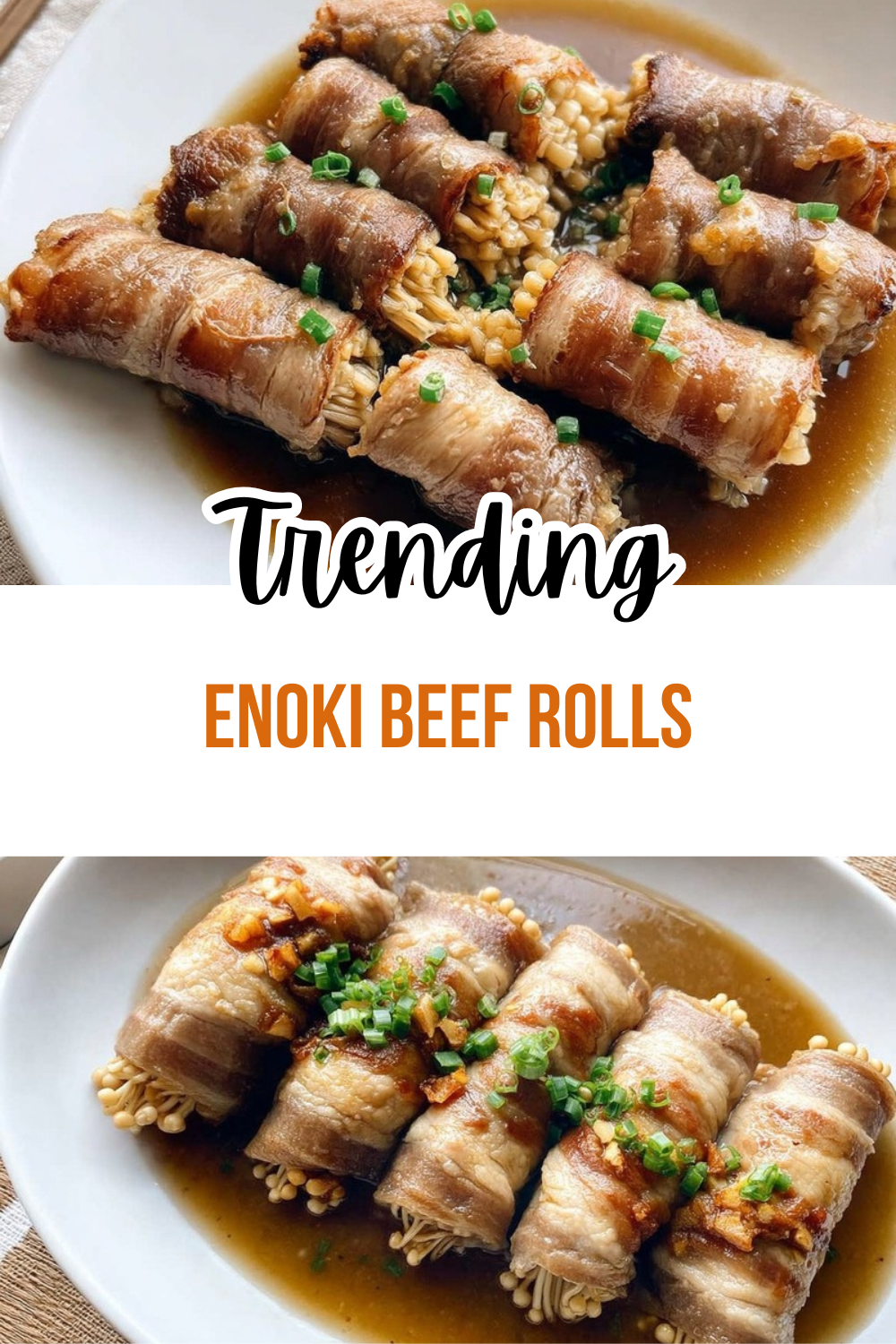
Serve Enoki Beef Rolls in individual shallow bowls to showcase the beautiful layers. Arrange the rolls in a circular pattern and spoon the sauce and eggs over the top. A sprinkle of bright green onions and toasted white sesame seeds creates visual contrast against the amber sauce and browned beef.
For family-style dining, bring the entire skillet to the table. The sizzling presentation adds drama and keeps the dish warm throughout the meal. Provide extra sauce on the side for dipping.
Make-Ahead Options
Prepare the beef rolls up to 24 hours in advance and store them covered in the refrigerator. This makes weeknight cooking even faster. The sauce can also be mixed ahead and stored in an airtight container for up to a week. When ready to cook, simply follow the cooking instructions starting from step 4.
For parties or gatherings, prep all components separately and let guests assemble their own rolls at the table. This interactive approach turns dinner into a fun activity and ensures everyone gets their preferred ingredients. Craving something sweet afterward? This creamy strawberry milkshake makes a delightful dessert.
How to Store Enoki Beef Rolls: Best Practices
Proper storage keeps your leftover Enoki Beef Rolls fresh and delicious for future meals. Follow these guidelines to maintain quality and safety:
Refrigeration Guidelines
Allow the cooked rolls to cool completely before storing, but never leave them at room temperature for more than 2 hours. Transfer the rolls along with any remaining sauce and eggs to an airtight container. The sauce helps keep the beef moist during storage. Properly stored, Enoki Beef Rolls will maintain their best quality in the refrigerator for up to 4 days.
Freezing for Long-Term Storage
For longer storage, freeze the rolls for up to 2 months. Flash-freeze the cooked rolls on a baking sheet in a single layer for 1 hour before transferring to freezer-safe bags. This prevents them from sticking together. Label the bags with the date for easy tracking. Freeze the sauce separately in ice cube trays, then transfer to a freezer bag for convenient portioning.
Reheating for Best Results
The gentle reheating method preserves the tender texture of the beef. For stovetop reheating, place the rolls in a skillet with a splash of broth or water. Cover and simmer over medium-low heat for 3-5 minutes until heated through. For microwave reheating, use a covered dish with a tablespoon of liquid and heat in 30-second intervals at medium power.
Meal Prep Considerations
These rolls work wonderfully for meal prep. Prepare a double batch on Sunday and portion into individual containers with rice and steamed vegetables. The flavors actually improve after a day as the beef absorbs more of the sauce. Keep the components separate if you prefer to reheat the rice and rolls individually.
FAQs: Frequently Asked Questions About Enoki Beef Rolls
What type of beef is best for enoki beef rolls?
Thinly sliced ribeye, sirloin, or brisket works best for enoki beef rolls because they stay tender when quickly cooked. Ribeye provides rich marbling and flavor, making it the top choice for juicy results. Sirloin offers a leaner option with good taste, while brisket adds a slightly chewy texture that’s budget-friendly. Look for “shabu shabu” or hot pot beef at Asian markets—these come pre-sliced paper-thin (about 1-2mm thick) for easy wrapping around enoki mushrooms. If slicing at home, freeze the beef partially for 30 minutes to make clean cuts with a sharp knife. Avoid thick cuts like steak, as they won’t wrap well or cook evenly. This choice ensures the rolls hold together and absorb seasonings during cooking. (98 words)
Where can I buy enoki mushrooms and thinly sliced beef for enoki beef rolls?
Enoki mushrooms and thinly sliced beef are staples at Asian grocery stores like H Mart, 99 Ranch Market, or local Chinatown markets. Find enoki in the refrigerated produce section—choose firm, white bundles without sliminess. Shabu shabu beef is often in the freezer aisle, pre-packaged in 1-pound portions for convenience. Major chains like Whole Foods or Costco may carry enoki fresh, and beef labeled “hot pot” or “sukiyaki” online via Amazon Fresh or Instacart. If unavailable locally, substitute with fresh enoki from farmers’ markets and slice beef yourself after partial freezing. Stock up on extras since these ingredients keep well—enoki lasts 1-2 weeks in the fridge, beef up to 3 months frozen. This makes sourcing simple for home cooks. (112 words)
Does the nutrition info for enoki beef rolls include rice or sides?
No, standard nutrition info for enoki beef rolls covers only the beef and mushrooms, excluding rice or any sides. A typical serving (4-5 rolls, about 150g) provides around 250-300 calories, 20g protein, 18g fat, 5g carbs, and 2g fiber, based on ribeye beef and plain enoki. This keeps it low-carb and keto-friendly. Fat content varies by beef cut—ribeye is higher at 20g per serving, sirloin lower at 12g. Mushrooms add vitamins B and D plus antioxidants with minimal calories (15 per 100g). Track precisely using apps like MyFitnessPal by inputting your exact ingredients. Pair with veggies for a balanced meal under 400 calories total. Always consult a nutritionist for personalized needs. (118 words)
How do I store leftover enoki beef rolls?
Store leftover enoki beef rolls in an airtight container with any cooking broth to keep them moist, refrigerating for up to 4 days. Let them cool completely first (within 2 hours of cooking) to prevent bacterial growth—spread on a plate if needed. For longer storage, freeze in a single layer on a baking sheet for 1 hour, then transfer to freezer bags for up to 2 months; broth freezes separately in ice cube trays for easy portioning. Label with dates to track freshness. Avoid room temperature storage beyond 2 hours. Thaw overnight in the fridge before reheating. This method preserves texture and flavor, making weeknight meals quick and safe. Discard if they smell off or show sliminess. (114 words)
What’s the best way to reheat enoki beef rolls?
Reheat enoki beef rolls gently to avoid toughening the beef—use the microwave for speed or stovetop for best results. Microwave: Place rolls in a covered dish with a splash of broth, heat on medium power in 30-second bursts, stirring halfway, until steaming hot (165°F internal temp), about 1-2 minutes total. Stovetop: Simmer in a pan with broth over medium-low heat for 3-5 minutes, flipping once, until warmed through. Add fresh green onions or soy sauce for extra flavor. Avoid high heat or dry reheating, as it dries out the thin beef. For frozen rolls, thaw first in the fridge. This keeps them tender like freshly made. Serve immediately with dipping sauce. (108 words)
Enoki Beef Rolls
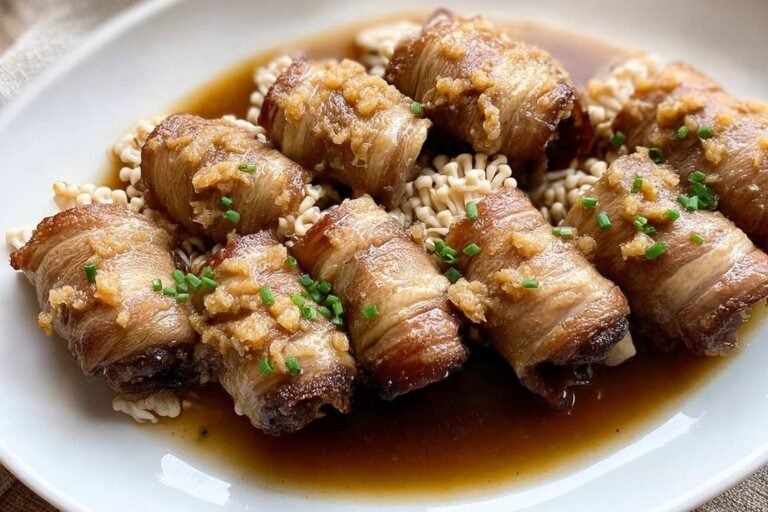
🥩 Delight in tender beef rolls stuffed with delicate enoki mushrooms, glazed in umami-rich sauce.
🍄 Whip up this flavorful Japanese-inspired dish in just 20 minutes—ideal for quick, satisfying dinners.
- Total Time: 20 minutes
- Yield: 3 servings
Ingredients
– 7 oz enoki mushrooms
– 1 lb thinly sliced beef (ribeye, sirloin, or brisket)
– 1 tbsp avocado oil or any neutral flavored oil
– 1 onion, thinly sliced (yellow or white)
– 2 eggs, whisked
– Chopped green onions and sesame seeds for garnish
– 1/3 cup water
– 1/4 cup soy sauce or tamari sauce (gluten-free option)
– 1 tbsp cooking sake (or substitute with mirin)
– 1 tbsp mirin
– 1 garlic clove, minced
Instructions
1-Step 1: Prepare the Enoki Mushrooms Start by trimming the bottom 1-2 inches off the enoki mushrooms. This removes the tough, woody base that can be unpleasant to eat. Rinse the mushrooms gently under cool running water to remove any dirt or debris. Pat them dry with paper towels to prevent excess moisture during cooking. Once cleaned, separate the mushrooms into small bundles about 1/4-inch thick. These bite-sized portions are perfect for rolling and ensure even cooking throughout the dish.
2-Step 2: Create the Beef Rolls Lay out a thin slice of beef on a clean work surface or cutting board. Place one enoki mushroom bundle near one edge of the beef slice. Carefully roll the beef around the mushrooms, tucking in the sides as you go to create a neat, compact roll. The beef should completely encase the mushrooms. Repeat this process with the remaining beef slices and mushroom bundles until all ingredients are used. You should end up with approximately 15-20 rolls depending on the size of your beef slices.
3-Step 3: Mix the Savory Sauce In a medium bowl, combine all the sauce ingredients: 1/3 cup water, 1/4 cup soy sauce (or tamari for gluten-free), 1 tbsp cooking sake, 1 tbsp mirin, and 1 minced garlic clove. Stir well until everything is thoroughly combined. The sauce should have a rich amber color and a balanced aroma of soy and garlic. Set this mixture aside while you prepare the cooking process.
4-Step 4: Cook the Aromatic Base Heat 1 tbsp of avocado oil in a large skillet over medium-high heat. Once the oil shimmers, add the thinly sliced onions. Cook the onions for about 3 minutes, stirring occasionally, until they become slightly softened and translucent. The onions should still have a bit of texture rather than being completely caramelized. This creates a flavorful bed for the beef rolls and adds sweetness to the final dish.
5-Step 5: Simmer the Rolls Arrange the enoki beef rolls evenly over the softened onions in the skillet. Pour the prepared sauce over the rolls, making sure each one gets coated with the flavorful liquid. Cover the skillet with a lid and bring the sauce to a boil. Once boiling, reduce the heat to low and let the rolls simmer for 3-4 minutes. The beef should cook through completely and no longer appear pink. The mushrooms inside will become tender and absorb the savory sauce.
6-Step 6: Add the Silky Egg Layer Remove the lid from the skillet and pour the 2 whisked eggs evenly over the rolls. Cover the skillet again and cook for 1 additional minute. The eggs will set into a delicate, custard-like layer that surrounds the rolls and thickens the sauce slightly. This step adds protein and creates a silky texture that makes the dish feel more substantial and satisfying.
7-Step 7: Finish and Serve Remove the skillet from the heat. Sprinkle the finished dish with chopped green onions and sesame seeds for a pop of color and fresh flavor. Serve immediately over warm white rice for a complete meal. The rice soaks up the delicious sauce and makes the dish more filling. For a lighter option, you can also serve these rolls on their own or with steamed vegetables on the side. Looking for a sweet treat after dinner? Try this delicious peach cobbler recipe for a perfect ending to your meal.
Last Step:
Please leave a rating and comment letting us know how you liked this recipe! This helps our business to thrive and continue providing free, high-quality recipes for you.Notes
🍄 Source enoki mushrooms and thinly sliced shabu shabu beef from Asian grocery stores.
🥩 Opt for ribeye for the richest, most flavorful results.
🥚 Use tamari instead of soy sauce for a gluten-free option.
- Prep Time: 10 minutes
- Cook Time: 10 minutes
- Category: Beef
- Method: Pan-Frying
- Cuisine: Japanese
Nutrition
- Serving Size: 1 serving
- Calories: 361 kcal
- Sugar: 3 g
- Sodium: 1255 mg
- Fat: 15 g
- Saturated Fat: 4 g
- Unsaturated Fat: 10 g
- Trans Fat: 0.01 g
- Carbohydrates: 13 g
- Fiber: 3 g
- Protein: 42 g
- Cholesterol: 203 mg