Why You’ll Love This Chicken Lo Mein
Imagine coming home after a long day and whipping up a satisfying meal that tastes like it came straight from your favorite takeout spot. This chicken lo mein recipe is exactly that it’s simple, comforting, and packed with flavors that make dinner feel special. Whether you’re a busy parent juggling kids’ activities or a student looking for a quick fix, this dish fits right into your routine.
One of the best parts about this chicken lo mein is how easy it is to prepare. You’ll find that with just a few basic ingredients and straightforward steps, you can have a hot meal on the table in under 30 minutes. Plus, it offers great health benefits as it’s loaded with lean protein from the chicken, fresh veggies for vitamins, and noodles that keep you full without weighing you down.
This recipe shines with its versatility, adapting to all kinds of dietary preferences. You can tweak it for gluten-free options or make it vegan, and it still delivers that authentic taste. The blend of savory soy sauce, garlic, and sesame oil creates a harmonious flavor that will have you coming back for more, making it a go-to for food enthusiasts of all levels.
Health Benefits in Detail
This chicken lo mein includes lean chicken, which is a smart choice for protein, as it’s a great source of essential nutrients. Each serving brings in plenty of vegetables like cabbage and carrots, adding fiber and vitamins that support daily energy. With ingredients such as garlic, known for its health perks like boosting immunity, this meal isn’t just tasty it’s nourishing too. For more on garlic’s advantages, check out how it can enhance your wellness.
Beyond that, the nutritional breakdown shows why it’s a balanced pick: it’s low in calories at 306 kcal per serving while offering 13 g of protein and 3 g of fiber. This makes it ideal for diet-conscious folks who want to enjoy their food without going overboard. All in all, this recipe is about creating enjoyable, healthy moments in your kitchen.
Jump to:
- Why You’ll Love This Chicken Lo Mein
- Essential Ingredients for Chicken Lo Mein
- How to Prepare the Perfect Chicken Lo Mein: Step-by-Step Guide
- Tips for the Best Results
- Dietary Substitutions to Customize Your Chicken Lo Mein
- Mastering Chicken Lo Mein: Advanced Tips and Variations
- How to Store Chicken Lo Mein: Best Practices
- FAQs: Frequently Asked Questions About Chicken Lo Mein
- What type of noodles work best for chicken lo mein?
- How do I properly cook uncooked lo mein noodles for chicken lo mein?
- What vegetables should I include in chicken lo mein for the best flavor and texture?
- What is the difference between chicken lo mein and chicken chow mein?
- What is the best way to reheat leftover chicken lo mein without losing flavor or texture?
- Chicken Lo Mein
- Ingredients
- Instructions
- Last Step:
- Notes
- Nutrition
- Did you make this recipe?
Essential Ingredients for Chicken Lo Mein
Diving into the heart of any great recipe starts with the ingredients, and for this chicken lo mein, we’ve got a lineup that brings everything together just right. Think fresh veggies, tender chicken, and those signature sauces that make the dish pop. I’ll walk you through each one so you can shop with confidence and get cooking without any fuss.
Below is a complete list of everything you’ll need. I pulled this straight from my favorite version of the recipe to ensure it’s accurate and easy to follow. Each item is listed with its exact measurement to help you measure out portions smoothly and avoid any kitchen surprises.
- 1 pound lo mein noodles (raw or pre-cooked)
- 8 oz boneless skinless chicken thighs or chicken breast, cut into thin strips
- 2 teaspoons cornstarch
- 2 teaspoons water
- 4 teaspoons oil (divided, plus extra for cooking)
- 1 teaspoon oyster sauce
- 2 tablespoons hot water
- 1/8 teaspoon salt
- 1/8 teaspoon sugar
- 1 tablespoon light soy sauce
- 4 teaspoons dark soy sauce
- 1 teaspoon sesame oil
- 1/8 teaspoon white pepper
- 1 clove garlic, minced
- 4 cups shredded cabbage
- 2 medium carrots, julienned (about 1 1/2 cups)
- 1 tablespoon rice wine or dry sherry cooking wine
- 2 cups bean sprouts
- 2 scallions, julienned
These ingredients come together to create that classic restaurant vibe you love. For instance, the lo mein noodles form the base, giving a chewy texture that soaks up all the flavors. If you’re looking to try something sweet after this savory dish, you might enjoy a simple peach cobbler recipe from my blog for a fun dessert option.
How to Prepare the Perfect Chicken Lo Mein: Step-by-Step Guide
Now that we have our ingredients ready, let’s get into the fun part cooking! This chicken lo mein comes alive with a few easy steps that anyone can master, even if you’re new to stir-frying. I’ll break it down simply so you can follow along and end up with a dish that’s full of that crave-worthy taste.
First, if you’re using raw lo mein noodles, boil them until al dente, then rinse with warm water and drain. If you have pre-cooked noodles, just bring them to room temperature to keep things straightforward.
Next, in a medium bowl, combine the chicken strips with cornstarch, water, 2 teaspoons oil, and oyster sauce to get that tender, flavorful meat.
In another bowl, dissolve salt and sugar in hot water, then mix in light soy sauce, dark soy sauce, sesame oil, and white pepper to whip up the sauce.
Heat 2 tablespoons oil in a wok over high heat and stir-fry the chicken until it’s browned and cooked through; set it aside once done.
Add another 2 tablespoons oil to the wok, toss in the minced garlic, and after 10 seconds, add the cabbage and carrots. Stir-fry on high heat for one minute, then pour the rice wine around the edge of the wok.
Return the chicken and noodles to the wok, pour the sauce over everything, and mix thoroughly for about 30 seconds.
Reduce the heat to medium, cover the wok for one minute, then uncover and stir-fry the noodles. If it looks dry, add 1/4 cup water or stock until the noodles are loosened and heated through.
Finally, stir in the bean sprouts and scallions, and cook for an additional minute before serving hot. This method keeps the veggies crisp and the flavors balanced, making it a hit every time.
Tips for the Best Results
When you’re stir-frying, remember that high heat really makes a difference in bringing out the best texture. Always keep an eye on your noodles to avoid sogginess by adding a little oil after boiling.
Dietary Substitutions to Customize Your Chicken Lo Mein
One of the joys of cooking is making recipes your own, and this chicken lo mein is super flexible. Whether you’re looking to go vegan or cut down on carbs, a few swaps can keep things tasty and aligned with your needs. Let’s explore how to tweak it without losing that delicious essence.
For protein options, you can replace chicken with tofu or tempeh for a plant-based twist. If you’re in the mood for seafood, shrimp works great, or try beef for a heartier meal. On the noodle front, swap traditional ones with rice noodles for gluten-free diets or zucchini noodles if you’re watching carbs.
When it comes to veggies and sauces, feel free to mix in broccoli or mushrooms instead of the usual picks. Use tamari in place of soy sauce for gluten-free versions, and add a kick with chili flakes if you like it spicy. These changes let you experiment while keeping the dish light and flavorful.
Mastering Chicken Lo Mein: Advanced Tips and Variations
Once you’re comfortable with the basics, it’s time to level up your chicken lo mein game. These tips will help you refine your technique and add some creative twists that impress. From pro stir-frying methods to fun flavor boosts, you’ll feel like a kitchen pro in no time.
Use high heat and a well-seasoned wok for that authentic stir-fry texture it locks in the flavors and keeps veggies crisp.
For flavor variations, try adding hoisin sauce for sweetness or Chinese five-spice powder for an aromatic edge. Toss in crushed peanuts for extra crunch, which pairs nicely with the soft noodles.
Presentation is key too serve it on a platter with scallions and sesame seeds for a vibrant look. And if you’re prepping ahead, cook the chicken and sauce separately to keep everything fresh when you reheat.
| Tip Category | Details |
|---|---|
| Cooking Technique | Blanch veggies first for color and crunch |
| Storage Hack | Keep noodles separate to avoid sogginess |
Remember the tips from the recipe, like using uncooked noodles boiled al dente or adding cooking wine for extra taste. If the noodles start to dry out, a splash of water works wonders.
How to Store Chicken Lo Mein: Best Practices
Leftovers are a win, especially with a dish as yummy as this chicken lo mein, but storing it right keeps it fresh and tasty. Follow these simple steps to enjoy it later without any loss of flavor or texture. It’s all about making your meal prep easier for those busy days ahead.
Store the dish in an airtight container in the fridge for up to 3-4 days. For longer storage, freeze it in portions and thaw overnight in the fridge before reheating. When it’s time to eat, warm it gently in a pan with a bit of water to keep things moist, or use the microwave for quick results. Preparing ingredients separately can help maintain that fresh stir-fry feel during batch cooking.
FAQs: Frequently Asked Questions About Chicken Lo Mein
What type of noodles work best for chicken lo mein?
The best noodles for chicken lo mein are egg noodles, often labeled as “lo mein noodles” or “Hokkien noodles.” These yellow noodles have a chewy texture that holds sauce well. You can use uncooked noodles that require boiling before stir-frying or pre-cooked noodles which can be added directly to the wok after bringing to room temperature. Avoid using thin noodles like rice vermicelli as they won’t provide the right texture for this dish.
How do I properly cook uncooked lo mein noodles for chicken lo mein?
To cook uncooked lo mein noodles, boil them in plenty of water until they are al dente, usually 3 to 5 minutes depending on the package instructions. Once cooked, drain them in a colander and rinse quickly with warm water to stop the cooking process and prevent sticking. Drain thoroughly before adding to the stir-fry to maintain the ideal texture.
What vegetables should I include in chicken lo mein for the best flavor and texture?
Popular vegetables for chicken lo mein include carrots, cabbage, bean sprouts, and scallions, which provide a nice balance of crunch and freshness. You can also add red bell peppers, mushrooms, and snow peas for added color and flavor variety. Cutting vegetables into uniform, thin strips helps them cook evenly alongside the noodles.
What is the difference between chicken lo mein and chicken chow mein?
Chicken lo mein features soft, boiled egg noodles mixed with stir-fried vegetables and chicken, typically tossed together with sauce at the end. In contrast, chicken chow mein usually involves pan-fried or crispy noodles with toppings placed on top. Though sometimes confused in the U.S., traditional lo mein noodles remain soft and are not crispy like chow mein.
What is the best way to reheat leftover chicken lo mein without losing flavor or texture?
To reheat chicken lo mein, place leftovers in an airtight container and microwave on medium power for 1-2 minutes, stirring halfway through to heat evenly. Alternatively, reheat in a wok or skillet over medium heat with a splash of water or soy sauce to prevent drying out. Avoid overheating to keep the noodles tender and the chicken juicy.
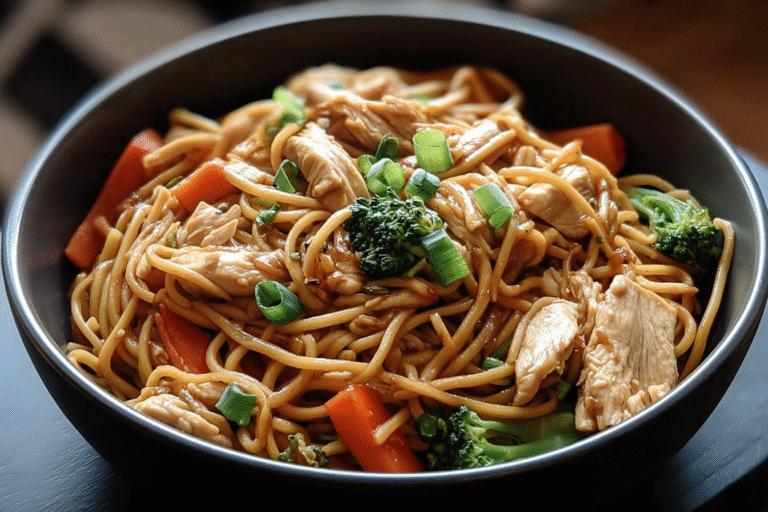
Chicken Lo Mein
🍜 Chicken Lo Mein Recipe with Classic Restaurant Flavors offers an authentic taste that’s quick to prepare and satisfying.
🔥 This dish combines tender chicken, crisp vegetables, and perfectly cooked noodles for a flavorful, well-balanced meal.
- Total Time: 30 minutes (plus 10-15 minutes if boiling raw noodles)
- Yield: 6 servings
Ingredients
– 1 pound lo mein noodles (raw or pre-cooked)
– 8 oz boneless skinless chicken thighs or chicken breast, cut into thin strips
– 2 teaspoons cornstarch
– 2 teaspoons water
– 4 teaspoons oil (divided, plus extra for cooking)
– 1 teaspoon oyster sauce
– 2 tablespoons hot water
– 1/8 teaspoon salt
– 1/8 teaspoon sugar
– 1 tablespoon light soy sauce
– 4 teaspoons dark soy sauce
– 1 teaspoon sesame oil
– 1/8 teaspoon white pepper
– 1 clove garlic, minced
– 4 cups shredded cabbage
– 2 medium carrots, julienned (about 1 1/2 cups)
– 1 tablespoon rice wine or dry sherry cooking wine
– 2 cups bean sprouts
– 2 scallions, julienned
Instructions
1-First, if you’re using raw lo mein noodles, boil them until al dente, then rinse with warm water and drain. If you have pre-cooked noodles, just bring them to room temperature to keep things straightforward.
2-Next, in a medium bowl, combine the chicken strips with cornstarch, water, 2 teaspoons oil, and oyster sauce to get that tender, flavorful meat.
3-In another bowl, dissolve salt and sugar in hot water, then mix in light soy sauce, dark soy sauce, sesame oil, and white pepper to whip up the sauce.
4-Heat 2 tablespoons oil in a wok over high heat and stir-fry the chicken until it’s browned and cooked through; set it aside once done.
5-Add another 2 tablespoons oil to the wok, toss in the minced garlic, and after 10 seconds, add the cabbage and carrots. Stir-fry on high heat for one minute, then pour the rice wine around the edge of the wok.
6-Return the chicken and noodles to the wok, pour the sauce over everything, and mix thoroughly for about 30 seconds.
7-Reduce the heat to medium, cover the wok for one minute, then uncover and stir-fry the noodles. If it looks dry, add 1/4 cup water or stock until the noodles are loosened and heated through.
8-Finally, stir in the bean sprouts and scallions, and cook for an additional minute before serving hot. This method keeps the veggies crisp and the flavors balanced, making it a hit every time.
Last Step:
Please leave a rating and comment letting us know how you liked this recipe! This helps our business to thrive and continue providing free, high-quality recipes for you.Notes
🍜 Use either raw noodles boiled al dente or pre-cooked noodles at room temperature to avoid sogginess.
🔥 Cook over high heat for best flavor and texture.
🍶 Adding cooking wine improves the dish’s authentic taste.
💧 Add a bit of water or stock if noodles dry out during cooking.
🥡 Store leftovers in airtight containers and reheat in the microwave for convenience.
- Prep Time: 20 minutes
- Cook Time: 10 minutes
- Category: Main Course
- Method: Boiling, Stir-frying
- Cuisine: Chinese
Nutrition
- Serving Size: 1/6 of recipe
- Calories: 306 kcal
- Sugar: 4 g
- Sodium: 502 mg
- Fat: 5 g
- Saturated Fat: 1 g
- Trans Fat: 0 g
- Carbohydrates: 42 g
- Fiber: 3 g
- Protein: 13 g
- Cholesterol: 58 mg