Why You’ll Love This Chicken Kimchi Soup
This Chicken Kimchi Soup recipe has become a go-to favorite in my kitchen, and it’s not hard to see why. Whether you’re a busy parent juggling weeknight dinners or a student looking for something nourishing yet simple, this soup delivers on every front. It brings together bold Korean flavors with everyday pantry staples in a way that feels both comforting and exciting.
Here’s why this kimchi chicken soup recipe deserves a permanent spot in your meal rotation:
- Ease of Preparation: This soup comes together in 45 minutes or less from start to finish. Since it uses leftover cooked chicken, you skip the step of cooking raw poultry, which saves precious time on busy weeknights. The one-pot method means minimal cleanup, leaving you more time to enjoy your meal and less time scrubbing dishes.
- Health Benefits: Kimchi is a nutritional powerhouse packed with probiotics that support gut health and immunity. Combined with protein-rich chicken and fiber-filled white beans, this chicken soup variation offers a well-rounded nutritional profile. The fermented cabbage brings vitamins A, B, and C along with essential minerals like calcium and iron.
- Versatility: The recipe adapts easily to different dietary needs and preferences. You can make it vegetarian by swapping chicken for tofu, adjust the spice level to your liking, or add extra vegetables you have sitting in the crisper drawer. It’s forgiving and flexible, making it perfect for using up leftovers.
- Distinctive Flavor: The tangy, slightly spicy kick from the kimchi transforms ordinary chicken kimchi soup into something memorable. Each spoonful delivers layers of flavor from the fermented cabbage, savory broth, and tender beans. It’s the kind of dish that warms you from the inside out.
Jump to:
- Why You’ll Love This Chicken Kimchi Soup
- Essential Ingredients for Chicken Kimchi Soup
- Main Ingredients
- Special Dietary Options
- How to Prepare the Perfect Chicken Kimchi Soup: Step-by-Step Guide
- Step 1: Prepare Your Ingredients
- Step 2: Build the Flavor Foundation
- Step 3: Combine the Main Components
- Step 4: Season and Simmer
- Step 5: Adjust Consistency and Seasoning
- Step 6: Serve and Enjoy
- Dietary Substitutions to Customize Your Chicken Kimchi Soup
- Protein and Main Component Alternatives
- Vegetable, Sauce, and Seasoning Modifications
- Mastering Chicken Kimchi Soup: Advanced Tips and Variations
- Pro Cooking Techniques
- Flavor Variations
- Presentation Tips
- Make-Ahead Options
- How to Store Chicken Kimchi Soup: Best Practices
- Refrigeration Guidelines
- Freezing for Longer Storage
- Reheating Methods
- Meal Prep Considerations
- FAQs: Frequently Asked Questions About Chicken Kimchi Soup
- How do you make chicken kimchi soup from scratch?
- How long does it take to cook chicken kimchi soup?
- Can I make a vegetarian version of chicken kimchi soup?
- What are the health benefits of chicken kimchi soup?
- How should I store and reheat chicken kimchi soup?
- Chicken Kimchi Soup
- Ingredients
- Instructions
- Last Step:
- Notes
- Nutrition
- Did you make this recipe?
Essential Ingredients for Chicken Kimchi Soup
One of the best things about this recipe is its simplicity. You probably have most of these ingredients on hand, and the ones you need to pick up are easy to find at any grocery store. Here’s everything you’ll need to make a pot of satisfying chicken kimchi soup.
Main Ingredients
- 2 tablespoons olive oil – Used for sautéing the onion until soft and translucent. Any neutral cooking oil works here, but olive oil adds a pleasant subtle flavor.
- 1 medium onion, chopped – Provides a sweet, aromatic base for the soup. Yellow or white onions work best, though red onion can add a nice color contrast.
- 2 cups cooked chicken, cut into small pieces – This is perfect for using up leftover rotisserie chicken or any cooked poultry. The small pieces distribute the protein evenly throughout the soup.
- 2 cups Napa cabbage kimchi, chopped – The star ingredient that gives this soup its signature tangy, spicy character. Look for kimchi in the refrigerated section near other fermented foods.
- 2 1/2 cups water (plus more if needed) – Forms the base of the broth. The kimchi releases flavorful liquid as it cooks, infusing the water with deep umami notes.
- 1 cup reduced-sodium chicken broth – Adds richness and depth to the soup base. Using reduced-sodium lets you control the final salt level more precisely.
- 1 15-ounce can white beans, drained and rinsed – Cannellini or navy beans work beautifully here, adding creaminess and plant-based protein. Rinsing removes excess sodium and starch.
- Freshly ground black pepper – Adds a subtle heat and aromatic quality that enhances the other flavors without competing with the kimchi.
- Salt, if needed – Used for final seasoning adjustment. Kimchi and broth both contain sodium, so taste before adding extra salt.
Special Dietary Options
| Dietary Need | Substitution |
|---|---|
| Vegan/Vegetarian | Replace chicken with cubed tofu; use water instead of chicken broth; seek out vegan kimchi without fish sauce |
| Gluten-Free | Verify kimchi is gluten-free (some contain wheat-based sauces); all other ingredients are naturally gluten-free |
| Low-Calorie | Use less oil for sautéing; increase vegetables; skip serving bread on the side |
Pro Tip: Always check the ingredient label on store-bought kimchi if you follow a vegetarian or vegan diet. Traditional recipes often include fish sauce or salted shrimp, but many brands now offer plant-based alternatives clearly marked as vegan.
How to Prepare the Perfect Chicken Kimchi Soup: Step-by-Step Guide
Making this kimchi soup is straightforward, but a few key techniques will help you get the best results. The process flows naturally from one step to the next, building layers of flavor along the way.
Step 1: Prepare Your Ingredients
Before you turn on the stove, take a few minutes to gather and prep everything. This mise en place approach makes the actual cooking smooth and stress-free. Chop your onion into even pieces about the size of a kernel of corn so they cook uniformly. If your leftover chicken is in large chunks, cut it into bite-sized pieces. Rough chop the kimchi so it’s easier to eat with a spoon. Drain and rinse the white beans in a colander, giving them a quick rinse under cool water.
Step 2: Build the Flavor Foundation
Heat 2 tablespoons olive oil in a large saucepan over medium heat. You want the oil to shimmer but not smoke. Add 1 medium chopped onion and sauté, stirring frequently, until softened and translucent, about 3 minutes. The onion should look glossy and smell sweet, with no browning at the edges. This step creates a mellow, aromatic base that supports the bolder kimchi flavor.
Stirring frequently prevents the onion from sticking and ensures even cooking. If you find the onion is browning too quickly, lower the heat slightly. The goal is softness, not caramelization.
Step 3: Combine the Main Components
Add 2 cups cooked chicken pieces, 2 cups chopped Napa cabbage kimchi, 2 1/2 cups water, 1 cup reduced-sodium chicken broth, and 1 15-ounce can drained and rinsed white beans to the pot. Stir everything together with a wooden spoon or heat-safe spatula, making sure the ingredients are evenly distributed.
At this stage, you’ll notice the kimchi beginning to release its flavorful liquid into the broth. This is exactly what you want. The fermented cabbage will infuse the cooking liquid with a tangy depth that makes this chicken kimchi soup so special.
Step 4: Season and Simmer
Season generously with freshly ground black pepper. Hold off on adding salt until the end, as kimchi and broth both contain sodium and you may find it doesn’t need extra. Bring the mixture to a boil, then reduce heat to simmer. Cook partly covered for 20 to 30 minutes, stirring occasionally to blend flavors.
The partial covering allows some steam to escape, which helps concentrate the flavors while still keeping the soup at a gentle simmer. Occasional stirring prevents anything from sticking to the bottom and helps the flavors meld together.
How do you know when it’s done? The soup is ready when the flavors have come together and the kimchi has softened but still retains some texture. Taste the broth it should have a balanced tangy, savory quality.
Step 5: Adjust Consistency and Seasoning
After simmering, check the consistency. Add more water if the soup is too thick. Some people prefer a brothy soup while others like it more stew-like, so adjust to your preference. Remember that the soup will thicken slightly as it cools.
Taste and adjust salt as needed. Start with a small pinch, stir to dissolve, and taste again. It’s always easier to add more than to fix an oversalted soup. If you want more heat or tang, you can stir in a little kimchi juice from the jar.
Step 6: Serve and Enjoy
Ladle the hot soup into bowls and serve with bread and butter. A slice of crusty bread is perfect for soaking up the flavorful broth. For a heartier meal, you could also serve it over steamed rice.
This soup pairs wonderfully with simple sides. After enjoying this savory, warming bowl, you might want to try something sweet like a creamy strawberry milkshake for dessert. The contrast between the tangy, spicy soup and a cool, sweet treat makes for a memorable meal.
For those interested in exploring more variations on this recipe, you can check out this gluten-free kimchi soup version for additional inspiration and techniques.

Dietary Substitutions to Customize Your Chicken Kimchi Soup
One of the greatest strengths of this recipe is how easily it adapts to different dietary needs and preferences. Whether you’re cooking for vegetarians, reducing sodium, or simply working with what’s in your pantry, there are plenty of ways to make this soup your own.
Protein and Main Component Alternatives
If you don’t have leftover cooked chicken or prefer a plant-based option, several substitutions work beautifully. Cubed firm tofu makes an excellent vegetarian alternative. Press the tofu for 15 minutes to remove excess water, then cut it into 1-inch cubes. You can add it directly to the soup or sauté it first for a firmer texture and golden exterior.
Mushrooms offer another satisfying option for those avoiding meat. Shiitake mushrooms bring umami depth that complements the kimchi perfectly. Cremini or button mushrooms work too, though they have a milder flavor. Simply slice and add them along with the other ingredients.
For a fully plant-based chicken kimchi soup, substitute the chicken broth with additional water or vegetable broth. Remember that traditional kimchi often contains fish or seafood sauce, so look for specifically labeled vegan kimchi at health food stores or Asian markets.
If you have leftover turkey from holiday meals, it works just as well as chicken. The mild flavor pairs nicely with the bold kimchi, and you get to use up leftovers in a fresh, new way.
Vegetable, Sauce, and Seasoning Modifications
This recipe welcomes vegetable additions and substitutions. Diced carrots, sliced bok choy, or chopped spinach all integrate seamlessly. Add sturdier vegetables like carrots along with the broth so they have time to soften. Leafy greens like spinach should go in during the last 5 minutes of cooking.
For a spicier soup, add a spoonful of gochujang (Korean red pepper paste) or a dash of red pepper flakes. If you prefer milder flavors, use less kimchi or choose a less spicy variety. The kimchi juice itself is a seasoning stir in more for extra tang and fermented flavor.
Garlic and ginger add aromatic depth that pairs beautifully with the kimchi. Mince 2-3 cloves of garlic and a 1-inch piece of fresh ginger, then sauté them with the onion at the beginning. This builds another layer of flavor in the broth.
For a richer, more substantial soup, try adding a tablespoon of miso paste during the last few minutes of cooking. Whisk it into a small amount of warm broth first to dissolve it smoothly. The miso adds probiotics and a deep, savory quality that enhances the overall taste.
Mastering Chicken Kimchi Soup: Advanced Tips and Variations
Once you’ve mastered the basic recipe, you might want to try some advanced techniques and creative variations. These tips will help you take your kimchi chicken soup recipe to the next level.
Pro Cooking Techniques
The quality of your kimchi makes a significant difference in the final dish. Look for kimchi that’s well-fermented, with a good balance of sour and spicy notes. It should have a vibrant color and smell pleasantly pungent. Fresh kimchi works fine, but slightly older kimchi that’s been fermenting longer often has a more complex, developed flavor that shines in soups.
If you want a clearer broth, you can briefly sauté the kimchi before adding liquid. This caramelizes some of the natural sugars and deepens the flavor. Cook it for about 2 minutes, stirring constantly, until it becomes fragrant and slightly softened.
For the smoothest texture, blend a portion of the beans before adding them to the soup. This creates a creamy, velvety base while still leaving some whole beans for texture. An immersion blender makes quick work of this step.
Flavor Variations
- Spicy Kimchi Soup: Add 1-2 tablespoons gochujang paste along with the broth for extra heat and depth. The fermented pepper paste brings authentic Korean flavor and a beautiful red color.
- Coconut Curry Fusion: Stir in 1/2 cup of coconut milk and 1 tablespoon of curry powder during the last 10 minutes of cooking. This creates a rich, aromatic variation that’s distinctly different but equally delicious.
- Miso-Ginger: Add 1 tablespoon of white miso paste and 1 teaspoon of grated fresh ginger. The miso adds umami richness while ginger brings brightness and a gentle warmth.
Presentation Tips
Transform a simple bowl of soup into a restaurant-worthy dish with thoughtful garnishes. Sliced green onions add a fresh, oniony crunch and bright color contrast. A sprinkle of toasted sesame seeds brings nutty aroma and visual appeal. A drizzle of sesame oil just before serving adds a luxurious finishing touch.
For texture contrast, consider topping with crispy fried shallots or a handful of bean sprouts. These additions give the soup multiple dimensions of flavor and mouthfeel.
Make-Ahead Options
This soup is ideal for meal prep. You can make a full batch on Sunday and portion it out for the week ahead. The flavors actually improve after a day in the refrigerator as the ingredients have more time to meld together.
For faster weeknight cooking, prep your ingredients in advance. Chop the onion and kimchi, measure out the beans and broth, and store everything in containers in the refrigerator. When you’re ready to cook, simply follow the recipe steps. For more inspiration on dishes that work well for gatherings or meal prep, take a look at our comforting peach cobbler recipe that’s perfect for sharing.
How to Store Chicken Kimchi Soup: Best Practices
Proper storage ensures your leftover chicken kimchi soup stays fresh and delicious. Here’s everything you need to know about refrigerating, freezing, and reheating this flavorful soup.
Refrigeration Guidelines
Allow the soup to cool to room temperature before storing, but don’t leave it out for more than 2 hours. Transfer cooled soup to airtight containers, leaving about an inch of space at the top for expansion. Store in the refrigerator for up to 4 days. The flavors often improve overnight as the ingredients continue to meld together, making leftovers even more tasty than the first serving.
Freezing for Longer Storage
This kimchi soup freezes well for longer storage. Portion the cooled soup into freezer-safe containers or heavy-duty freezer bags. Label with the date and contents for easy identification later. Freeze for up to 2 months for best quality.
Keep in mind that the texture of the beans may soften slightly after freezing and thawing, but the flavor remains excellent. If you plan to freeze a large batch, consider slightly undercooking the beans initially.
Reheating Methods
For best results, reheat the soup gently on the stovetop over medium-low heat. Stir occasionally and add a splash of water or broth if it has thickened too much during storage. Heat until it reaches a gentle simmer and is hot throughout.
You can also reheat individual portions in the microwave. Cover the bowl with a microwave-safe lid or paper towel to prevent splatters. Heat in 1-minute intervals, stirring between each, until heated through.
Meal Prep Considerations
When meal prepping, portion the soup into single-serving containers for grab-and-go lunches. Pre-portioning saves time and makes it easy to track how many meals you have ready for the week. Store any garnishes separately and add them fresh when serving for the best texture and appearance.
FAQs: Frequently Asked Questions About Chicken Kimchi Soup
How do you make chicken kimchi soup from scratch?
To make chicken kimchi soup, start with 1 lb boneless chicken thighs cut into bite-sized pieces, 2 cups chopped kimchi, 1 cup white beans (drained), 4 cups chicken broth, 1 onion sliced, 2 garlic cloves minced, 1 tbsp gochujang, and green onions for garnish. Sauté onion and garlic in 1 tbsp oil for 3 minutes. Add chicken and cook until browned, about 5 minutes. Stir in kimchi, gochujang, beans, and broth. Bring to a boil, then simmer 25-30 minutes until chicken is tender. Adjust spice with more gochujang if needed. Serves 4. Total time: 45 minutes. This one-pot recipe is simple for weeknights—prep ingredients ahead for faster cooking. Pair with rice for a full meal. (92 words)
How long does it take to cook chicken kimchi soup?
Chicken kimchi soup cooks in 45 minutes or less, making it ideal for quick dinners. Prep takes 10 minutes: chop chicken, kimchi, onion, and garlic. Sauté aromatics and chicken for 8 minutes, add kimchi, beans, gochujang, and broth, then simmer 25-30 minutes until flavors meld and chicken is fully cooked (internal temp 165°F). Use pre-chopped kimchi to save time. One-pot method minimizes cleanup. For leftovers, it tastes better the next day as flavors deepen. Store in fridge up to 4 days or freeze for 2 months—reheat on stovetop with a splash of broth. (98 words)
Can I make a vegetarian version of chicken kimchi soup?
Yes, swap chicken for firm tofu or mushrooms for a vegetarian chicken kimchi soup. Use vegetable broth instead of chicken broth. Sauté 14 oz cubed tofu until golden, 5 minutes, then add 2 cups kimchi, 1 cup white beans, sliced onion, garlic, gochujang, and 4 cups veg broth. Simmer 25 minutes. Check your kimchi label—many contain fish sauce; opt for vegan kimchi (brands like Mother-in-Law’s) for fully plant-based. This keeps the tangy, spicy profile with 20g protein per serving from tofu and beans. Add spinach at the end for greens. Serves 4 in under 45 minutes. (102 words)
What are the health benefits of chicken kimchi soup?
Chicken kimchi soup offers gut-friendly probiotics from fermented kimchi, supporting digestion and immunity. Kimchi provides vitamins A, B, C, plus calcium and iron; studies show it may lower cholesterol by 10-15%, reduce inflammation, and aid weight loss (one cup has ~20 calories). White beans add 7g fiber and 6g protein per half-cup, helping blood sugar control and heart health. Chicken contributes lean protein (25g per serving). Overall, a bowl delivers ~300 calories, balancing spice with nutrition. Low-carb option: skip beans. Consume 2-3 times weekly for benefits—pair with brown rice for sustained energy. (104 words)
How should I store and reheat chicken kimchi soup?
Store cooled chicken kimchi soup in airtight containers in the fridge for up to 4 days; flavors intensify, so it improves overnight. For longer storage, freeze in portions up to 2 months—thaw overnight in fridge. Reheat on stovetop over medium heat for 5-10 minutes, stirring and adding broth if thickened; microwave in 1-minute bursts, covered. Avoid boiling to preserve probiotics. If too spicy after storage, dilute with broth or yogurt. Pro tip: portion into single servings for easy lunches. Always check chicken reaches 165°F when reheating for safety. Links to full recipe and variations in our Korean soup collection. (98 words)
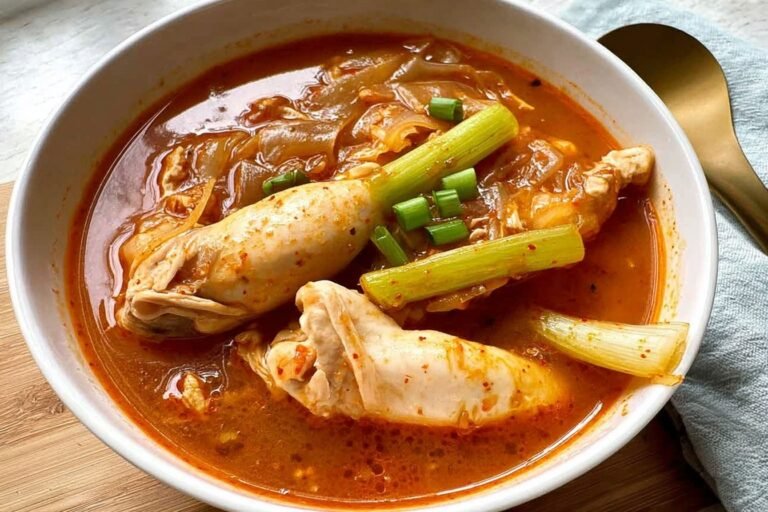
Chicken Kimchi Soup
🍲 Nourish your gut with probiotic-packed kimchi and lean chicken in this hearty soup – boosts immunity, heart health, and digestion!
🥄 Quick 45-minute weeknight wonder using leftovers, loaded with fiber-rich beans for satisfying, flavorful comfort.
- Total Time: 45 minutes
- Yield: 4 servings
Ingredients
– 2 tablespoons olive oil
– 1 medium onion, chopped
– 2 cups cooked chicken, cut into small pieces
– 2 cups Napa cabbage kimchi, chopped
– 2 1/2 cups water (plus more if needed)
– 1 cup reduced-sodium chicken broth
– 1 15-ounce can white beans, drained and rinsed
– Freshly ground black pepper
– Salt, if needed
Instructions
1-Step 1: Prepare Your Ingredients Before you turn on the stove, take a few minutes to gather and prep everything. This mise en place approach makes the actual cooking smooth and stress-free. Chop your onion into even pieces about the size of a kernel of corn so they cook uniformly. If your leftover chicken is in large chunks, cut it into bite-sized pieces. Rough chop the kimchi so it’s easier to eat with a spoon. Drain and rinse the white beans in a colander, giving them a quick rinse under cool water.
2-Step 2: Build the Flavor Foundation Heat 2 tablespoons olive oil in a large saucepan over medium heat. You want the oil to shimmer but not smoke. Add 1 medium chopped onion and sauté, stirring frequently, until softened and translucent, about 3 minutes. The onion should look glossy and smell sweet, with no browning at the edges. This step creates a mellow, aromatic base that supports the bolder kimchi flavor. Stirring frequently prevents the onion from sticking and ensures even cooking. If you find the onion is browning too quickly, lower the heat slightly. The goal is softness, not caramelization.
3-Step 3: Combine the Main Components Add 2 cups cooked chicken pieces, 2 cups chopped Napa cabbage kimchi, 2 1/2 cups water, 1 cup reduced-sodium chicken broth, and 1 15-ounce can drained and rinsed white beans to the pot. Stir everything together with a wooden spoon or heat-safe spatula, making sure the ingredients are evenly distributed. At this stage, you’ll notice the kimchi beginning to release its flavorful liquid into the broth. This is exactly what you want. The fermented cabbage will infuse the cooking liquid with a tangy depth that makes this chicken kimchi soup so special.
4-Step 4: Season and Simmer Season generously with freshly ground black pepper. Hold off on adding salt until the end, as kimchi and broth both contain sodium and you may find it doesn’t need extra. Bring the mixture to a boil, then reduce heat to simmer. Cook partly covered for 20 to 30 minutes, stirring occasionally to blend flavors. The partial covering allows some steam to escape, which helps concentrate the flavors while still keeping the soup at a gentle simmer. Occasional stirring prevents anything from sticking to the bottom and helps the flavors meld together. How do you know when it’s done? The soup is ready when the flavors have come together and the kimchi has softened but still retains some texture. Taste the broth it should have a balanced tangy, savory quality.
5-Step 5: Adjust Consistency and Seasoning After simmering, check the consistency. Add more water if the soup is too thick. Some people prefer a brothy soup while others like it more stew-like, so adjust to your preference. Remember that the soup will thicken slightly as it cools. Taste and adjust salt as needed. Start with a small pinch, stir to dissolve, and taste again. It’s always easier to add more than to fix an oversalted soup. If you want more heat or tang, you can stir in a little kimchi juice from the jar.
6-Step 6: Serve and Enjoy Ladle the hot soup into bowls and serve with bread and butter. A slice of crusty bread is perfect for soaking up the flavorful broth. For a heartier meal, you could also serve it over steamed rice. This soup pairs wonderfully with simple sides. After enjoying this savory, warming bowl, you might want to try something sweet like a creamy strawberry milkshake for dessert. The contrast between the tangy, spicy soup and a cool, sweet treat makes for a memorable meal. For those interested in exploring more variations on this recipe, you can check out this gluten-free kimchi soup version for additional inspiration and techniques.
Last Step:
Please leave a rating and comment letting us know how you liked this recipe! This helps our business to thrive and continue providing free, high-quality recipes for you.Notes
🌱 Make it vegetarian by swapping chicken for sautéed tofu and using vegetable broth.
🥬 Choose well-fermented kimchi for maximum probiotics and tangy flavor.
💧 Adjust water for desired consistency – simmer longer for deeper flavor infusion.
- Prep Time: 10 minutes
- Cook Time: 35 minutes
- Category: Soups
- Method: Simmer
- Cuisine: Korean
- Diet: Gluten-Free, High-Protein, Gut-Healthy
Nutrition
- Serving Size: 1 1/2 cups
- Calories: 350 kcal
- Sugar: 5g
- Sodium: 800mg
- Fat: 12g
- Saturated Fat: 2g
- Unsaturated Fat: 9g
- Trans Fat: 0g
- Carbohydrates: 25g
- Fiber: 6g
- Protein: 25g
- Cholesterol: 60mg