Why You’ll Love This Baked Salmon In Foil Recipe
If you want a Baked Salmon In Foil Recipe that feels fancy but acts like a weeknight hero, this one checks all the boxes. It is quick, low-fuss, full of fresh flavor, and friendly to busy schedules. Plus, the foil packet helps the salmon stay tender while the lemon, garlic, and herbs do all the heavy lifting.
- Easy prep: You only need about 15 minutes to get everything ready, and the oven does the rest. There is no complicated sauce, no special equipment, and very little cleanup.
- Healthy and filling: Salmon brings plenty of protein and healthy fats, so this meal works well for anyone who wants something nourishing without feeling heavy. Each serving has 180 calories, 28 grams of protein, and just 6 grams of fat.
- Flexible for many diets: This baked salmon recipe can fit gluten-free eating, lower-carb meals, and simple meal prep plans. You can also swap herbs based on what you have on hand.
- Bright, fresh flavor: Lemon, garlic, rosemary, and olive oil make the salmon taste clean and rich at the same time. The short broil at the end gives the top a lightly golden finish that tastes like you spent way more time on dinner than you did.
Best of all, this is the kind of dinner that makes you look organized even if you were answering emails, helping with homework, or just trying to survive the day.
For another easy seafood dinner idea, you may also like this simple healthy baked salmon method from a trusted recipe site.
Jump to:
- Why You’ll Love This Baked Salmon In Foil Recipe
- Essential Ingredients for Baked Salmon In Foil Recipe
- Main ingredients
- Special dietary options
- How to Prepare the Perfect Baked Salmon In Foil Recipe: Step-by-Step Guide
- First step: get everything ready
- Second step: build the flavor base
- Third step: season generously
- Fourth step: seal the foil packet
- Fifth step: bake until nearly done
- Sixth step: broil for a light golden top
- Final step: rest, portion, and serve
- Quick timing and nutrition snapshot
- Protein and Main Component Alternatives
- Different salmon options
- Other protein ideas
- Vegetable, Sauce, and Seasoning Modifications
- Vegetable add-ins
- Sauce and seasoning swaps
- Mastering Baked Salmon In Foil Recipe: Advanced Tips and Variations
- Pro cooking techniques
- Flavor variations
- Presentation tips
- Make-ahead options
- How to Store Baked Salmon In Foil Recipe: Best Practices
- Refrigeration
- Freezing
- Reheating
- Meal prep considerations
- FAQs: Frequently Asked Questions About Baked Salmon In Foil Recipe
- How long does it take to bake salmon in foil at 375 degrees?
- What temperature should I use to bake salmon in foil?
- How do you know when salmon baked in foil is done?
- Can you bake salmon in foil with the skin on or off?
- How do you store and reheat leftover baked salmon from foil?
- Baked Salmon In Foil Recipe
- Ingredients
- Instructions
- Last Step:
- Notes
- Nutrition
- Did you make this recipe?
Essential Ingredients for Baked Salmon In Foil Recipe
Main ingredients
- 2 pound side of salmon, boneless, skin on or off – The star of the recipe. A side of salmon gives you generous portions and bakes evenly in foil.
- 5 sprigs fresh rosemary or other fresh herbs, do not use dried – Fresh herbs add aroma and flavor without overpowering the fish.
- 2 small lemons, divided, plus extra for serving – Lemon brightens the salmon and keeps the flavor fresh and clean.
- 2 tablespoons olive oil – Helps the seasonings stick and adds richness.
- 1 teaspoon salt – Brings out the natural flavor of the salmon.
- 1/4 teaspoon black pepper – Adds a gentle bit of warmth.
- 4 cloves garlic, peeled and roughly chopped – Garlic gives the fish a savory kick as it roasts.
- Additional chopped fresh herbs like basil, thyme, parsley, dill, or green onion, optional – A nice finishing touch for color and extra freshness.
Special dietary options
- Gluten-free: This recipe is naturally gluten-free as written.
- Low-calorie: Keep the olive oil as written, or lightly reduce it if you want a leaner finish.
- Vegan: Salmon itself is not vegan, but the same lemon-herb foil idea works well with thick slabs of tofu or cauliflower steaks using similar seasoning.
| Ingredient | Purpose | Helpful note |
|---|---|---|
| Salmon | Main protein | Choose a fresh side with even thickness for steady baking |
| Lemon | Fresh flavor | Use slices and juice for the best balance |
| Rosemary | Aromatic herb | Fresh only, not dried |
| Garlic | Savory depth | Rough chop so it softens nicely in the oven |
How to Prepare the Perfect Baked Salmon In Foil Recipe: Step-by-Step Guide
First step: get everything ready
Take the salmon out of the fridge and let it sit at room temperature for 10 minutes. This helps it cook more evenly instead of going from cold and stiff to hot and dry. While it rests, preheat your oven to 375 degrees F. Line a large baking dish or rimmed baking sheet with aluminum foil, then lightly coat the foil with baking spray.
That small bit of prep matters more than it looks. Salmon cooks fairly fast, and starting with a preheated oven and a ready pan keeps the process smooth. If you are making dinner after a long day, this is the point where the recipe starts feeling very doable.
Second step: build the flavor base
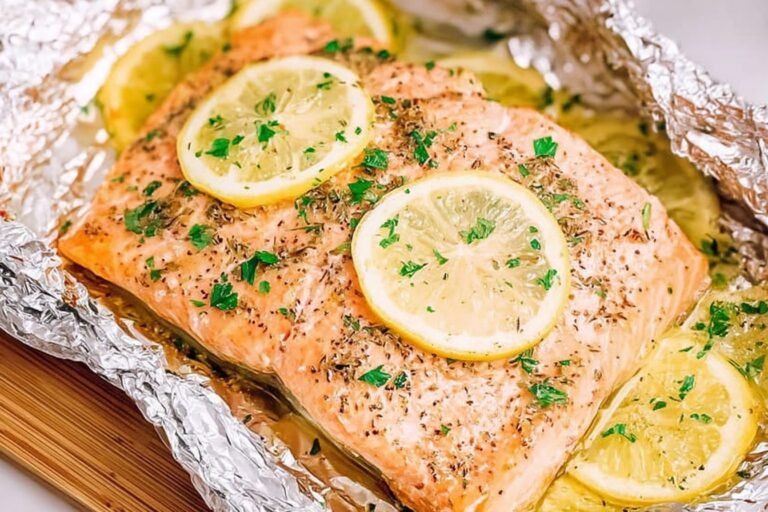
Arrange 2 sprigs of rosemary down the middle of the foil. Thinly slice one lemon and place half of the slices over the rosemary. Then set the salmon on top. This creates a fragrant little bed for the fish and helps the bottom absorb flavor as it bakes.
If you do not have rosemary, fresh dill, parsley, thyme, or basil can step in nicely. Just do not use dried herbs here, because fresh herbs give a cleaner flavor and a better finish. That fresh-herb layer is part of what makes this Baked Salmon Recipe taste so bright.
Third step: season generously
Drizzle the salmon with 2 tablespoons olive oil, then sprinkle on 1 teaspoon salt and 1/4 teaspoon black pepper. Rub the mixture over the top so the seasoning coats the fish well. Scatter the 4 cloves garlic over the surface, then lay the remaining rosemary and lemon slices on top. Juice the second lemon and pour it over the salmon.
This is where the salmon starts smelling amazing. The oil helps hold in moisture, the lemon keeps the flavor lively, and the garlic adds savory depth. If you like a richer taste, you can add a little butter along with the olive oil, but the recipe works beautifully as written.
Fourth step: seal the foil packet
Fold the foil sides up and over the salmon until it is completely enclosed. If needed, use a second piece of foil to seal the packet. Leave a little room inside so air can circulate. That trapped steam helps the fish stay tender and juicy.
A tight seal matters, but you do not want to squash the salmon flat. Think of it like a cozy little tent, not a vacuum package. If you prefer, parchment paper can stand in for foil, though foil usually gives the most reliable seal.
Fifth step: bake until nearly done
Bake for 15 to 20 minutes, until the salmon is almost cooked through at the thickest part. Time will vary based on thickness. A 2-pound side usually lands in this range, while thinner fillets may cook faster and thicker pieces may need a bit more time.
If you have a quick-read thermometer, aim to remove the fish at 137 to 140 degrees F. It will keep cooking a little after it comes out of the oven. The FDA recommends 145 degrees F, but many cooks prefer to pull it a touch early for a juicier texture.
Sixth step: broil for a light golden top
Remove the pan from the oven and carefully open the foil so the top of the fish is uncovered. Switch the oven to broil and broil for 3 minutes until the top is lightly golden and cooked through. Watch it closely, because broilers move fast and salmon can go from golden to too dark in a flash.
This finish adds a nice little restaurant-style touch without much extra effort. If you have ever wanted salmon that looks impressive but did not require stress, this is the move.
Final step: rest, portion, and serve
If the salmon seems slightly underdone, tent it loosely with foil and let it rest for a few minutes until it flakes easily. Then cut it into portions and serve with additional fresh herbs and lemon if desired. The resting time lets the juices settle so every bite stays moist.
Perfect salmon should flake easily with a fork and still look moist in the center.
For a sweet finish after dinner, try pairing this meal with classic peach cobbler from Savoring Flavors. If you are putting together a fun family meal night, you could even add a creamy strawberry milkshake for dessert.
Quick timing and nutrition snapshot
| Detail | Amount |
|---|---|
| Prep time | 15 minutes |
| Cook time | 15 to 20 minutes |
| Total time | About 30 minutes |
| Servings | 6 |
| Calories per serving | 180 kcal |
Protein and Main Component Alternatives
Different salmon options
This recipe works with either skin-on or skin-off salmon. Skin-on salmon tends to stay extra moist because the skin acts like a little shield while baking. Skin-off salmon is just as tasty and may be easier for people who want to serve and eat it quickly. If your fishmonger can remove the skin for you, that is a handy shortcut.
You can also use smaller fillets instead of a full side if that is what you can find. Just remember that smaller pieces cook faster, so start checking for doneness early. For more than one piece, keep the fillets close in thickness so they finish around the same time.
Other protein ideas
If salmon is not available, this same general method can work with trout, arctic char, or even thick white fish fillets. The seasoning mix, lemon, garlic, and fresh herbs still shine. Adjust the time based on thickness and watch closely near the end so the fish stays tender.
For a plant-based dinner, thick tofu slabs or cauliflower steaks can mimic the foil packet style. They will not taste like salmon, of course, but they soak up lemon, oil, garlic, and herbs in a really satisfying way. That makes the same cooking style useful for mixed households where everyone eats a little differently.
Vegetable, Sauce, and Seasoning Modifications
Vegetable add-ins
One of the best things about a foil packet dinner is how easy it is to add vegetables. Thin asparagus, zucchini slices, bell peppers, or green beans can cook alongside the salmon if sliced small enough. Just keep an eye on cooking time, since softer vegetables may finish before the fish does.
Roasting vegetables underneath or beside the salmon can turn this into a full meal with very little extra effort. If you are feeding a hungry family or trying to use up produce from the fridge, this is a great move. A little olive oil, salt, and pepper go a long way here too.
Sauce and seasoning swaps
Fresh dill is a classic with salmon, but parsley, thyme, basil, or green onion can bring a different mood to the plate. If you want richer flavor, add a few pats of butter before sealing the foil. You can also mix a little honey into the lemon juice for a mild sweet note, though the original recipe stays nicely balanced without it.
When it comes to seasoning, keep things simple. Salmon already has a rich flavor, so you do not need a heavy hand. Lemon, garlic, herbs, salt, pepper, and olive oil are enough to make the fish taste polished without hiding it.
Mastering Baked Salmon In Foil Recipe: Advanced Tips and Variations
Pro cooking techniques
The biggest rule is simple: do not overcook the salmon. Use a quick-read thermometer and pull it from the oven at 137 to 140 degrees F if you want the juiciest result. After a few minutes of resting, it should land right around 145 degrees F. That little window is the difference between tender fish and dry fish.
If you are cooking a smaller fillet or roasting vegetables in the same pan, begin checking earlier than the recipe time suggests. Every oven has its own personality, and thicker salmon cooks differently from thinner salmon. That is why the fork test still matters, even if you use a thermometer.
Flavor variations
Try swapping the rosemary for dill and adding a little butter for a more classic seafood flavor. Parsley and thyme work well if you want something lighter and earthier. Basil brings a soft, almost sweet finish that feels nice in warmer months.
If you are cooking for someone who loves bold flavors, add more garlic or a pinch of red pepper flakes. If you want a brighter meal, serve the salmon with extra lemon wedges at the table. The recipe is flexible, so you can make it match your mood without starting from scratch.
Presentation tips
Serve the salmon on a large platter with the lemon slices and fresh herbs arranged on top. A few sprigs of dill or parsley make it look fresh and inviting. If you are plating individual servings, spoon a little of the pan juices over each piece for extra flavor and shine.
This recipe also looks lovely next to simple side dishes like rice, roasted potatoes, or a crisp salad. For a playful family spread, you could even add a fun snack like pink popcorn for a colorful treat later in the day.
Make-ahead options
You can slice the lemons, chop the garlic, and wash the herbs earlier in the day. That way, when dinner time rolls around, all you need to do is assemble the packet and bake. It is a great strategy for busy parents, students, and working professionals.
If you want even more flavor, let the salmon sit briefly with the oil, lemon, garlic, and herbs before baking. Just keep the rest short so the lemon does not start breaking down the fish too much. A few minutes is plenty.
How to Store Baked Salmon In Foil Recipe: Best Practices
Refrigeration
Store leftover salmon in an airtight container in the refrigerator for 1 to 2 days. For the best texture, let it cool first, then seal it up quickly. Since seafood is delicate, try to eat it sooner rather than later.
Freezing
If you need to save it longer, wrap the salmon well and freeze it for up to 2 months. The texture may soften a bit after thawing, but it still works well for salads, pasta, or salmon patties. Label the container so you know exactly when it went in.
Reheating
Reheat gently so the fish does not dry out. A skillet over low heat with a splash of water or broth works well, covered, for a few minutes. You can also use the microwave on medium power in short bursts, but keep it covered with a damp paper towel.
Meal prep considerations
This salmon is great for meal prep because it tastes good warm or cold. Flake leftovers into salad, spoon them into grain bowls, or tuck them into wraps and sandwiches. If you are cooking ahead for the week, keep the seasoning simple so the leftovers stay versatile.

FAQs: Frequently Asked Questions About Baked Salmon In Foil Recipe
How long does it take to bake salmon in foil at 375 degrees?
Baking salmon in foil at 375 degrees F typically takes 15 to 20 minutes for a 2-pound side or 4-6 ounce fillets. Thinner fillets may need just 12-15 minutes, while thicker ones could go up to 25 minutes. Always check doneness by inserting a fork; it should flake easily with a slight translucency in the center. Use an instant-read thermometer for precision—the FDA suggests 145 degrees F internal temperature, but pull it out at 135 degrees F to account for carryover cooking. Factors like salmon thickness, starting temperature, and oven variations affect time, so start checking at 12 minutes. This method keeps the fish moist by trapping steam inside the foil packet.
What temperature should I use to bake salmon in foil?
Bake salmon in foil at 375 degrees F for the best results, especially for a large 2-pound side. This temperature cooks the fish evenly, locks in moisture, and prevents drying out. For smaller fillets, the same temp works but reduce time to 12-15 minutes. Preheat your oven fully before placing the foil packets on a baking sheet. Avoid higher temps like 400 degrees F unless adjusting time downward, as it risks overcooking the exterior while the inside stays underdone. Pair with lemon slices, herbs, and a drizzle of oil inside the foil for tender, flaky salmon every time.
How do you know when salmon baked in foil is done?
Salmon baked in foil is done when it flakes easily with a fork but retains a hint of translucency in the thickest part, around 135-145 degrees F internally. The FDA recommends 145 degrees F, but removing it 5-10 degrees early lets residual heat finish cooking for juicy results. Visual cues include opaque flesh that separates into moist flakes—no longer shiny or raw-looking. Avoid overcooking, as it turns dry and chalky. Rest the foil packet for 3-5 minutes post-bake to redistribute juices. Test multiple spots on thicker pieces for accuracy.
Can you bake salmon in foil with the skin on or off?
Yes, bake salmon in foil with skin on or off—both work well. Skin-on fillets stay extra moist as the skin acts as a barrier, crisping slightly and peeling off easily after baking. For skin-off, pat dry and season directly; ask your fishmonger to remove it if needed. Skin is edible and nutritious (rich in omega-3s), but foil-baked it often turns soft rather than crispy—better for pan-frying. Place skin-side down in foil with seasonings, seal tightly, and bake. This versatility suits preferences while keeping cleanup simple.
How do you store and reheat leftover baked salmon from foil?
Store leftover baked salmon in an airtight container in the fridge for 1-2 days max, or freeze wrapped in foil/plastic for up to 2 months. To reheat without drying, use a skillet over low heat with a splash of water or broth, covered, for 3-5 minutes per side. Microwave on medium power in 30-second bursts, covered with a damp paper towel. Avoid high heat to preserve moisture and texture. Repurpose into salads, flakes for pasta, or sandwiches. Consume refrigerated leftovers within 24 hours for peak freshness and safety.
Baked Salmon In Foil Recipe
🐟 Unlock juicy, flavorful baked salmon with this foolproof foil method – healthy omega-3s in every tender bite!
🔥 Simple oven prep means dinner ready fast, perfect for weeknights or impressing with minimal effort.
- Total Time: 40 minutes
- Yield: 6 servings
Ingredients
– 2 pound side of salmon, boneless, skin on or off for main protein
– 5 sprigs fresh rosemary or other fresh herbs, do not use dried for aromatic herb
– 2 small lemons, divided, plus extra for serving for fresh flavor
– 2 tablespoons olive oil
– 1 teaspoon salt
– 1/4 teaspoon black pepper
– 4 cloves garlic, peeled and roughly chopped for savory depth
– Additional chopped fresh herbs like basil, thyme, parsley, dill, or green onion, optional
Instructions
1-First step: get everything ready Take the salmon out of the fridge and let it sit at room temperature for 10 minutes. This helps it cook more evenly instead of going from cold and stiff to hot and dry. While it rests, preheat your oven to 375 degrees F. Line a large baking dish or rimmed baking sheet with aluminum foil, then lightly coat the foil with baking spray.
2-Second step: build the flavor base Arrange 2 sprigs of rosemary down the middle of the foil. Thinly slice one lemon and place half of the slices over the rosemary. Then set the salmon on top. This creates a fragrant little bed for the fish and helps the bottom absorb flavor as it bakes.
3-Third step: season generously Drizzle the salmon with 2 tablespoons olive oil, then sprinkle on 1 teaspoon salt and 1/4 teaspoon black pepper. Rub the mixture over the top so the seasoning coats the fish well. Scatter the 4 cloves garlic over the surface, then lay the remaining rosemary and lemon slices on top. Juice the second lemon and pour it over the salmon.
4-Fourth step: seal the foil packet Fold the foil sides up and over the salmon until it is completely enclosed. If needed, use a second piece of foil to seal the packet. Leave a little room inside so air can circulate. That trapped steam helps the fish stay tender and juicy.
5-Fifth step: bake until nearly done Bake for 15 to 20 minutes, until the salmon is almost cooked through at the thickest part. Time will vary based on thickness. A 2-pound side usually lands in this range, while thinner fillets may cook faster and thicker pieces may need a bit more time.
6-Sixth step: broil for a light golden top Remove the pan from the oven and carefully open the foil so the top of the fish is uncovered. Switch the oven to broil and broil for 3 minutes until the top is lightly golden and cooked through. Watch it closely, because broilers move fast and salmon can go from golden to too dark in a flash.
7-Final step: rest, portion, and serve If the salmon seems slightly underdone, tent it loosely with foil and let it rest for a few minutes until it flakes easily. Then cut it into portions and serve with additional fresh herbs and lemon if desired. The resting time lets the juices settle so every bite stays moist.
Last Step:
Please leave a rating and comment letting us know how you liked this recipe! This helps our business to thrive and continue providing free, high-quality recipes for you.Notes
🌡️ Remove salmon from fridge early and use thermometer (137-140°F) to avoid overcooking.
📄 Swap foil for parchment if preferred; skin-on keeps it moist.
🌿 Fresh herbs only – try dill or parsley for variety and add butter for extra richness.
- Prep Time: 15 minutes
- Resting: 5 minutes
- Cook Time: 20 minutes
- Category: Main Dishes
- Method: Baked
- Cuisine: American
- Diet: Pescatarian
Nutrition
- Serving Size: 5.3 oz salmon
- Calories: 180 kcal
- Sugar: 1 g
- Sodium: 450 mg
- Fat: 6 g
- Saturated Fat: 1 g
- Unsaturated Fat: 5 g
- Trans Fat: 0 g
- Carbohydrates: 4 g
- Fiber: 1 g
- Protein: 28 g
- Cholesterol: 60 mg