Why You’ll Love This Spicy Tuna Kimbap
If you’re looking for a satisfying Korean dish that’s both delicious and fun to make, this Spicy Tuna Kimbap recipe is sure to become a favorite in your kitchen. Whether you’re a busy parent needing a quick lunch option or a student craving something flavorful and filling, this Korean kimbap checks all the boxes for convenience, taste, and nutrition.
- Ease of preparation: This Easy Spicy Tuna Kimbap comes together in just 40 minutes, making it perfect for weeknight dinners or weekend meal prep. With straightforward steps and simple techniques, even beginners can master the art of rolling kimbap without stress.
- Health benefits: Packed with protein-rich tuna and fresh perilla leaves, this Spicy Tuna Kimbap recipe delivers a well-balanced combination of nutrients. Tuna provides lean protein and omega-3 fatty acids, while perilla leaves contribute vitamins and antioxidants. It’s a wholesome meal you can feel good about serving to your family.
- Versatility: This tuna kimbap adapts easily to different tastes and dietary preferences. You can adjust the spice level, swap ingredients based on what’s available in your pantry, or modify the fillings to suit picky eaters. It’s also portable, making it ideal for picnics, lunchboxes, or on-the-go snacks.
- Distinctive flavor: The combination of creamy mayo, spicy gochujang, and nutty sesame oil creates a bold, addictive taste that sets this spicy kimbap apart from other rice rolls. Each bite offers a satisfying crunch from the toasted seaweed and a burst of savory, spicy goodness from the tuna filling.
Jump to:
- Why You’ll Love This Spicy Tuna Kimbap
- Essential Ingredients for Spicy Tuna Kimbap
- Main Ingredients
- Rice Seasoning
- Spicy Tuna Filling
- Special Dietary Options
- How to Prepare the Perfect Spicy Tuna Kimbap: Step-by-Step Guide
- Step 1: Prepare the Perilla Leaves
- Step 2: Season the Rice
- Step 3: Make the Spicy Tuna Filling
- Step 4: Set Up Your Rolling Station
- Step 5: Spread the Rice
- Step 6: Layer the Perilla Leaves
- Step 7: Add the Tuna Filling
- Step 8: Roll the Kimbap
- Step 9: Brush with Sesame Oil
- Step 10: Slice and Serve
- Dietary Substitutions to Customize Your Spicy Tuna Kimbap
- Protein and Main Component Alternatives
- Vegetable, Sauce, and Seasoning Modifications
- Mastering Spicy Tuna Kimbap: Advanced Tips and Variations
- Pro Cooking Techniques
- Flavor Variations
- Presentation Tips
- Make-Ahead Options
- How to Store Spicy Tuna Kimbap: Best Practices
- Refrigeration
- Freezing
- Reheating
- Meal Prep Considerations
- FAQs: Frequently Asked Questions About Spicy Tuna Kimbap
- What is spicy tuna kimbap?
- What’s the difference between spicy tuna kimbap and sushi?
- Is spicy tuna kimbap healthy?
- How do you store spicy tuna kimbap?
- How do you eat leftover spicy tuna kimbap?
- Spicy Tuna Kimbap
- Ingredients
- Instructions
- Last Step:
- Notes
- Nutrition
- Did you make this recipe?
Essential Ingredients for Spicy Tuna Kimbap
Gathering the right ingredients is the first step toward making an authentic and delicious Korean Spicy Tuna Kimbap. Below is a comprehensive list with precise measurements to ensure your kimbap turns out perfectly every time.
Main Ingredients
- 3 sheets roasted seaweed (gim) – Provides the crispy outer wrapper that holds everything together.
- 12 perilla leaves – Add a refreshing, herbal flavor that balances the spicy tuna filling beautifully.
Rice Seasoning
- 2 to 2 1/2 cups cooked short-grain or medium-grain rice – The foundation of your kimbap; short-grain rice sticks well for easier rolling.
- 2 teaspoons sesame oil – Adds a rich, nutty aroma to the rice.
- 1/2 tablespoon roasted sesame seeds – Give the rice a subtle crunch and nutty taste.
- 1/4 teaspoon salt – Season the rice to bring out its natural flavor.
Spicy Tuna Filling
- 1 can (150g) tuna, drained completely – The star protein; drain thoroughly to avoid soggy filling.
- 2 scallions, chopped – Bring a mild onion flavor and fresh crunch to the tuna mixture.
- 1 1/2 tablespoons mayo (adjust to taste) – Creates a creamy, smooth texture that binds the filling together.
- 2 teaspoons gochujang (Korean red pepper paste, adjust to taste) – Delivers authentic Korean spiciness and depth of flavor.
- 2 teaspoons gochugaru (Korean red pepper flakes, adjust to taste) – Adds extra heat and vibrant red color.
- 2 teaspoons sesame oil – Enhances the nutty aroma of the tuna filling.
- 1 teaspoon roasted sesame seeds – Add texture and a subtle nutty finish.
Tuna is not only delicious but also packed with nutrients. According to WebMD, tuna is an excellent source of lean protein, omega-3 fatty acids, and essential vitamins that support heart health and brain function.
Special Dietary Options
- Vegan: Substitute the tuna with mashed chickpeas or crumbled tofu, and use vegan mayo instead of regular mayo.
- Gluten-free: Ensure your gochujang is certified gluten-free, as some brands contain wheat.
- Low-calorie: Use light mayo and reduce the amount of rice per roll for a lighter version.
How to Prepare the Perfect Spicy Tuna Kimbap: Step-by-Step Guide
Making Spicy Tuna Kimbap at home is easier than you might think. Follow these detailed steps to create restaurant-quality kimbap in your own kitchen. This Easy Korean Kimbap recipe will guide you through the process from start to finish.
Step 1: Prepare the Perilla Leaves
Start by washing and patting dry the perilla leaves. This step is important because excess moisture can make your kimbap soggy. Set the cleaned leaves aside while you prepare the other components. If you cannot find perilla leaves at your local Asian market, red-leaf lettuce makes a decent substitute, though the flavor profile will be slightly different.
Step 2: Season the Rice
In a medium bowl, combine 2 to 2 1/2 cups of cooked short-grain rice with 2 teaspoons sesame oil, 1/2 tablespoon roasted sesame seeds, and 1/4 teaspoon salt. Mix thoroughly but gently to avoid mashing the rice grains. The sesame oil and seeds give the rice its signature nutty flavor that defines authentic Korean kimbap. Allow the seasoned rice to cool to room temperature before using it to assemble the rolls. Warm rice can make the seaweed soggy and difficult to handle.
Step 3: Make the Spicy Tuna Filling
Open the can of tuna and drain it completely. Press the tuna gently with a fork or your hands to remove as much liquid as possible. Place the drained tuna in a mixing bowl. Add the chopped scallions, 1 1/2 tablespoons mayo, 2 teaspoons gochujang, 2 teaspoons gochugaru, 2 teaspoons sesame oil, and 1 teaspoon roasted sesame seeds. Mix everything together until well combined and the tuna is evenly coated with the spicy, creamy sauce.
Pro Tip: Taste the filling before rolling and adjust the spice level by adding more gochujang or gochugaru if you prefer extra heat, or more mayo if you want a milder, creamier filling.
Step 4: Set Up Your Rolling Station
Place a sheet of roasted seaweed shiny side down on a bamboo rolling mat (also called a sudare or makisu). If you don’t have a bamboo mat, you can use a piece of parchment paper or plastic wrap, though the mat gives you better control and tighter rolls.
Step 5: Spread the Rice
Scoop about 3/4 cup of seasoned rice and spread it evenly over the seaweed, leaving 1 to 2 inches of empty space at the top edge. This bare section will help seal the roll. Use damp fingers to spread the rice smoothly and prevent it from sticking to your hands. Work quickly but carefully to keep the rice layer even and thin.
Step 6: Layer the Perilla Leaves
Arrange about four perilla leaves across the center of the rice in a single layer. The leaves should slightly overlap but not bunch up. This creates a fresh, herbal barrier between the rice and the tuna filling.
Step 7: Add the Tuna Filling
Spread the spicy tuna filling evenly on top of the perilla leaves. Use the back of a spoon to create an even layer that extends from one end of the roll to the other. Keep the filling compact and avoid overstuffing, which can make rolling difficult.
Step 8: Roll the Kimbap
Lift the edge of the bamboo mat closest to you and fold it over the filling, tucking the seaweed edge under the filling gently. Apply light but firm pressure to shape the roll. Continue rolling forward, using the mat to keep the shape tight and even. When you reach the bare seaweed edge at the top, press gently to seal the roll.
Step 9: Brush with Sesame Oil
Brush the outside of the finished roll with a small amount of sesame oil for a glossy finish and extra nutty aroma. This step also helps keep the seaweed from becoming too chewy.
Step 10: Slice and Serve
Using a sharp knife, slice the roll into 1-inch bite-sized pieces. Wet the knife blade between cuts to prevent rice from sticking and ensure clean, neat slices. Wipe the knife with a damp cloth or dip it in water after every few cuts. Serve immediately for the best taste and texture.
If you enjoy meals that are both nutritious and simple to prepare, check out this easy salmon and summer veggies in foil recipe for another healthy dinner option.

Dietary Substitutions to Customize Your Spicy Tuna Kimbap
One of the best things about this Spicy Tuna Kimbap recipe is its adaptability. Whether you have dietary restrictions or simply want to use what’s already in your kitchen, these substitutions allow you to make kimbap that suits your needs.
Protein and Main Component Alternatives
If tuna isn’t your preference or you follow a plant-based diet, there are several alternatives you can try:
- Canned salmon: Substitute with the same quantity for a different fish flavor with similar omega-3 benefits.
- Imitation crab: A budget-friendly option that’s mild and slightly sweet, popular in Korean kimbap variations.
- Chickpeas: Mash canned chickpeas for a vegan protein that mimics the texture of tuna salad.
- Tofu: Crumble firm tofu and press out moisture before mixing with the spicy sauce for a vegan version.
Vegetable, Sauce, and Seasoning Modifications
Customize your tuna kimbap with different vegetables and seasonings based on availability and preference:
- Vegetables: Add julienned carrots, blanched spinach, or pickled radish (danmuji) for extra crunch and color.
- Spice level: Use mild gochujang for a gentler heat or add extra gochugaru for a fiery kick.
- Mayo alternatives: Try Kewpie mayo for extra richness or Greek yogurt for a lighter, tangier filling.
- Sesame substitutes: If you have a sesame allergy, omit the sesame oil and seeds and use a neutral oil like avocado oil.
Perilla leaves are traditionally used in this recipe and offer unique health benefits. As noted by WebMD, perilla contains compounds that may help with inflammation and allergies, making it a nutritious addition to your kimbap.
Mastering Spicy Tuna Kimbap: Advanced Tips and Variations
Ready to take your Easy Spicy Tuna Kimbap to the next level? These pro tips and creative variations will help you perfect your technique and discover new flavors.
Pro Cooking Techniques
- Rice texture matters: Use short-grain or medium-grain rice for the best stickiness. Long-grain rice won’t hold together as well when rolling.
- Temperature control: Let the rice cool to room temperature before spreading. Warm rice softens the seaweed too quickly.
- Even pressure: Apply consistent, gentle pressure when rolling to create a firm log shape that holds together when sliced.
- Sharp knife skills: Use your sharpest knife and wet it between cuts for the cleanest slices without squishing the roll.
Flavor Variations
| Variation | What to Add | Flavor Profile |
|---|---|---|
| Cheese Kimbap | Add a slice of cheddar or American cheese | Creamy, mild richness |
| Spicy Pork Kimbap | Use bulgogi-style marinated pork instead of tuna | Sweet and savory |
| Veggie-Loaded | Add cucumber, avocado, and pickled radish | Fresh and crunchy |
| Kimchi Kimbap | Layer fermented kimchi with the tuna | Tangy and bold |
Presentation Tips
Arrange sliced kimbap on a plate with the cut sides facing up to show off the colorful filling. Garnish with extra sesame seeds or serve with a side of pickled radish for a pop of color. For an impressive presentation, alternate kimbap slices with vegetable sticks or fresh perilla leaves.
Make-Ahead Options
For busy schedules, prep the components in advance. Make the spicy tuna filling up to two days ahead and store it separately in the refrigerator. Cook and season the rice the day before, but assemble the rolls on the day you plan to serve them for the freshest taste.
For more protein-packed meal ideas, try this flavorful blackened chicken recipe that pairs wonderfully with a variety of sides.
How to Store Spicy Tuna Kimbap: Best Practices
Proper storage ensures your Spicy Tuna Kimbap stays fresh and delicious. Follow these guidelines to make the most of your leftovers.
Refrigeration
Store leftover kimbap in an airtight container in the refrigerator for up to 1-2 days. Wrap whole rolls tightly in plastic wrap before refrigerating to prevent the rice from drying out and the seaweed from becoming chewy. Slice the rolls just before eating rather than in advance for better texture.
Freezing
Freezing is not recommended for spicy kimbap. The rice becomes mushy when thawed, and the tuna filling can separate. For the best experience, enjoy your kimbap fresh or refrigerated.
Reheating
Let refrigerated kimbap sit at room temperature for 20-30 minutes to soften the rice before eating. Alternatively, microwave individual slices for 10-15 seconds. For a crispy twist, dip slices in beaten egg and pan-fry in oil over medium heat for 1-2 minutes per side until golden brown. This method revives the texture and adds a delicious crispy coating.
Meal Prep Considerations
If you’re planning to make kimbap for meal prep, keep the components separate until ready to eat. Store seasoned rice, spicy tuna filling, and perilla leaves in individual containers. Assemble the rolls fresh for the best taste and texture.
FAQs: Frequently Asked Questions About Spicy Tuna Kimbap
What is spicy tuna kimbap?
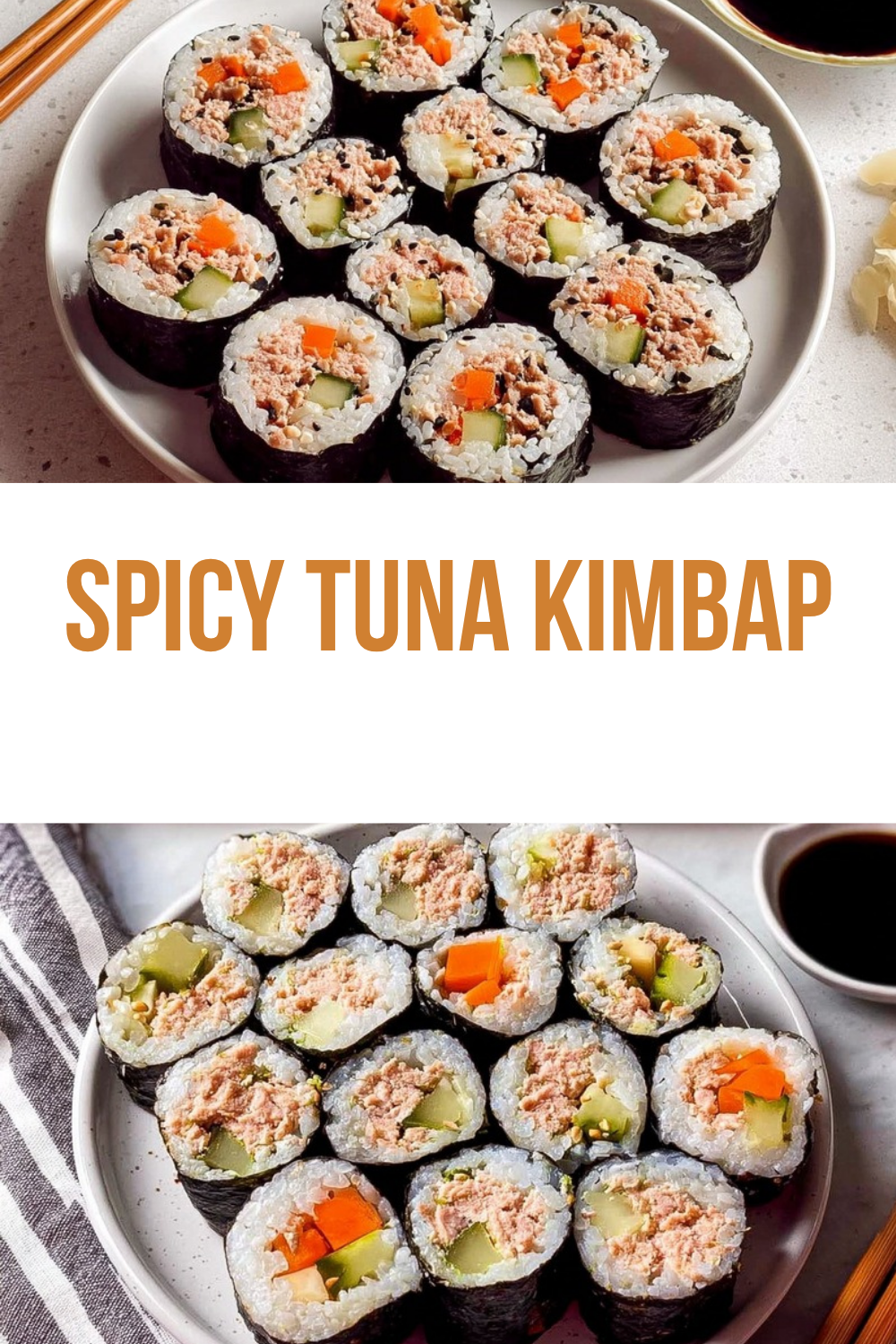
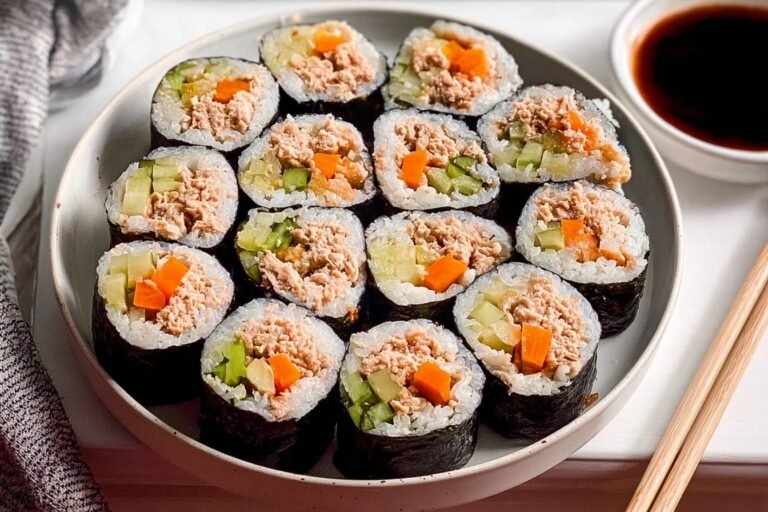
Spicy tuna kimbap is a Korean rice roll featuring seasoned short-grain rice wrapped in gim (dried seaweed) with a spicy tuna filling as the star. The tuna mix typically includes canned tuna flakes combined with gochujang (Korean chili paste), mayonnaise, sesame oil, and green onions for a creamy, spicy kick. Other common fillings add crunch and balance, like carrot strips, spinach, pickled radish, and tamagoyaki (sweet omelet). Slice it into bite-sized pieces for easy eating. Unlike sushi, it uses cooked ingredients and salt-sesame seasoned rice, not vinegar rice. It’s portable, making it ideal for lunches or snacks. Prep time is about 45 minutes for 3-4 rolls, serving 4 people. (92 words)
What’s the difference between spicy tuna kimbap and sushi?
Spicy tuna kimbap and sushi differ in origin, rice seasoning, and fillings. Kimbap is Korean, with rice mixed with salt, sesame oil, and seeds for a nutty taste; sushi is Japanese, using vinegar-seasoned rice that’s sweet and tangy. Kimbap fillings are cooked—like spicy tuna mayo mix, veggies, and egg—while sushi often has raw fish. Kimbap rolls are larger, sliced thicker, and eaten without chopsticks, sometimes with danmuji (pickled radish). No wasabi or soy dipping needed for kimbap. Both use seaweed, but kimbap’s is toasted gim. Try spicy tuna kimbap for a bolder, spicier flavor profile. (98 words)
Is spicy tuna kimbap healthy?
Yes, spicy tuna kimbap can be a balanced, nutritious meal covering proteins, carbs, veggies, and healthy fats. One roll (about 8 slices) provides around 300-400 calories, 15-20g protein from tuna, fiber from veggies like spinach and carrots, and omega-3s from sesame oil and tuna. Opt for low-sodium tuna and light mayo to keep it under 500mg sodium per serving. It’s healthier than fried kimbap varieties since the tuna is mixed, not battered. Pair with fresh fruit for a full lunch. Customize by adding more greens to boost vitamins A and C. Track portions to fit your diet goals. (102 words)
How do you store spicy tuna kimbap?
Store leftover spicy tuna kimbap in an airtight container in the fridge, where it lasts 1-2 days max due to the tuna and mayo. Wrap whole rolls tightly in plastic wrap first to prevent drying, then slice before eating. Avoid freezing, as rice gets mushy and tuna sauce separates upon thawing. For best texture, eat within hours of making. If prepping ahead, assemble rolls but keep tuna filling separate until rolling. Always check for off smells before eating—discard if spoiled. This keeps it safe and tasty. (85 words)
How do you eat leftover spicy tuna kimbap?
Let refrigerated spicy tuna kimbap sit at room temperature for 20-30 minutes to soften the rice, or microwave slices for 10-15 seconds per side on a microwave-safe plate—avoid overcooking to prevent sogginess. For a crispy upgrade, dip slices in beaten egg and pan-fry in a bit of oil over medium heat for 1-2 minutes per side until golden. Serve with kimchi or soy sauce for extra flavor. This revives the spicy tuna’s creaminess and nutty rice. Consume within 24-48 hours for peak taste and safety. (92 words)
Spicy Tuna Kimbap
🌶️ Protein-packed spicy tuna kimbap with fresh perilla—quick, portable Korean lunch delight.
🍙 Customizable heat in nutty sesame rice rolls; healthier homemade twist on takeout.
- Total Time: 40 minutes
- Yield: 3 rolls
Ingredients
– 3 sheets roasted seaweed (gim)
– 12 perilla leaves
– 2 to 2 1/2 cups cooked short-grain or medium-grain rice
– 2 teaspoons sesame oil
– 1/2 tablespoon roasted sesame seeds
– 1/4 teaspoon salt
– 1 can (150g) tuna, drained completely
– 2 scallions, chopped
– 1 1/2 tablespoons mayo (adjust to taste)
– 2 teaspoons gochujang (Korean red pepper paste, adjust to taste)
– 2 teaspoons gochugaru (Korean red pepper flakes, adjust to taste)
– 2 teaspoons sesame oil
– 1 teaspoon roasted sesame seeds
Instructions
1-Step 1: Prepare the Perilla Leaves Start by washing and patting dry the perilla leaves. This step is important because excess moisture can make your kimbap soggy. Set the cleaned leaves aside while you prepare the other components. If you cannot find perilla leaves at your local Asian market, red-leaf lettuce makes a decent substitute, though the flavor profile will be slightly different.
2-Step 2: Season the Rice In a medium bowl, combine 2 to 2 1/2 cups of cooked short-grain rice with 2 teaspoons sesame oil, 1/2 tablespoon roasted sesame seeds, and 1/4 teaspoon salt. Mix thoroughly but gently to avoid mashing the rice grains. The sesame oil and seeds give the rice its signature nutty flavor that defines authentic Korean kimbap. Allow the seasoned rice to cool to room temperature before using it to assemble the rolls. Warm rice can make the seaweed soggy and difficult to handle.
3-Step 3: Make the Spicy Tuna Filling Open the can of tuna and drain it completely. Press the tuna gently with a fork or your hands to remove as much liquid as possible. Place the drained tuna in a mixing bowl. Add the chopped scallions, 1 1/2 tablespoons mayo, 2 teaspoons gochujang, 2 teaspoons gochugaru, 2 teaspoons sesame oil, and 1 teaspoon roasted sesame seeds. Mix everything together until well combined and the tuna is evenly coated with the spicy, creamy sauce.
4-Step 4: Set Up Your Rolling Station Place a sheet of roasted seaweed shiny side down on a bamboo rolling mat (also called a sudare or makisu). If you don’t have a bamboo mat, you can use a piece of parchment paper or plastic wrap, though the mat gives you better control and tighter rolls.
5-Step 5: Spread the Rice Scoop about 3/4 cup of seasoned rice and spread it evenly over the seaweed, leaving 1 to 2 inches of empty space at the top edge. This bare section will help seal the roll. Use damp fingers to spread the rice smoothly and prevent it from sticking to your hands. Work quickly but carefully to keep the rice layer even and thin.
6-Step 6: Layer the Perilla Leaves Arrange about four perilla leaves across the center of the rice in a single layer. The leaves should slightly overlap but not bunch up. This creates a fresh, herbal barrier between the rice and the tuna filling.
7-Step 7: Add the Tuna Filling Spread the spicy tuna filling evenly on top of the perilla leaves. Use the back of a spoon to create an even layer that extends from one end of the roll to the other. Keep the filling compact and avoid overstuffing, which can make rolling difficult.
8-Step 8: Roll the Kimbap Lift the edge of the bamboo mat closest to you and fold it over the filling, tucking the seaweed edge under the filling gently. Apply light but firm pressure to shape the roll. Continue rolling forward, using the mat to keep the shape tight and even. When you reach the bare seaweed edge at the top, press gently to seal the roll.
9-Step 9: Brush with Sesame Oil Brush the outside of the finished roll with a small amount of sesame oil for a glossy finish and extra nutty aroma. This step also helps keep the seaweed from becoming too chewy.
10-Step 10: Slice and Serve Using a sharp knife, slice the roll into 1-inch bite-sized pieces. Wet the knife blade between cuts to prevent rice from sticking and ensure clean, neat slices. Wipe the knife with a damp cloth or dip it in water after every few cuts. Serve immediately for the best taste and texture.
Last Step:
Please leave a rating and comment letting us know how you liked this recipe! This helps our business to thrive and continue providing free, high-quality recipes for you.Notes
🍚 Short-grain rice ensures perfect sticky roll hold.
🔪 Wet knife between cuts prevents rice sticking.
🌿 Perilla leaves add authentic fresh flavor; sub lettuce if needed.
- Prep Time: 20 minutes
- Cook Time: 20 minutes
- Category: Lunch
- Method: Assembly
- Cuisine: Korean
- Diet: Pescatarian
Nutrition
- Serving Size: 1 roll
- Calories: 350 kcal
- Sugar: 5 g
- Sodium: 800 mg
- Fat: 15 g
- Saturated Fat: 3 g
- Unsaturated Fat: 11 g
- Trans Fat: 0 g
- Carbohydrates: 45 g
- Fiber: 2 g
- Protein: 18 g
- Cholesterol: 40 mg