Why You’ll Love This Chinese Roast Duck
There’s something truly magical about pulling a perfectly roasted duck from the oven. The glossy, mahogany-colored skin crackles as you carve it, revealing succulent, flavorful meat underneath. This Chinese roast duck recipe brings the authentic flavors of a Chinese barbecue restaurant right into your home kitchen, and trust me, it’s more achievable than you might think.
- Ease of preparation: While this recipe involves multiple steps spread across a day and a half, each individual step is straightforward and manageable. The active prep time totals about 2 hours, broken into smaller tasks that fit easily into your schedule. Most of the magic happens while the duck rests in your refrigerator overnight.
- Health benefits: Duck is a nutrient-dense protein packed with 50g of protein per serving. It’s rich in iron, B vitamins, and healthy monounsaturated and polyunsaturated fats. For a complete perspective on duck’s nutritional profile, check out these health benefits of duck meat.
- Versatility: This Chinese roast duck works beautifully as a showstopping centerpiece for special occasions, but leftovers freeze beautifully for up to 2 months and can transform into incredible soups, noodle dishes, or fried rice. After mastering this savory dish, you might even want to try your hand at a sweet peach cobbler for dessert!
- Distinctive flavor: The combination of five-spice powder, fermented bean curd, hoisin sauce, and aromatic spices creates layers of savory, sweet, and slightly funky flavors that penetrate deep into the meat. The vinegar and maltose bath gives the skin that signature glossy appearance and shatteringly crispy texture.
Jump to:
- Why You’ll Love This Chinese Roast Duck
- Essential Ingredients for Chinese Roast Duck
- Main Duck and Cavity Seasoning
- Cooked Marinade Ingredients
- Water and Vinegar Bath
- Special Dietary Options
- How to Prepare the Perfect Chinese Roast Duck: Step-by-Step Guide
- First Step: Prepare and Clean the Duck
- Second Step: Season the Cavity
- Third Step: Prepare the Cooked Marinade
- Fourth Step: Marinate and Seal the Duck
- Fifth Step: Inflate the Skin
- Sixth Step: Apply the Hot Water Bath
- Seventh Step: Apply the Vinegar Bath
- Eighth Step: Air-Dry Overnight
- Ninth Step: Roast to Perfection
- Final Step: Carve and Serve
- Dietary Substitutions to Customize Your Chinese Roast Duck
- Protein and Main Component Alternatives
- Vegetable, Sauce, and Seasoning Modifications
- Mastering Chinese Roast Duck: Advanced Tips and Variations
- Pro Tips
- Creative Variations
- Common Mistakes to Avoid
- Frequently Asked Questions About Chinese Roast Duck
- What’s the difference between Peking duck and Cantonese roast duck?
- What type of duck is best for making Chinese roast duck at home?
- What equipment do I need to make Chinese roast duck at home?
- How do you inflate and prepare the skin for Chinese roast duck?
- How do you serve and store leftover Chinese roast duck?
- Chinese Roast Duck
- Ingredients
- Instructions
- Last Step:
- Notes
- Nutrition
- Did you make this recipe?
Essential Ingredients for Chinese Roast Duck
Gathering the right ingredients is the first step toward achieving that authentic Chinese roast duck experience. Many of these items can be found at Asian grocery stores or ordered online. Let’s break down everything you’ll need.
Main Duck and Cavity Seasoning
- 1 duckling, about 5-6 pounds (2.5 kg) – The star of the show, providing tender meat and plenty of rendered fat for crispy skin
- 1½ tablespoons salt – Seasons the cavity and helps draw out moisture
- 2½ teaspoons five-spice powder – The quintessential Chinese spice blend with warm, aromatic notes of star anise, Sichuan peppercorns, fennel, cinnamon, and cloves
- 2 teaspoons sugar – Balances the savory elements and aids in browning
- 1 teaspoon sand ginger powder or galangal powder – Adds a unique, slightly floral ginger flavor that’s traditional in Cantonese cooking
- 2 tablespoons Shaoxing wine – Chinese rice wine that deglazes and adds depth of flavor to the cavity seasoning
Cooked Marinade Ingredients
- 2 tablespoons chee hou sauce – A thick, savory-sweet fermented bean paste
- 2 tablespoons warm water – Thins the marinade to the right consistency
- 1 tablespoon ground bean sauce – Adds umami depth
- 1 tablespoon hoisin sauce – Contributes sweetness and complexity
- 1 tablespoon oyster sauce – Provides rich, savory flavor
- 1 tablespoon red fermented bean curd (mix of solids and liquid) – The secret ingredient for authentic Cantonese flavor and color
- 2 teaspoons neutral oil (vegetable, canola, peanut, or avocado oil) – For sautéing aromatics
- 2 slices ginger (⅛-inch/3mm thick) – Fresh ginger adds bright, spicy notes
- 2 medium garlic cloves, sliced – Aromatic foundation
- 1 scallion (white and green parts cut into 2-inch/5 cm pieces and smashed) – Adds mild onion flavor
- 2 bay leaves – Herbal background note
- 2 star anise segments – Licorice-like sweetness
- 1 cinnamon stick, about 3 inches/7-8 cm broken into small pieces – Warm, sweet spice
- 1 piece orange peel, 2 inches/5 cm, broken into a few small pieces – Citrus brightness that cuts through richness
Water and Vinegar Bath
- 6 cups water – For the initial hot water bath
- 3 tablespoons red vinegar – Provides color and mild acidity
- 2 tablespoons maltose or corn syrup – Creates that glossy, lacquered finish on the skin
- 1½ teaspoons salt – For the vinegar bath
- ½ cup hot water for the roasting pan – Creates steam during roasting
Special Dietary Options
| Dietary Need | Substitution |
|---|---|
| Gluten-free | Replace Shaoxing wine with dry sherry, use tamari instead of any soy-based sauces, and verify that hoisin and oyster sauces are gluten-free certified |
| Low-sodium | Reduce salt by half in cavity seasoning and vinegar bath |
| Alcohol-free | Substitute Shaoxing wine with equal parts low-sodium chicken broth with a splash of rice vinegar |
How to Prepare the Perfect Chinese Roast Duck: Step-by-Step Guide
Now comes the fun part! Making Chinese roast duck is a labor of love, but following these steps carefully will reward you with restaurant-quality results. Many home cooks have shared their success stories with this technique on cooking forums and communities, proving that with patience, anyone can master this dish.
First Step: Prepare and Clean the Duck
Start by trimming excess fat from the duck cavity. Remove wing tips and feet if your duck came whole. Leave the neck attached for roasting and inflation, as this makes the skin separation process much easier. Remove any pinfeathers with tweezers, take out the internal organs (save the liver for another use if you like), and rinse the duck thoroughly inside and out. Pat it completely dry with paper towels.
Second Step: Season the Cavity
Mix the salt, five-spice powder, sugar, and sand ginger powder in a small bowl. Rub the duck cavity thoroughly with the Shaoxing wine first, then coat it evenly with your spice mixture. Make sure to get the seasoning into every nook and cranny of the cavity. Place the duck on a wire rack over a baking sheet and refrigerate it uncovered for 1 hour.
Third Step: Prepare the Cooked Marinade
While the duck chills, combine the chee hou sauce, warm water, ground bean sauce, hoisin sauce, oyster sauce, and red fermented bean curd in a bowl. In a small saucepan, heat the neutral oil over medium-low heat. Add the ginger slices and cook until fragrant, about 30 seconds. Add the garlic, scallion, bay leaves, star anise, cinnamon pieces, and orange peel, cooking briefly for another 30 seconds while stirring constantly.
Pour in your sauce mixture and bring it to a gentle simmer. Stir often and cook for about 2-3 minutes until the flavors meld together. Remove from heat and let it cool completely before using.
Fourth Step: Marinate and Seal the Duck
After the duck has chilled for 1 hour, pour the cooled marinade into the cavity. Rotate the duck to coat the inside evenly, being careful to keep the outside skin clean and dry. Now comes the crucial sealing step: weave a metal skewer through the skin flaps at the tail end to seal the cavity airtight. You can alternatively use butcher’s twine tied very tightly. This seal is essential for keeping the marinade inside during roasting.
Fifth Step: Inflate the Skin
Here’s the secret technique that separates good Chinese roast duck from great: carefully insert the tube from an electric air pump under the neck skin, between the skin and the meat. Pump air gently until the skin separates fully from the meat, like inflating a balloon. This step ensures even browning and maximum crispiness.
Once inflated, immediately seal the neck opening with kitchen string while maintaining the air pressure inside. Work quickly but carefully to avoid tearing the delicate skin.
Sixth Step: Apply the Hot Water Bath
Place your duck on a wire rack over a roasting pan. Ladle hot water evenly over the entire duck, then flip it over and repeat on the other side. This step tightens the skin and begins the rendering process. Set the duck aside and discard the water from the pan.
Seventh Step: Apply the Vinegar Bath
Heat 2 cups of water with the red vinegar, maltose (or corn syrup), and 1½ teaspoons salt until the salt completely dissolves. Ladle this hot vinegar mixture over the duck, starting with the breast side down. Flip and repeat with the breast side up. This vinegar bath gives the duck its signature deep color and glossy finish.
Eighth Step: Air-Dry Overnight
Let the duck air-dry at room temperature for 30 minutes after the vinegar bath. Then place it back on your sheet pan, breast side down, and refrigerate it uncovered overnight. This drying period is absolutely critical for achieving crispy skin, so resist any temptation to skip or shorten it.
Ninth Step: Roast to Perfection
Four hours before you plan to serve, remove the duck from the refrigerator and let it come to room temperature on the counter for 2 hours. Preheat your oven to 350°F (175°C). Place ½ cup hot water in the roasting pan.
Roast the duck breast side down for 25 minutes, then rotate the pan 180 degrees and roast for another 25 minutes. Flip the duck breast side up and roast for 20 minutes, rotate the pan 180 degrees again, and roast for a final 20 minutes. The total roasting time is about 1 hour 30 minutes.
Remove the duck from the oven and tent it loosely with foil. Let it rest for 20 minutes before carving.
Final Step: Carve and Serve
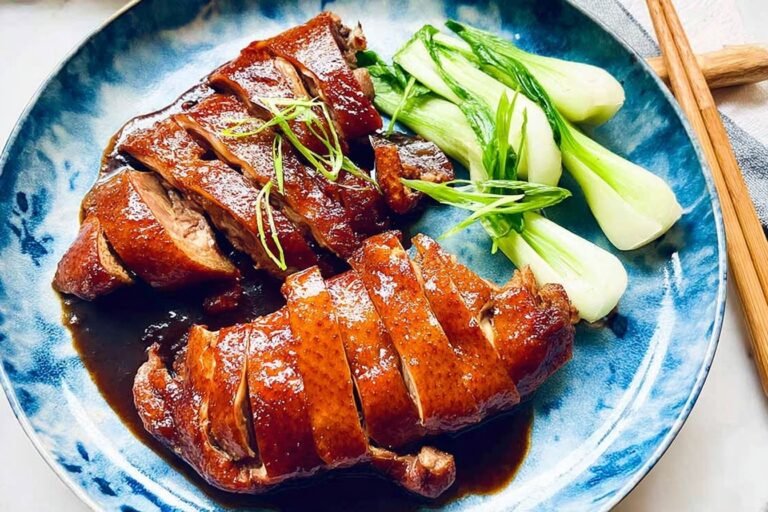
Remove the skewer sealing the cavity. Pour the fat and juices through a fine strainer into a bowl and reserve the fat for another use. To carve, halve the duck lengthwise, remove the backbone, separate the wings and leg quarters, then chop the remaining meat into bite-sized pieces. Serve immediately with the reserved pan sauce.

Dietary Substitutions to Customize Your Chinese Roast Duck
While this Chinese roast duck recipe is already quite specialized, there are ways to adapt it based on ingredient availability or dietary preferences.
Protein and Main Component Alternatives
Though duck is irreplaceable for authentic results, you can apply similar techniques to other poultry. A whole chicken (4-5 pounds) can work with the same marinade and cooking method, though you’ll need to reduce cooking time to about 1 hour total. For a smaller portion, use duck legs or duck breast, adjusting roasting times accordingly.
Vegetable, Sauce, and Seasoning Modifications
If you cannot find certain specialty sauces, here are some workable substitutions:
- Chee hou sauce: Substitute with equal parts hoisin sauce mixed with a teaspoon of miso paste
- Ground bean sauce: Use miso paste with a pinch of five-spice powder
- Red fermented bean curd: This is harder to substitute, but you can use 1 tablespoon of miso mixed with 1 teaspoon of rice vinegar for a similar fermented funk
- Sand ginger powder: Regular ginger powder works fine, though the flavor will be slightly different
- Maltose: Honey creates a similar glossy finish, though it may brown more quickly
For spice modifications, feel free to adjust the five-spice powder based on your preference. Some home cooks add extra star anise or cinnamon for a more pronounced warm spice flavor.
Mastering Chinese Roast Duck: Advanced Tips and Variations
Ready to take your Chinese roast duck to the next level? Here are some pro tips and creative variations to help you perfect this impressive dish.
Pro Tips
- Choose the plumpest duck available for the best meat yield. A well-fattened duck will render beautifully and produce crispier skin. Ask your butcher for a duck with the skin intact and the neck still attached.
- Invest in an electric air pump and plastic tubing. This small investment makes the skin inflation process so much easier and gives you that restaurant-quality separation between skin and meat. The results are worth every penny.
- Save every drop of rendered duck fat. Strain it through a fine-mesh sieve and store it in the refrigerator for up to 6 months. Duck fat is culinary gold for roasting potatoes, cooking eggs, or making the most incredible savory dishes you can dream up.
Creative Variations
- Tea-smoked duck: Add ¼ cup loose black tea, ¼ cup rice, and 2 tablespoons brown sugar to a foil packet. Place this under the duck during the last 15 minutes of roasting for a subtle, aromatic smokiness.
- Five-spice and honey glaze: Brush the duck with a mixture of 2 tablespoons honey and ½ teaspoon five-spice powder during the final 10 minutes of roasting for extra gloss and a slightly sweeter finish.
Common Mistakes to Avoid
- Under-drying the skin: Skipping or shortening the overnight drying period leads to soggy, rubbery skin. That 12-24 hour drying time in the refrigerator is absolutely essential for crispy results.
- Not bringing the duck to room temperature before roasting: Cold duck going into a hot oven results in uneven cooking. Always let it sit on the counter for 2 hours before roasting.
- Sealing the cavity too loosely: If air escapes from the cavity during roasting, the skin won’t puff properly. Take your time weaving that skewer or tying the twine very tightly.
Frequently Asked Questions About Chinese Roast Duck
What’s the difference between Peking duck and Cantonese roast duck?
Peking duck focuses on ultra-crispy skin with little seasoning on the meat, achieved by inflating the skin, scalding, and air-drying before roasting. It’s sliced tableside and wrapped in thin pancakes with hoisin sauce, cucumber, and scallions for a delicate, skin-first experience. Cantonese roast duck, by contrast, packs bold flavors from multiple marinades including five-spice powder, garlic, ginger, and fermented bean curd. The meat is more seasoned, the skin still crispy but lacquered glossy from maltose or honey glazes. Both use Pekin ducks, but Cantonese versions roast at slightly lower temperatures for juicier results. At home, Peking requires precise skin separation; Cantonese emphasizes marinade penetration. Expect Peking to take 24+ hours prep for skin perfection, while Cantonese can be ready in less time with overnight drying. This distinction helps choose based on your flavor preference—light and crisp or savory and spiced.
What type of duck is best for making Chinese roast duck at home?
Pekin duck (also called Long Island or American Pekin) is the top choice for authentic Chinese roast duck. It has the ideal size (4-5 pounds), tender meat, and thick fat layer that renders into crispy skin without toughness. Force-fed ducks from farms yield even better results due to higher fat content, mimicking restaurant quality. Avoid Muscovy (too gamey) or wild ducks (lean and stringy). Buy whole, fresh ducks with head-on if possible for traditional inflation, but headless works fine— just seal the neck tightly. Trim excess fat from the cavity and remove innards thoroughly. Source from Asian markets or specialty butchers for the best flavor profile. One 5-pound Pekin serves 4-6 people generously. Pro tip: Pat dry immediately after purchase and refrigerate uncovered to start air-drying early for superior crispiness.
What equipment do I need to make Chinese roast duck at home?
Essential tools include a small electric air pump with a plastic tube (for inflating skin from the neck cavity), sturdy bamboo or metal skewers (to seal cavities airtight), and tweezers or pliers (for pin feathers). A wire rack over a foil-lined baking sheet catches drippings during roasting and air-drying. You’ll also need a large pot for scalding baths with vinegar and maltose. Optional but helpful: a meat hook for hanging during drying, digital thermometer for perfect doneness (thigh at 165°F), and cleaver for carving. No rotisserie needed—an oven at 375°F initially, then 325°F works. Total cost for basics: under $30 if you have kitchen staples. These items ensure skin puffs crisply and meat stays juicy, replicating pro results without fancy gear. Clean everything post-use to avoid odors.
How do you inflate and prepare the skin for Chinese roast duck?
Start by inserting a plastic tube from an electric air pump into the neck cavity between skin and meat—pump air gently for 1-2 minutes until skin balloons away from the flesh, like inflating a balloon. This prevents sticking and crisps evenly. Seal neck and tail with skewers. Clean and trim duck, season cavity with salt, ginger, and Shaoxing wine. Brush with boiled marinade (soy, honey, five-spice, maltose), seal airtight, then scald in boiling water with vinegar twice for tightening. Air-dry uncovered in fridge overnight (12-24 hours) for mahogany color and dry skin. Next day, roast breast-up at 375°F for 30 minutes, flip, baste, and continue at 325°F for 1-1.5 hours until skin crackles. Rest 15 minutes before carving. This process yields glossy, shatteringly crisp skin—key to authenticity. Common mistake: under-drying leads to soggy results.
How do you serve and store leftover Chinese roast duck?
Carve into bite-sized pieces, separating skin, meat, and bones. Serve Cantonese-style with steamed rice, blanched greens like bok choy, and reserved pan sauce reduced with duck juices, soy, and cornstarch for gloss. Pair with pickled radish or cucumber for contrast. For Peking vibes, wrap skin and meat in pancakes with hoisin, though Cantonese shines simply. One duck feeds 4-6. Refrigerate leftovers in airtight containers up to 3 days—reheat skin-side up at 350°F for crispness or steam meat. Freeze bones and meat up to 2 months for congee, noodle soup, or fried rice. Avoid microwaving to prevent chewiness. Tip: Use fat drippings for stir-fries. Fresh is best within hours, but proper storage maintains flavor—restaurants repurpose scraps this way too. Experiment with leftovers to stretch value.
Chinese Roast Duck
🦆 Experience the ultimate indulgence with crispy, golden skin and juicy, tender meat that falls off the bone.
🏮 Perfect for special occasions, this authentic Chinese roast duck will wow your guests with restaurant-quality flavors at home.
- Total Time: 1 day 6 hours
- Yield: 4 servings
Ingredients
– 1 duckling, about 5-6 pounds (2.5 kg)
– 1½ tablespoons salt
– 2½ teaspoons five-spice powder
– 2 teaspoons sugar
– 1 teaspoon sand ginger powder or galangal powder
– 2 tablespoons Shaoxing wine
– 2 tablespoons chee hou sauce
– 2 tablespoons warm water
– 1 tablespoon ground bean sauce
– 1 tablespoon hoisin sauce
– 1 tablespoon oyster sauce
– 1 tablespoon red fermented bean curd (mix of solids and liquid)
– 2 teaspoons neutral oil (vegetable, canola, peanut, or avocado oil)
– 2 slices ginger (⅛-inch/3mm thick)
– 2 medium garlic cloves, sliced
– 1 scallion (white and green parts cut into 2-inch/5 cm pieces and smashed)
– 2 bay leaves
– 2 star anise segments
– 1 cinnamon stick, about 3 inches/7-8 cm broken into small pieces
– 1 piece orange peel, 2 inches/5 cm, broken into a few small pieces
– 6 cups water
– 3 tablespoons red vinegar
– 2 tablespoons maltose or corn syrup
– 1½ teaspoons salt
– ½ cup hot water for the roasting pan
Instructions
1-First Step: Prepare and Clean the Duck Start by trimming excess fat from the duck cavity. Remove wing tips and feet if your duck came whole. Leave the neck attached for roasting and inflation, as this makes the skin separation process much easier. Remove any pinfeathers with tweezers, take out the internal organs (save the liver for another use if you like), and rinse the duck thoroughly inside and out. Pat it completely dry with paper towels.
2-Second Step: Season the Cavity Mix the salt, five-spice powder, sugar, and sand ginger powder in a small bowl. Rub the duck cavity thoroughly with the Shaoxing wine first, then coat it evenly with your spice mixture. Make sure to get the seasoning into every nook and cranny of the cavity. Place the duck on a wire rack over a baking sheet and refrigerate it uncovered for 1 hour.
3-Third Step: Prepare the Cooked Marinade While the duck chills, combine the chee hou sauce, warm water, ground bean sauce, hoisin sauce, oyster sauce, and red fermented bean curd in a bowl. In a small saucepan, heat the neutral oil over medium-low heat. Add the ginger slices and cook until fragrant, about 30 seconds. Add the garlic, scallion, bay leaves, star anise, cinnamon pieces, and orange peel, cooking briefly for another 30 seconds while stirring constantly. Pour in your sauce mixture and bring it to a gentle simmer. Stir often and cook for about 2-3 minutes until the flavors meld together. Remove from heat and let it cool completely before using.
4-Fourth Step: Marinate and Seal the Duck After the duck has chilled for 1 hour, pour the cooled marinade into the cavity. Rotate the duck to coat the inside evenly, being careful to keep the outside skin clean and dry. Now comes the crucial sealing step: weave a metal skewer through the skin flaps at the tail end to seal the cavity airtight. You can alternatively use butcher’s twine tied very tightly. This seal is essential for keeping the marinade inside during roasting.
5-Fifth Step: Inflate the Skin Here’s the secret technique that separates good Chinese roast duck from great: carefully insert the tube from an electric air pump under the neck skin, between the skin and the meat. Pump air gently until the skin separates fully from the meat, like inflating a balloon. This step ensures even browning and maximum crispiness. Once inflated, immediately seal the neck opening with kitchen string while maintaining the air pressure inside. Work quickly but carefully to avoid tearing the delicate skin.
6-Sixth Step: Apply the Hot Water Bath Place your duck on a wire rack over a roasting pan. Ladle hot water evenly over the entire duck, then flip it over and repeat on the other side. This step tightens the skin and begins the rendering process. Set the duck aside and discard the water from the pan.
7-Seventh Step: Apply the Vinegar Bath Heat 2 cups of water with the red vinegar, maltose (or corn syrup), and 1½ teaspoons salt until the salt completely dissolves. Ladle this hot vinegar mixture over the duck, starting with the breast side down. Flip and repeat with the breast side up. This vinegar bath gives the duck its signature deep color and glossy finish.
8-Eighth Step: Air-Dry Overnight Let the duck air-dry at room temperature for 30 minutes after the vinegar bath. Then place it back on your sheet pan, breast side down, and refrigerate it uncovered overnight. This drying period is absolutely critical for achieving crispy skin, so resist any temptation to skip or shorten it.
9-Ninth Step: Roast to Perfection Four hours before you plan to serve, remove the duck from the refrigerator and let it come to room temperature on the counter for 2 hours. Preheat your oven to 350°F (175°C). Place ½ cup hot water in the roasting pan. Roast the duck breast side down for 25 minutes, then rotate the pan 180 degrees and roast for another 25 minutes. Flip the duck breast side up and roast for 20 minutes, rotate the pan 180 degrees again, and roast for a final 20 minutes. The total roasting time is about 1 hour 30 minutes. Remove the duck from the oven and tent it loosely with foil. Let it rest for 20 minutes before carving.
10-Final Step: Carve and Serve Remove the skewer sealing the cavity. Pour the fat and juices through a fine strainer into a bowl and reserve the fat for another use. To carve, halve the duck lengthwise, remove the backbone, separate the wings and leg quarters, then chop the remaining meat into bite-sized pieces. Serve immediately with the reserved pan sauce.
Last Step:
Please leave a rating and comment letting us know how you liked this recipe! This helps our business to thrive and continue providing free, high-quality recipes for you.Notes
🦆 Choose the plumpest duck for the best meat yield.
🫁 Use an electric air pump and plastic tubing to inflate the skin away from the meat for even roasting.
❄️ Air-dry the duck uncovered overnight to ensure perfectly crispy skin.
- Prep Time: 2 hours
- Marinate and Air-Dry: Overnight
- Cook Time: 1 hour 30 minutes
- Category: Poultry
- Method: Roasting
- Cuisine: Chinese
Nutrition
- Serving Size: 1 serving
- Calories: 455 kcal
- Sugar: 4 g
- Sodium: 2752 mg
- Fat: 23 g
- Saturated Fat: 6 g
- Unsaturated Fat: 15 g
- Trans Fat: 0.01 g
- Carbohydrates: 8 g
- Fiber: 1 g
- Protein: 50 g
- Cholesterol: 208 mg