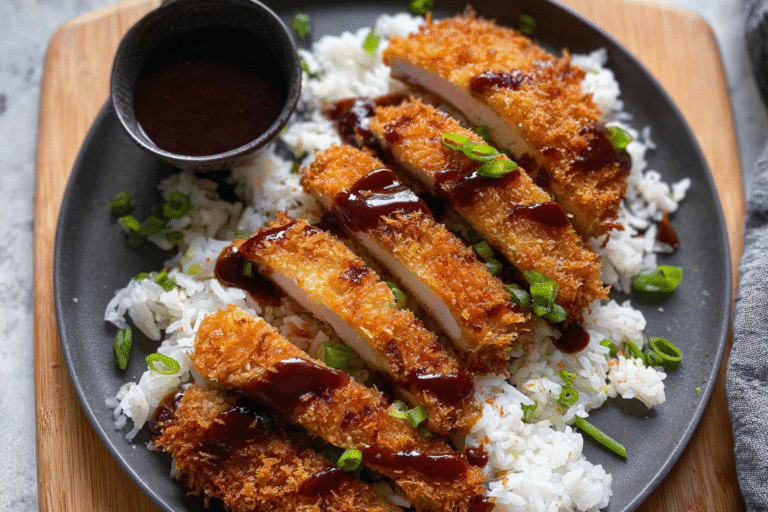
Ingredients
– 2 boneless pork loin chops (about 1-inch thick) – Provides the base protein, ensuring juicy and tender meat when cooked
– 1 cup of panko breadcrumbs – Creates the extra crispy coating that defines this pork katsu dish
– 1/2 cup of all-purpose flour – Helps the coating adhere to the pork for even frying
– 1 large egg (beaten) – Acts as a binder to hold the breadcrumbs in place
– 1 teaspoon of salt – Seasons the pork, enhancing its natural flavors
– 1/2 teaspoon of black pepper – Adds a subtle kick and depth to the overall taste
– 2 cups of vegetable oil (for frying) – Delivers the high heat needed for a golden, crunchy exterior
Instructions
1-Gathering Your Tools and Ingredients: Start by organizing your kitchen to make the process smooth, just like setting up for any pork katsu adventure. Lay out a cutting board, a meat mallet, bowls for dredging, and a deep frying pan. This step ensures everything is ready, helping beginners avoid confusion and keep the recipe flowing easily.
2-Prepping the Pork: First step: Take your 2 boneless pork loin chops and pound them gently with a meat mallet to about 1/2-inch thick. This tenderizes the meat and makes it cook evenly, a key part of achieving that juicy pork katsu texture.
3-Prepping the Pork: Second step: Season both sides of the pork with 1 teaspoon of salt and 1/2 teaspoon of black pepper. Let it sit for 5 minutes to absorb the flavors, adapting this for diet-conscious readers by using low-sodium salt if needed.
4-Prepping the Pork: Third step: Set up three bowls: one with 1/2 cup of flour, one with 1 beaten egg, and one with 1 cup of panko breadcrumbs. For those with gluten sensitivities, swap the flour as mentioned earlier to keep this versatile.
5-Coating and Frying: Fourth step: Dip each seasoned pork chop first into the flour, shaking off excess, then into the beaten egg, and finally into the panko, pressing gently to coat evenly. This method builds the crispy layer that makes pork katsu irresistible and can be adjusted for a lighter version with an oven bake. For a fun variation, check out our strawberry milkshake recipe for pairing ideas that add a sweet contrast.
6-Coating and Frying: Fifth step: Heat 2 cups of vegetable oil in a deep pan to 350 degrees Fahrenheit. Carefully add the coated pork and fry for 3-4 minutes per side until golden brown. Monitor the temperature to prevent overcooking, which helps maintain nutritional benefits for health-focused eaters.
7-Coating and Frying: Sixth step: Remove the pork katsu from the oil and let it drain on a wire rack for 5 minutes. This allows excess oil to drip off, making it lighter and more appealing to busy parents or working professionals.
8-Serving and Finishing Touches: Final step: Slice the pork into strips and serve with shredded cabbage, rice, and tonkatsu sauce. Add a squeeze of lemon for extra zest, and consider external resources like The Art of Tonkatsu for more cultural insights. This completes your pork katsu, ready in about 30 minutes total, perfect for various dietary preferences.
Last Step:
Please leave a rating and comment letting us know how you liked this recipe! This helps our business to thrive and continue providing free, high-quality recipes for you.Notes
🔪 Let the pounded cutlets rest for 10 minutes before breading – this helps the coating stick better
🌡️ Maintain oil temperature at 350°F for the crispiest results – too hot burns, too cool makes it oily
🍋 Serve immediately after frying to maintain maximum crispiness
- Prep Time: 20 minutes
- Resting Time: 10 minutes
- Cook Time: 15 minutes
- Category: Main Course
- Method: Frying
- Cuisine: Japanese
- Diet: Non-Vegetarian
Nutrition
- Serving Size: 1 pork cutlet
- Calories: 450
- Sugar: 2g
- Sodium: 600mg
- Fat: 22g
- Saturated Fat: 5g
- Unsaturated Fat: 14g
- Trans Fat: 0g
- Carbohydrates: 28g
- Fiber: 1g
- Protein: 32g
- Cholesterol: 120mg