Ingredients
– 1/4 cup cooked rice
– 1/4 teaspoon sesame oil
– Salt to taste
– 1/4 teaspoon sesame seeds (optional)
– 1 seaweed sheet (gim/nori)
– 2 thin slices canned luncheon meat
– 2 tablespoons canned tuna (liquid pressed out)
– 1 fried egg (no runny yolk)
– Cheese slice
– Fish cake (eomuk)
– Fried tofu
– 1 lettuce leaf
– 1/2 small cucumber, carrot, or other vegetables
Instructions
1-Step 1: Prepare the Seasoned Rice Start by preparing your rice foundation. Take 1/4 cup of warm cooked rice and transfer it to a small bowl. Add 1/4 teaspoon of sesame oil and salt to taste. If you’re using sesame seeds, add 1/4 teaspoon now. Gently mix everything together using a folding motion rather than mashing this keeps the rice grains intact and creates a better texture. The rice should be warm but not hot when you season it. Warm rice absorbs the sesame oil more evenly and is easier to spread. If you’re using leftover refrigerated rice, microwave it for 15-20 seconds with a sprinkle of water to soften it before seasoning.
2-Step 2: Prepare Your Protein While the rice cools slightly, prepare your chosen protein. Each option requires different handling:* Canned luncheon meat: Cut 2 thin slices and pan-fry them over medium heat for 1-2 minutes per side until lightly browned and crispy on the edges. Set aside on paper towels to drain excess oil.* Canned tuna: Place 2 tablespoons of tuna in a fine-mesh strainer or between paper towels. Press firmly to remove all liquid. Dry tuna is essential to prevent soggy kimbap.* Fried egg: Crack an egg into a lightly oiled pan over medium-low heat. Cook until the whites are set and the yolk is fully cooked through no runny yolks for this recipe. For a neat fit, you can use a square mold or trim the egg after cooking.* Fried tofu: Press firm tofu to remove excess water, slice into thin pieces, and pan-fry in a little oil until golden brown on both sides.
3-Step 3: Prepare the Vegetables Vegetable preparation is crucial for the structural integrity of your folded kimbap. Clean, pat dry, and slice your vegetables carefully. For the best results:* Wash 1 lettuce leaf and pat it completely dry with paper towels. Excess moisture is the enemy of crispy kimbap.* Take 1/2 small cucumber or carrot and thinly slice, shave, or julienne. The thinner your cuts, the easier the kimbap will fold.* If you’re using perilla leaves, wash and dry them thoroughly.* For added flavor, you can lightly sauté carrots or other hard vegetables, but this isn’t necessary.* If including kimchi, squeeze out all liquid and optionally sauté it briefly to intensify the flavor.
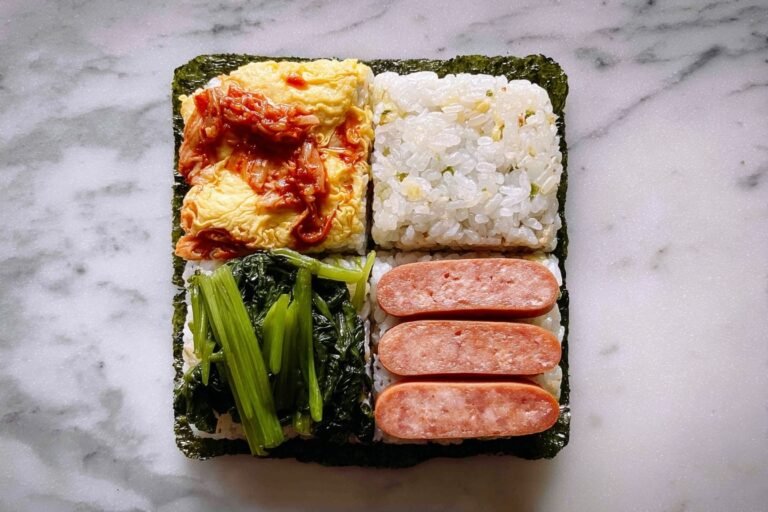
4-Step 4: Set Up Your Assembly Station Clear a clean, flat workspace. Lay your seaweed sheet shiny side down with the shorter side facing you. This orientation is important for the proper fold. Using clean scissors or a sharp knife, cut a slit halfway from the center of one short side toward the middle. The cut should go from the edge to the center point, creating four distinct quadrants that will allow you to fold the kimbap into its signature triangle shape. Think of the seaweed sheet as a clock face. The slit runs from the 6 o’clock position to the center point. This single cut is what makes the folding technique possible.
5-Step 5: Fill Each Quadrant Now comes the fun part assembling your kimbap. You’ll place different ingredients on each of the four quadrants created by your slit:* Bottom left quadrant: Spread your seasoned rice evenly across this section. The rice should be in a thin layer, not a thick mound. Press it gently to help it adhere to the seaweed.* Top left quadrant: Place your protein of choice here. Whether it’s luncheon meat, tuna, egg, or tofu, arrange it neatly without overloading.* Top right quadrant: Add your vegetables here. Layer the lettuce leaf first, then add cucumber or carrot on top. Keep portions reasonable.* Bottom right quadrant: This can hold cheese, additional vegetables, or a second protein. Get creative with this section!
6-Step 6: Master the Fold The folding sequence is where the magic happens. Follow these steps carefully:1. Fold the bottom left quadrant (rice) onto the top left quadrant (protein). Lift the corner of the seaweed and fold it upward, bringing the rice on top of your protein. Press gently to help the rice act as glue.2. Fold this combined section onto the top right quadrant (vegetables). Continue the folding motion to the right, bringing the rice and protein stack onto the vegetables. Press again to seal.3. Complete the fold by bringing everything onto the bottom right quadrant. Make the final fold downward, creating a compact triangle or square package. Press firmly but gently, tucking in any ingredients that might escape. The rice should now be in the center, with all other ingredients layered around it. The seaweed edges should seal together, held by the moisture from the rice.
7-Step 7: Final Touches and Serving Your folded kimbap is now complete! For the best eating experience:* Let it rest for 1-2 minutes before eating. This allows the seaweed to soften slightly and the flavors to meld.* Cut it in half diagonally to show off the beautiful layers inside perfect for photos!* Serve immediately for the crispiest seaweed texture.* If packing for later, wrap individually in plastic wrap or foil to maintain freshness.
Last Step:
Please leave a rating and comment letting us know how you liked this recipe! This helps our business to thrive and continue providing free, high-quality recipes for you.Notes
💧 Squeeze liquids from tuna/kimchi, pat veggies dry to avoid sogginess.
📏 Avoid overloading quarters; position small items near rice.
🔪 Cut seaweed precisely for perfect origami folds.
- Prep Time: 10 minutes
- Cook Time: 5 minutes
- Category: Lunch
- Method: Assembly
- Cuisine: Korean
Nutrition
- Serving Size: 1 kimbap
- Calories: 350 kcal
- Sugar: 3 g
- Sodium: 900 mg
- Fat: 15 g
- Saturated Fat: 4 g
- Unsaturated Fat: 10 g
- Trans Fat: 0 g
- Carbohydrates: 45 g
- Fiber: 3 g
- Protein: 15 g
- Cholesterol: 200 mg