Why You’ll Love Thai Basil Pesto
Thai Basil Pesto is one of those quick recipes that brings big flavor with very little effort. It is fresh, spicy, and bright, and it works well for busy nights when you want something homemade without spending hours in the kitchen. With a prep time of just 15 minutes, this is a fast sauce that can fit into almost any routine.
- Easy to make: Thai Basil Pesto comes together in a mini food processor or with a mortar and pestle. You wash the herbs, add the ingredients, blend, and you are done. That makes it a great pick for home cooks, students, and working professionals.
- Good for everyday meals: This pesto adds healthy fats from nuts and oil, plus vitamin-rich basil, garlic, and lime. According to the health benefits of basil, basil brings helpful plant compounds and a fresh flavor that works well in simple meals.
- Flexible for many diets: You can make Thai Basil Pesto with olive oil, sesame oil, canola, or grapeseed oil. You can also use soy sauce or tamari instead of sea salt, and you can keep it nut-forward with cashews, peanuts, or both.
- Bold flavor in every bite: The mix of Thai basil, garlic, chili flakes, lime juice, rice wine vinegar, and roasted nuts gives this sauce a punchy taste that stands apart from classic pesto. It is savory, a little spicy, and deeply aromatic.
Thai Basil Pesto is a small-batch sauce that can change the way you make noodles, rice bowls, sandwiches, and grilled vegetables.
If you enjoy easy sauces that bring personality to the table, this one is a smart choice. It feels special, but it stays simple enough for everyday cooking.
Jump to:
- Why You’ll Love Thai Basil Pesto
- Essential Ingredients for Thai Basil Pesto
- Simple substitutions that still taste great
- Diet-friendly options
- How to Prepare the Perfect Thai Basil Pesto: Step-by-Step Guide
- First Step: wash and prep the basil
- Second Step: load the food processor
- Third Step: blend into a paste
- Fourth Step: taste and adjust
- Final Step: store or serve
- Dietary Substitutions to Customize Your Thai Basil Pesto
- Protein and main ingredient alternatives
- Vegetable, sauce, and seasoning modifications
- Mastering Thai Basil Pesto: Advanced Tips and Variations
- Pro cooking techniques
- Flavor variations
- Presentation tips
- Make-ahead options
- How to Store Thai Basil Pesto: Best Practices
- FAQs: Frequently Asked Questions About Thai Basil Pesto
- What is Thai basil pesto?
- What’s the difference between Thai basil and regular basil?
- How do you make Thai basil pesto at home?
- Can I substitute regular basil for Thai basil in pesto?
- How long does Thai basil pesto last and how do you store it?
- Thai Basil Pesto
- Ingredients
- Instructions
- Last Step:
- Notes
- Nutrition
- Did you make this recipe?
Essential Ingredients for Thai Basil Pesto
Here is the full ingredient list for Thai Basil Pesto, written in a clear, structured way so you can prep without missing anything.
- 2 cups Thai basil leaves packed, washed, and dried. This is the heart of the recipe and gives the pesto its bold, peppery, slightly sweet flavor.
- 2 tablespoons cashew nuts roasted and unsalted. Cashews add creaminess and help the pesto blend into a smooth paste.
- 2 tablespoons peanuts roasted and unsalted. Peanuts bring a deeper nutty taste and help make the sauce richer.
- 2 garlic cloves crushed. Garlic adds sharp flavor and balances the herbs and nuts.
- 1/2 teaspoon chili flakes. This adds gentle heat, and you can add more if you like a spicier finish.
- 60 ml olive oil or sesame oil. Oil helps everything blend and gives the pesto a silky texture.
- 1/2 teaspoon sea salt or 1 teaspoon soy sauce or tamari. This seasons the pesto and gives it savory depth.
- 1 teaspoon rice wine vinegar. A little acidity keeps the flavor bright and balanced.
- 1 teaspoon caster sugar. Sugar softens the sharp edges and rounds out the flavor.
- Juice from 1/2 lime, to taste. Lime brings freshness and a lively citrus finish.
Simple substitutions that still taste great
- Top up Thai basil with Italian basil if you do not have quite enough Thai basil leaves.
- Use only cashews or only peanuts if you want to simplify the recipe.
- Choose mild oils like canola or grapeseed if you prefer a softer flavor.
- Swap sea salt for soy sauce or tamari for a deeper savory note.
Diet-friendly options
- Vegan: This Thai Basil Pesto is already plant-based, so no extra changes are needed.
- Gluten-free: Use tamari instead of regular soy sauce if needed.
- Low-calorie: Use a little less oil and serve the pesto in smaller spoonfuls over vegetables or grains.
Cashews add a creamy texture while peanuts bring a warm, roasted taste. For more nut facts, see this guide to cashews.
Nutritional information per recipe: 794 kcal, Carbohydrates 17g, Protein 11g, Fat 79g, Saturated Fat 11g, Polyunsaturated Fat 12g, Monounsaturated Fat 53g, Sodium 1190mg, Potassium 467mg, Fiber 4g, Sugar 5g, Vitamin A 2829IU, Vitamin C 11mg, Calcium 129mg, Iron 4mg.
| Prep Time | Storage | Best Uses |
|---|---|---|
| 15 minutes total | Fridge up to 1 week or freezer up to 4 months | Pasta, noodles, rice bowls, grilled meats, vegetables, sandwiches, dips |
How to Prepare the Perfect Thai Basil Pesto: Step-by-Step Guide
First Step: wash and prep the basil
Start by washing and drying the Thai basil leaves well. Pick the leaves from the stems, since the stems can make the pesto a little fibrous. You want the basil as dry as possible so the sauce blends smoothly and stays bright green. This small prep step matters because too much water can thin the pesto and dull the flavor.
If you are short on Thai basil, top it up with Italian basil. That gives you enough volume while keeping the recipe practical for home cooks who may not find Thai basil at every store. A mix of both still tastes great, and it keeps the process simple for busy parents and students.
Second Step: load the food processor
Place the basil leaves into a mini food processor bowl. Add the roasted cashews, roasted peanuts, crushed garlic, chili flakes, oil, sea salt or soy sauce, rice wine vinegar, caster sugar, and lime juice. This recipe works best when everything goes in together, because the nuts and oil help the herbs break down into a smooth paste.
If you prefer a softer flavor, use olive oil or a mild oil like canola or grapeseed. If you want a deeper nutty note, sesame oil is a nice choice. For a gluten-free version, choose tamari instead of regular soy sauce. That small swap keeps the sauce safe for more people without changing the method.
Third Step: blend into a paste
Blend the mixture until it turns into a thick paste. Stop and scrape down the sides as needed so everything mixes evenly. A mini processor works well here because the batch is small and the blades can catch the basil more easily.
If you like a looser pesto, you can add a little extra oil. If you want a thicker spread for toast or sandwiches, keep the texture a bit more rustic. Either way, the goal is a sauce that looks green, smells fresh, and has a balanced kick from garlic, chili, and lime.
Fourth Step: taste and adjust
Taste the Thai Basil Pesto after blending. Add more lime juice if you want extra brightness. If the sauce tastes flat, a pinch more salt or a splash more soy sauce or tamari can help. If you want more heat, increase the chili flakes to 3/4 teaspoon or more.
This is the stage where you can shape the pesto to fit your meal. For noodle bowls, a sharper lime taste works well. For sandwiches and grilled vegetables, a slightly richer and smoother version may be better. The recipe gives you a base, but you can make the final flavor match your table.
Final Step: store or serve
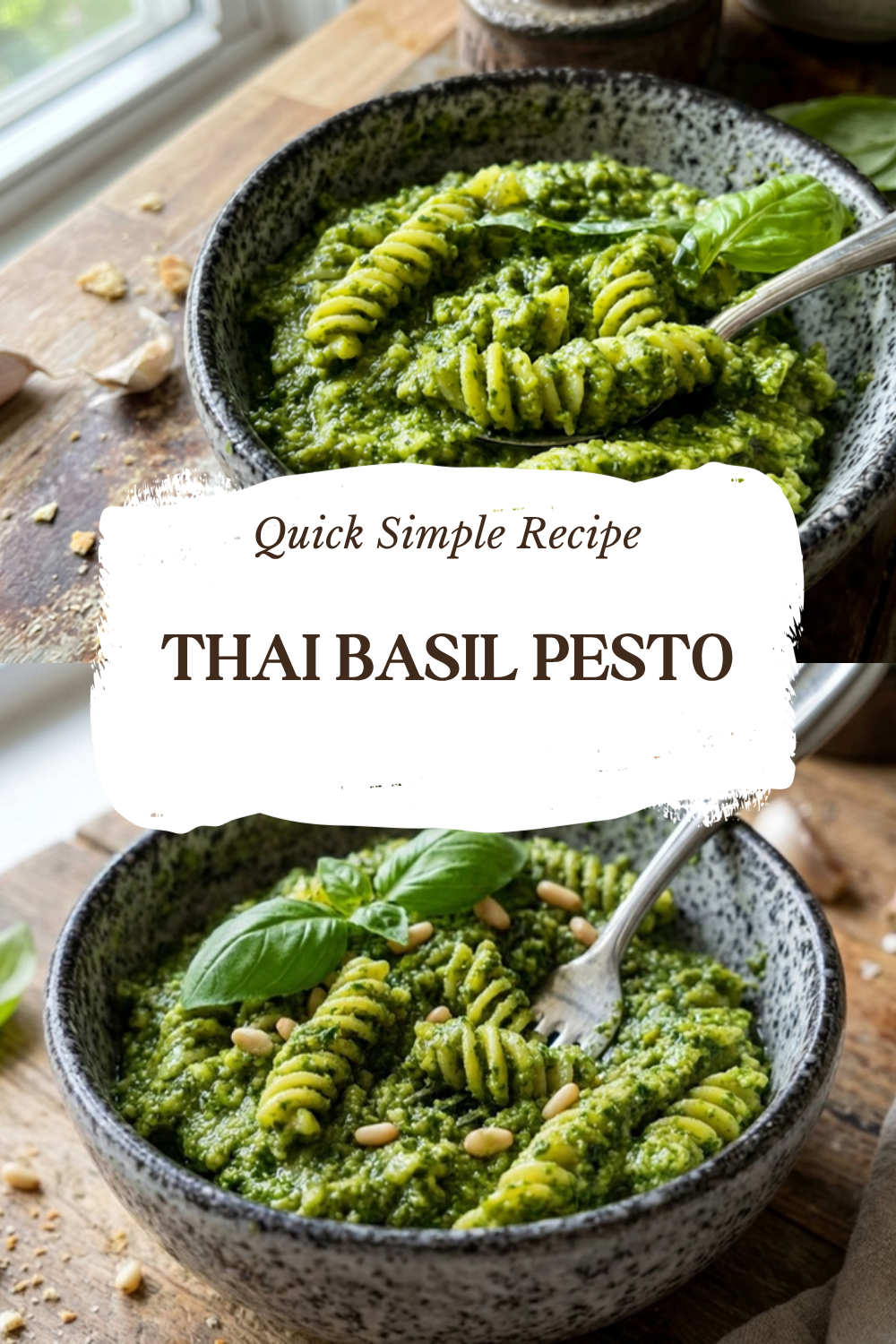
Transfer the pesto to a jar. Drizzle a thin layer of oil over the top to help seal the surface and slow browning. You can serve it right away, or refrigerate it for up to 1 week. For longer storage, freeze it for up to 4 months.
Thai Basil Pesto is great with rice noodles, stir-fried vegetables, tofu, grilled chicken, shrimp, roasted potatoes, or even as a spread for sandwiches and wraps. It is also a nice dip for crackers or fresh vegetables. If you want to pair it with a fun treat later, you might also like the easy dessert ideas on Savoring Flavors peach cobbler recipe or a sweet drink like their strawberry milkshake recipe.
A thin oil layer on top helps keep Thai Basil Pesto bright and fresh for longer.

Dietary Substitutions to Customize Your Thai Basil Pesto
Protein and main ingredient alternatives
Thai Basil Pesto is already flexible, which makes it easy to fit different eating styles. If you only have one type of nut, use just cashews or just peanuts. Both work well, and each one gives the sauce a slightly different texture. Cashews make the pesto smoother, while peanuts add a stronger roasted flavor.
If Thai basil is hard to find, use Italian basil to fill in the gap. That keeps the sauce easy to make without a special shopping trip. The flavor will be a little milder, but the pesto will still be bright and useful in many meals. For people who like a softer herbal note, this swap is a simple win.
Vegetable, sauce, and seasoning modifications
You can also change the seasoning to match what you have in the kitchen. Sea salt works well, but soy sauce or tamari can stand in when you want extra savory depth. Rice wine vinegar gives a clean, gentle tang, while lime juice adds a fresher citrus taste. If you want more heat, add extra chili flakes little by little until it feels right.
For oil, olive oil gives a classic smooth texture, sesame oil brings a nuttier edge, and canola or grapeseed oil keeps the taste mild. These changes help you match the pesto to different dishes. Use sesame oil for noodle bowls, olive oil for pasta, or a neutral oil for a lighter finish. That kind of flexibility is helpful for diet-conscious individuals, newlyweds learning to cook together, and anyone who likes to work with what is already in the pantry.
Mastering Thai Basil Pesto: Advanced Tips and Variations
Pro cooking techniques
For the best texture, make sure the basil is fully dry before blending. Water can make the pesto thin and less vibrant. If you want a more rustic sauce, use a mortar and pestle instead of a processor. This traditional method takes a little longer, but it gives you a more textured paste and a strong herbal aroma.
Another useful trick is to scrape the sides of the bowl often. That keeps the nuts and basil moving so the pesto blends evenly. If the mixture seems too thick, drizzle in a little more oil. If it seems too loose, add a few more basil leaves or a small spoonful of nuts.
Flavor variations
You can shape Thai Basil Pesto in many directions. For more heat, go past the base 1/2 teaspoon of chili flakes and add up to 3/4 teaspoon or more. For a softer, rounder flavor, reduce the chili and lean on the lime and sugar balance. If you love sesame flavor, use sesame oil instead of olive oil for a richer Asian-inspired profile.
Roasted peanuts alone make the sauce bolder and more familiar in Southeast Asian cooking, while cashews alone create a creamier finish. A half-and-half mix gives the best of both worlds. That mix also helps the pesto spread well on toast, melt into noodles, or coat vegetables evenly.
Presentation tips
When serving, spoon the pesto into a small bowl and top it with a few chopped peanuts, a basil leaf, or a tiny drizzle of oil. That simple finish makes it look fresh and inviting. For a meal, swirl it through noodles or place it beside grilled vegetables for color and contrast.
If you are serving guests, keep the sauce in a small jar so people can add as much as they want. It works nicely on a snack board with crackers, cucumber slices, and fresh herbs. That makes it useful for food enthusiasts and travelers who enjoy simple flavors from different cuisines.
Make-ahead options
This recipe is easy to prep ahead for the week. Make a batch on Sunday, then keep part of it in the fridge and freeze the rest in small portions. Ice cube trays work well for this. Once frozen, move the cubes into a sealed bag so you can use a little at a time.
For meal prep, label your containers with the date and portion size. That helps when you want a fast dinner after work or school. A small amount of Thai Basil Pesto can turn plain rice, noodles, or roasted vegetables into a fast meal with strong flavor.
How to Store Thai Basil Pesto: Best Practices
Thai Basil Pesto stores well, which makes it a smart recipe for batch cooking. For short-term storage, place it in a jar or airtight container and keep it in the refrigerator for up to 1 week. Drizzle oil over the top before sealing the container to help slow browning and protect the surface.
For long-term storage, freeze the pesto for up to 4 months. Small portions are best because they thaw quickly and reduce waste. You can freeze the pesto in ice cube trays, then transfer the cubes to freezer bags once solid. That makes it easy to grab just what you need for one dinner or lunch.
When reheating is needed, let frozen pesto thaw in the fridge or at room temperature for a short time. If you add it to warm food, stir it in at the end so the fresh flavor stays strong. Avoid high heat, since that can dull the herbs and flatten the lime notes. For meal prep, keep each batch sealed well and stored in portion sizes that match your usual cooking routine.
FAQs: Frequently Asked Questions About Thai Basil Pesto
What is Thai basil pesto?
Thai basil pesto is an Asian-inspired twist on classic Italian pesto, swapping sweet basil for the more aromatic Thai basil with its licorice-like, slightly spicy flavor. Key ingredients include fresh Thai basil leaves, roasted peanuts (instead of pine nuts), garlic, fresh chilies, lime juice, fish sauce for umami, and coconut oil or neutral oil. Blend everything into a vibrant green sauce perfect for stir-fries, noodle dishes, grilled meats, or as a dip. It adds bold, herbaceous heat that pairs well with Southeast Asian cuisine. Prep time is about 10 minutes—no cooking required. Store in the fridge for up to a week or freeze in ice cube trays for easy portions. This versatile condiment brings authentic Thai flair to everyday meals. (98 words)
What’s the difference between Thai basil and regular basil?
Thai basil leaves are narrower with serrated edges, purple stems, and sturdier texture compared to Italian sweet basil’s rounded, delicate green leaves and stems. Flavor-wise, Thai basil delivers a sweet anise or licorice note with mild spice, while Italian basil offers fresh sweetness with black pepper and mint hints. For Thai basil pesto, Thai basil’s bold profile creates an authentic Asian vibe, though Italian basil works as a milder substitute—just expect less punch. Source fresh Thai basil at Asian markets or grow it indoors; it thrives in warm conditions and handles heat better than sweet basil. Test side-by-side in recipes to feel the difference. (102 words)
How do you make Thai basil pesto at home?
Making Thai basil pesto is simple: Start with 2 cups packed Thai basil leaves, ½ cup roasted peanuts, 3 garlic cloves, 1-2 Thai chilies (seeded for less heat), juice of 2 limes, 2 tbsp fish sauce (or soy for vegan), and ½ cup coconut oil. Pulse peanuts and garlic in a food processor until crumbly, add chilies, basil, lime, and fish sauce, then drizzle in oil while blending to a coarse paste. Taste and adjust salt or lime. Yields 1.5 cups. Use immediately on rice noodles, chicken satay, or veggies. No cheese needed for authenticity. Takes 10 minutes total—faster than store-bought. (108 words)
Can I substitute regular basil for Thai basil in pesto?
Yes, you can substitute Italian sweet basil for Thai basil in pesto, but the flavor shifts from spicy-licorice to milder, sweeter notes. Use a 1:1 ratio—2 cups sweet basil works fine if Thai basil is unavailable. Boost authenticity by adding ½ tsp star anise powder or extra chili for that anise kick. Peanuts and fish sauce keep the Thai essence intact. Test a small batch first. At Asian grocers, Thai basil costs about $2-3 per bunch and lasts 5-7 days refrigerated in water. This swap makes the recipe accessible year-round without losing pesto’s creamy texture. (96 words)
How long does Thai basil pesto last and how do you store it?
Homemade Thai basil pesto lasts 5-7 days in the fridge in an airtight jar—top with a thin oil layer to prevent browning. For longer storage, freeze in ice cube trays (1-2 tbsp per cube), then transfer to freezer bags; use within 3 months. Thaw cubes in the fridge or microwave briefly. Avoid metal containers to prevent flavor off-notes. Signs of spoilage: off smell, mold, or sliminess—discard if unsure. Pro tip: Portion into recipe-sized amounts for quick weeknight meals like tossing with shrimp stir-fry or spreading on sandwiches. Freezing retains 90% flavor potency. (92 words)
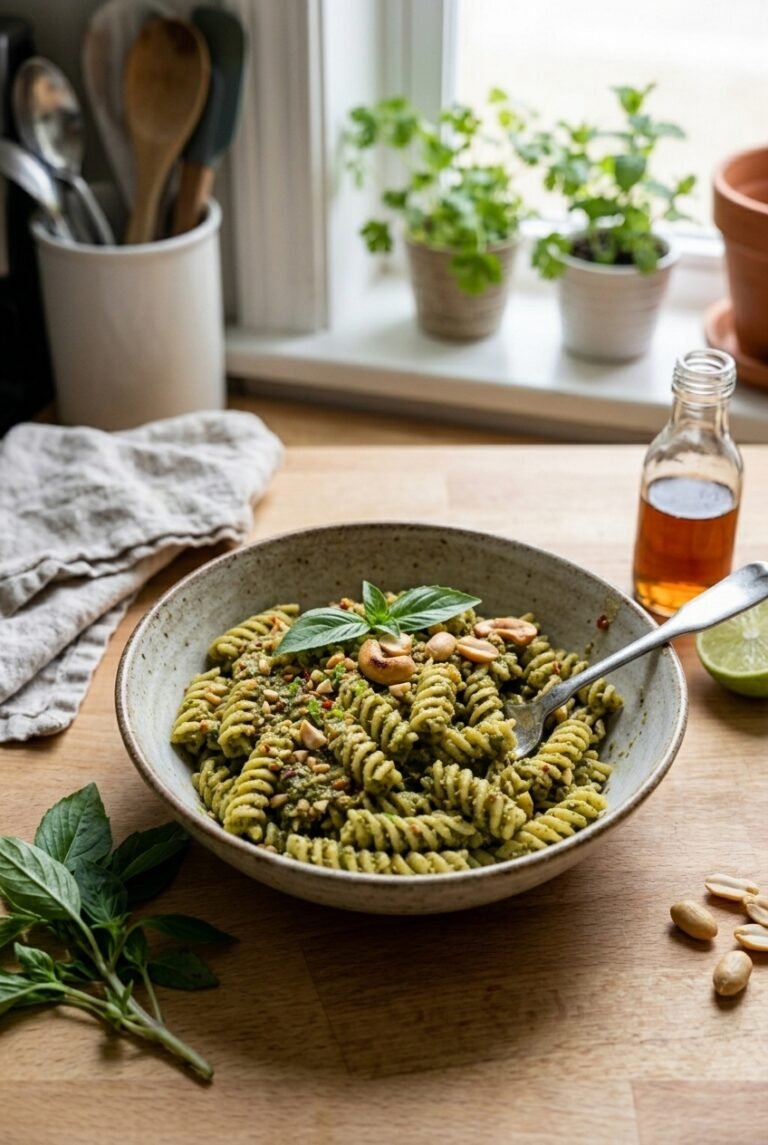
Thai Basil Pesto
🌿 Transform meals with Thai Basil Pesto’s explosive fusion of spicy chili, nutty crunch, zesty lime, and aromatic basil – bolder, fresher than Italian pesto!
🇹🇭 Versatile no-cook sauce for pasta, rice bowls, grilled proteins, or dips; vegan-friendly, stores weeks, bursts authentic Thai flavors effortlessly.
- Total Time: 15 minutes
- Yield: 8 servings
Ingredients
– 2 cups Thai basil leaves packed, washed, and dried
– 2 tablespoons cashew nuts roasted and unsalted
– 2 tablespoons peanuts roasted and unsalted
– 2 garlic cloves crushed
– 1/2 teaspoon chili flakes
– 60 ml olive oil or sesame oil
– 1/2 teaspoon sea salt
– 1 teaspoon soy sauce or tamari
– 1 teaspoon rice wine vinegar
– 1 teaspoon caster sugar
– Juice from 1/2 lime, to taste
Instructions
1-First Step: wash and prep the basil Start by washing and drying the Thai basil leaves well. Pick the leaves from the stems, since the stems can make the pesto a little fibrous. You want the basil as dry as possible so the sauce blends smoothly and stays bright green. This small prep step matters because too much water can thin the pesto and dull the flavor.
2-Second Step: load the food processor Place the basil leaves into a mini food processor bowl. Add the roasted cashews, roasted peanuts, crushed garlic, chili flakes, oil, sea salt or soy sauce, rice wine vinegar, caster sugar, and lime juice. This recipe works best when everything goes in together, because the nuts and oil help the herbs break down into a smooth paste.
3-Third Step: blend into a paste Blend the mixture until it turns into a thick paste. Stop and scrape down the sides as needed so everything mixes evenly. A mini processor works well here because the batch is small and the blades can catch the basil more easily.
4-Fourth Step: taste and adjust Taste the Thai Basil Pesto after blending. Add more lime juice if you want extra brightness. If the sauce tastes flat, a pinch more salt or a splash more soy sauce or tamari can help. If you want more heat, increase the chili flakes to 3/4 teaspoon or more.
5-Final Step: store or serve Transfer the pesto to a jar. Drizzle a thin layer of oil over the top to help seal the surface and slow browning. You can serve it right away, or refrigerate it for up to 1 week. For longer storage, freeze it for up to 4 months.
Last Step:
Please leave a rating and comment letting us know how you liked this recipe! This helps our business to thrive and continue providing free, high-quality recipes for you.Notes
🔥 Boost heat with 3/4 teaspoon+ chili flakes for authentic fiery Thai kick.
🥄 Traditional mortar-pestle pounding yields chunkier, more flavorful texture.
🛢️ Top pesto with oil layer in jar to prevent oxidation and browning.
- Prep Time: 15 minutes
- Category: Sauces
- Method: Blending
- Cuisine: Thai
- Diet: Vegan, Gluten-Free
Nutrition
- Serving Size: 2 tablespoons
- Calories: 99 kcal
- Sugar: 1g
- Sodium: 149mg
- Fat: 10g
- Saturated Fat: 1.5g
- Unsaturated Fat: 8g
- Trans Fat: 0g
- Carbohydrates: 2g
- Fiber: 0.5g
- Protein: 1.5g
- Cholesterol: 0mg