Why You’ll Love This Microwave Lemon Curd
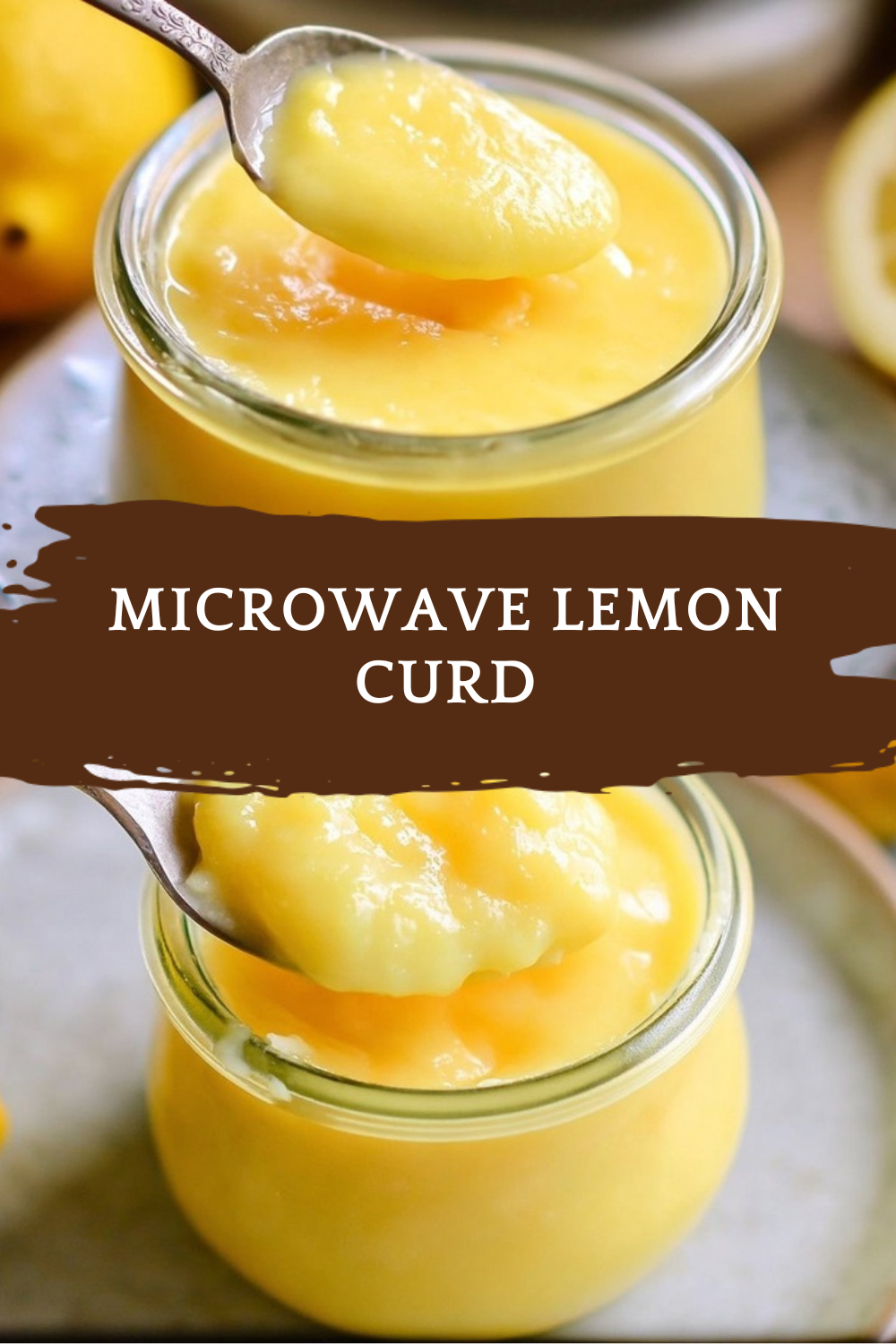
Microwave Lemon Curd is the kind of recipe that feels almost too easy to be true, but it really works. In about 11 minutes, you get a bright, silky curd with a fresh lemon flavor that tastes like sunshine in a spoon. If you want a fast dessert topping, a filling for cakes, or a sweet spread for breakfast, this little bowl of gold has your back.
- Quick and simple: This Microwave Lemon Curd takes about 5 minutes to prep and about 6 minutes to cook, so it fits busy days, late-night cravings, and last-minute dessert plans. There is no stovetop stirring marathon here, just whisk, microwave, stir, and repeat.
- Bright flavor with real ingredients: Fresh lemon juice and finely grated lemon zest give this curd a bold citrus taste. The butter makes it rich, while the eggs help it turn smooth and creamy. For more on the benefits of lemons, you can also read this helpful guide on lemon benefits.
- Flexible for many uses: Microwave Lemon Curd works on toast, pancakes, waffles, ice cream, fresh fruit, cakes, and tarts. It also makes a sweet homemade gift when packed into small jars with pretty labels.
- Great for home bakers: If you like easy wins in the kitchen, this recipe gives you a reliable, foolproof result. It is a great choice for students, busy parents, travelers, and anyone who wants a dessert that feels special without taking much time.
One batch of Microwave Lemon Curd can turn a plain breakfast into something that feels a little fancy, without making your kitchen look like a disaster zone.
And if you love fruit-based recipes, this one fits right in with other sunny treats. It is simple, cheerful, and hard not to like. For another bright idea, you may also enjoy our homemade lemon recipes collection.
Jump to:
- Why You’ll Love This Microwave Lemon Curd
- Essential Ingredients for Microwave Lemon Curd
- Special dietary options
- How to Prepare the Perfect Microwave Lemon Curd: Step-by-Step Guide
- First step: Get your ingredients ready
- Second step: Whisk the base until smooth
- Third step: Add the butter cubes
- Fourth step: Microwave in short bursts
- Fifth step: Check for doneness
- Sixth step: Add zest and finish
- Seventh step: Serve it your way
- Dietary Substitutions to Customize Your Microwave Lemon Curd
- Protein and main ingredient alternatives
- Vegetable, sauce, and seasoning modifications
- Mastering Microwave Lemon Curd: Advanced Tips and Variations
- Pro cooking techniques
- Flavor variations
- Presentation tips
- Make-ahead options
- How to Store Microwave Lemon Curd: Best Practices
- Refrigeration
- Freezing
- Reheating
- Meal prep considerations
- Nutrition Information
- FAQs: Frequently Asked Questions About Microwave Lemon Curd
- How do you make lemon curd in the microwave?
- How long does it take to make microwave lemon curd?
- How can you tell when microwave lemon curd is done?
- How do you store microwave lemon curd?
- What are ways to use microwave lemon curd?
- Microwave Lemon Curd
- Ingredients
- Instructions
- Last Step:
- Notes
- Nutrition
- Did you make this recipe?
Essential Ingredients for Microwave Lemon Curd
Before you start, gather everything so the process stays smooth and quick. The ingredient list is short, but each item plays an important role in the texture and taste of this Microwave Lemon Curd.
- 1 cup sugar: Sweetens the curd and helps create that classic glossy finish.
- Finely grated zest from 2 lemons: Adds a fresh lemon aroma and deeper citrus flavor. Use only the yellow part of the peel and avoid the bitter white pith.
- 1/2 cup lemon juice: Gives the curd its bright tang and helps it set.
- 2 egg yolks: Add extra richness and help thicken the curd. Reserve the whites for another use.
- 3 large eggs: Build the base of the curd and give it structure.
- 4 ounces salted butter, 1 stick, cut into cubes: Adds smoothness, richness, and a soft finish. If you use unsalted butter, add a pinch of salt, about 1/8 teaspoon.
Special dietary options
- Vegan: For a plant-based version, try a vegan lemon curd made with plant butter and a thickener such as cornstarch or a commercial egg substitute. The texture will be different, but still tasty.
- Gluten-free: This Microwave Lemon Curd is naturally gluten-free, so there is no special swap needed.
- Low-calorie: You can reduce the sugar a little, though the curd may be softer and less sweet. A smaller serving also helps keep things light.
How to Prepare the Perfect Microwave Lemon Curd: Step-by-Step Guide
Making Microwave Lemon Curd is all about short bursts of heat and a little whisking in between. Use a large microwave-safe bowl so the mixture has room to bubble without spilling over. A balloon whisk works best because it breaks up the eggs and helps the curd stay smooth.
First step: Get your ingredients ready
Start by measuring out 1 cup sugar, 1/2 cup lemon juice, 2 egg yolks, 3 large eggs, and 4 ounces salted butter cut into cubes. Finely grate the zest from 2 lemons and set it aside for later. If you are using unsalted butter, have a pinch of salt ready, about 1/8 teaspoon.
This quick prep makes the rest of the recipe easy. It also helps you move fast once the microwave starts doing the heavy lifting.
Second step: Whisk the base until smooth
In a large microwave-safe bowl, whisk together the sugar, eggs, egg yolks, lemon juice, and salt if needed. Keep whisking until the mixture looks smooth and even. This step matters because it helps prevent scrambled egg bits later.
The mixture may look thin at first, and that is completely normal. You are building the base before the butter and heat turn it into curd.
Third step: Add the butter cubes
Drop the butter cubes into the bowl and spread them out a little if they clump together. The butter melts during cooking and gives the curd its rich, creamy body. Salted butter works well here, but unsalted butter is fine too if you add that small pinch of salt.
If you are making this for a dairy-free guest, this is the point where a plant-based butter substitute would go in a test version. The texture may be a bit softer, but the lemon flavor still shines.
Fourth step: Microwave in short bursts
Microwave the mixture on high power for 45 seconds, then remove the bowl and stir vigorously with a whisk. This first stir helps distribute the heat and keeps the eggs from cooking too quickly in one spot. Return the bowl to the microwave and continue cooking in 45-second intervals, whisking after each round.
Depending on your microwave power, this usually takes about 4 to 7 minutes total. A stronger microwave may finish faster, while a lower wattage machine may need a little more time. If you are not sure about your microwave, watch the mixture closely and stir well every time.
Fifth step: Check for doneness
Microwave Lemon Curd is ready when it coats the back of a metal spoon or reaches 175°F on a thermometer. That temperature matters because it tells you the eggs are cooked safely and the curd is thick enough to set as it cools. The curd should look glossy and slightly thick, not watery.
If the mixture still looks thin, give it another short burst and stir again. If you see small lumps, do not panic. You can strain the curd through a fine-mesh strainer for a smoother finish.
Sixth step: Add zest and finish
Once the curd is cooked, remove it from the microwave and whisk well. Stir in the lemon zest at the end so the fresh citrus flavor stays bright. This final touch makes the flavor pop and gives the curd a fresh homemade feel.
Let it cool to room temperature. It will thicken as it cools, so do not worry if it seems a bit loose right after cooking. Cover it and store it in the refrigerator once it is no longer warm.
Seventh step: Serve it your way
When chilled, the curd is ready to use. Spread it on toast, spoon it over pancakes, layer it into cakes, or serve it with fresh fruit. It also works beautifully on waffles, ice cream, or as a tart filling.
If your Microwave Lemon Curd looks a little lumpy at first, a quick pass through a fine-mesh strainer can save the day and give you a silky finish.
| Recipe Detail | Time or Amount |
|---|---|
| Prep time | About 5 minutes |
| Cook time | About 6 minutes |
| Total time | About 11 minutes |
| Yield | About 2 cups |
| Serving size | 1 tablespoon |

Dietary Substitutions to Customize Your Microwave Lemon Curd
Protein and main ingredient alternatives
Eggs are what give this curd its structure, so they matter a lot. If you need an egg-free version, a plant-based lemon curd made with cornstarch, plant butter, and a thickener can work, though the texture will be more like a pudding-style spread. That makes it a decent choice for vegans or anyone avoiding eggs.
If you are out of whole eggs but have extra yolks, you can add more yolks for a richer, thicker curd. The recipe already uses 2 egg yolks plus 3 large eggs, which is part of what gives the final texture its smooth body. Reserve the egg whites for meringues, omelets, or breakfast scrambles.
Vegetable, sauce, and seasoning modifications
There are not many vegetables in this recipe, but there are plenty of ways to change the flavor. Try lime juice for a sharper citrus note, or mix lemon with orange for a softer, sweeter version. You can also add a little vanilla for a rounder taste, though classic lemon lovers may prefer to keep it simple.
If you use unsalted butter, add a pinch of salt so the flavor stays balanced. Want a lighter version? Reduce the sugar a little, but keep in mind the curd may set more softly. For readers who like to read more about citrus nutrition, this overview of lemons and their nutrients is a useful reference.
Mastering Microwave Lemon Curd: Advanced Tips and Variations
Once you make Microwave Lemon Curd once, you will probably start thinking about the next batch before the first jar is empty. A few small tricks can help you get a smoother texture and a flavor that feels just right for your table.
Pro cooking techniques
Use a large microwave-safe bowl to prevent overflow. Stir with purpose after every 45-second burst, not just a quick lazy swirl. The whisking matters because it spreads out the heat and keeps the eggs from cooking into little bits. If your microwave runs hot, shorten the last round and check often.
A thermometer is a great backup if you want accuracy. Aim for 175°F, and stop as soon as the curd reaches that point. If the texture looks slightly thin when hot, remember that it will thicken as it cools.
Flavor variations
For a brighter citrus punch, add a little extra zest. For a softer flavor, mix some orange juice with the lemon juice. You can also add a tiny splash of vanilla or a pinch of ginger for a fun twist. These changes keep the recipe fresh if you make it often.
Presentation tips
Spoon the curd into small jars, then top it with a strip of lemon zest or a thin lemon slice. For gifts, decorate the jars with simple labels and ribbon. It looks thoughtful without much work, which is always a win.
Make-ahead options
This recipe is perfect for meal prep and baking plans. Make it a day or two ahead, chill it, and use it when needed. It is also a smart recipe to keep in the fridge when you want a quick filling for dessert or a sweet breakfast spread.
How to Store Microwave Lemon Curd: Best Practices
Proper storage keeps your Microwave Lemon Curd tasting fresh and safe to eat. Since it contains eggs and butter, it needs to stay chilled.
Refrigeration
Store the cooled curd in an airtight container or jar in the refrigerator. It keeps well for 7 to 10 days, and many home cooks find it still tastes great during that window. Keep it below 40°F for best results.
Freezing
For longer storage, freeze the curd in small portions. Leave about 1/2 inch of headspace if using jars or freezer containers so the curd has room to expand. Frozen Microwave Lemon Curd can keep for up to one year when stored properly.
Reheating
If you want to soften chilled curd, let it sit in the fridge overnight after freezing, then bring it to room temperature before serving. Do not microwave it hard to reheat, because that can change the texture. Gentle thawing is better for keeping it smooth.
Meal prep considerations
Make a double batch if you want some for now and some for later. Label containers with the date, and if you give jars as gifts, add storage notes so the person receiving it knows to refrigerate it right away. A little planning makes this quick recipe even more useful.
Nutrition Information
Here is the nutrition for about 1 tablespoon of Microwave Lemon Curd.
| Nutrient | Amount |
|---|---|
| Calories | 60 |
| Carbohydrates | 7g |
| Protein | 1g |
| Fat | 4g |
| Saturated Fat | 2g |
| Cholesterol | 36mg |
| Sodium | 30mg |
| Potassium | 10mg |
| Fiber | 1g |
| Sugar | 6g |
| Vitamin A | 128 IU |
| Vitamin C | 1mg |
| Calcium | 5mg |
| Iron | 1mg |
This is a rich little treat, so a spoonful goes a long way. It is a lovely way to add bright flavor without needing a lot of it.
FAQs: Frequently Asked Questions About Microwave Lemon Curd
How do you make lemon curd in the microwave?
To make lemon curd in the microwave, start with ½ cup fresh lemon juice, ¾ cup granulated sugar, 2 large eggs, 2 egg yolks, and ½ cup unsalted butter (cut into pieces). In a microwave-safe bowl, whisk juice, sugar, eggs, and yolks until smooth and pale yellow. Microwave on high for 45 seconds, then whisk in butter. Continue microwaving in 45-second bursts, whisking thoroughly after each, for 4-6 rounds total until it thickens and turns glossy (about 10 minutes). It should coat the back of a spoon. Stir in 1-2 tablespoons lemon zest for extra flavor. Cool completely before jarring. This quick method skips stovetop stirring and yields 2 cups of tangy, creamy curd perfect for beginners. Always use a large bowl to prevent overflow. (92 words)
How long does it take to make microwave lemon curd?
Microwave lemon curd takes about 10 minutes total. Prep ingredients in 2-3 minutes: whisk lemon juice, sugar, eggs, yolks, and later butter. Then, microwave in 4-6 increments of 45 seconds each on high power, whisking vigorously between bursts to prevent curdling. Total active time is under 10 minutes, plus cooling. Factors like microwave wattage (1000W ideal) or bowl size can vary it by 1-2 minutes—higher power may need shorter bursts. No constant stirring like stovetop versions, making it faster for weeknight treats. Test doneness at 175-180°F with a thermometer for precision. Store in fridge up to 2 weeks. (98 words)
How can you tell when microwave lemon curd is done?
Microwave lemon curd is done when it thickens enough to coat the back of a metal spoon without running off, or reaches 175-180°F internally (use an instant-read thermometer for accuracy). After 4-6 bursts of 45 seconds, it turns glossy and holds its shape slightly when whisked. If lumpy, strain through a fine-mesh sieve. Undercooked curd stays thin and liquidy; overcooked may curdle—stop if it boils vigorously. Fresh lemons give the best vibrant color and set. This temp ensures egg safety per USDA guidelines, killing bacteria without scrambling. Let it cool to room temp for perfect texture. (96 words)
How do you store microwave lemon curd?
Refrigerate microwave lemon curd in an airtight jar or container for up to 2 weeks. It’s not shelf-stable due to eggs and lacks preservatives—always keep chilled below 40°F to prevent spoilage. For longer storage, freeze in portions with ½-inch headspace for expansion; it lasts up to 1 year per food safety guidelines. Thaw overnight in the fridge. Label with dates. If surface darkens or smells off, discard. Pro tip: press plastic wrap directly on the surface before sealing to avoid a skin forming. This preserves the bright flavor for tarts, fillings, or gifts. (94 words)
What are ways to use microwave lemon curd?
Microwave lemon curd shines in many dishes: spread thickly on toast, scones, or English muffins for breakfast; dollop over pancakes, waffles, or yogurt; layer in trifles or fill cakes, tarts, and crepes. Swirl into cheesecake batter, mix with whipped cream for easy mousse, or spoon atop ice cream and fresh berries. Gift in sterilized jars with ribbons. One batch (2 cups) fills 12 tarts or tops 8 pavlovas. Pairs well with gingerbread or meringues. Vegan swap: use aquafaba and plant butter. Experiment with orange curd variation for diversity—check your site’s citrus recipes for more ideas. (92 words)

Microwave Lemon Curd
🍋 Foolproof microwave lemon curd: silky, zesty perfection in minutes – versatile topping for toast, cakes, yogurt!
🔥 Quick, no-stir hassle-free recipe delivers intense lemon brightness and creamy texture every time.
- Total Time: 41 minutes
- Yield: 32 servings (2 cups)
Ingredients
– 1 cup sugar
– Finely grated zest from 2 lemons
– 1/2 cup lemon juice
– 2 egg yolks
– 3 large eggs
– 4 ounces salted butter, 1 stick, cut into cubes
Instructions
1-First step: Get your ingredients ready Start by measuring out 1 cup sugar, 1/2 cup lemon juice, 2 egg yolks, 3 large eggs, and 4 ounces salted butter cut into cubes. Finely grate the zest from 2 lemons and set it aside for later. If you are using unsalted butter, have a pinch of salt ready, about 1/8 teaspoon. This quick prep makes the rest of the recipe easy. It also helps you move fast once the microwave starts doing the heavy lifting.
2-Second step: Whisk the base until smooth In a large microwave-safe bowl, whisk together the sugar, eggs, egg yolks, lemon juice, and salt if needed. Keep whisking until the mixture looks smooth and even. This step matters because it helps prevent scrambled egg bits later. The mixture may look thin at first, and that is completely normal. You are building the base before the butter and heat turn it into curd.
3-Third step: Add the butter cubes Drop the butter cubes into the bowl and spread them out a little if they clump together. The butter melts during cooking and gives the curd its rich, creamy body. Salted butter works well here, but unsalted butter is fine too if you add that small pinch of salt. If you are making this for a dairy-free guest, this is the point where a plant-based butter substitute would go in a test version. The texture may be a bit softer, but the lemon flavor still shines.
4-Fourth step: Microwave in short bursts Microwave the mixture on high power for 45 seconds, then remove the bowl and stir vigorously with a whisk. This first stir helps distribute the heat and keeps the eggs from cooking too quickly in one spot. Return the bowl to the microwave and continue cooking in 45-second intervals, whisking after each round. Depending on your microwave power, this usually takes about 4 to 7 minutes total. A stronger microwave may finish faster, while a lower wattage machine may need a little more time. If you are not sure about your microwave, watch the mixture closely and stir well every time.
5-Fifth step: Check for doneness Microwave Lemon Curd is ready when it coats the back of a metal spoon or reaches 175°F on a thermometer. That temperature matters because it tells you the eggs are cooked safely and the curd is thick enough to set as it cools. The curd should look glossy and slightly thick, not watery. If the mixture still looks thin, give it another short burst and stir again. If you see small lumps, do not panic. You can strain the curd through a fine-mesh strainer for a smoother finish.
6-Sixth step: Add zest and finish Once the curd is cooked, remove it from the microwave and whisk well. Stir in the lemon zest at the end so the fresh citrus flavor stays bright. This final touch makes the flavor pop and gives the curd a fresh homemade feel. Let it cool to room temperature. It will thicken as it cools, so do not worry if it seems a bit loose right after cooking. Cover it and store it in the refrigerator once it is no longer warm.
7-Seventh step: Serve it your way When chilled, the curd is ready to use. Spread it on toast, spoon it over pancakes, layer it into cakes, or serve it with fresh fruit. It also works beautifully on waffles, ice cream, or as a tart filling.
Last Step:
Please leave a rating and comment letting us know how you liked this recipe! This helps our business to thrive and continue providing free, high-quality recipes for you.Notes
🍋 Zest only the yellow part of lemons – avoid bitter white pith.
🕳️ If lumpy, strain through fine-mesh sieve for silky smoothness.
🌡️ Use thermometer: stop at 175°F to prevent scrambling.
- Prep Time: 5 minutes
- Cooling: 30 minutes
- Cook Time: 6 minutes
- Category: Desserts
- Method: Microwave
- Cuisine: American
- Diet: Vegetarian
Nutrition
- Serving Size: 1 tablespoon
- Calories: 60 kcal
- Sugar: 6 g
- Sodium: 30 mg
- Fat: 4 g
- Saturated Fat: 2 g
- Unsaturated Fat: 2 g
- Trans Fat: 0 g
- Carbohydrates: 7 g
- Fiber: 1 g
- Protein: 1 g
- Cholesterol: 36 mg