Why You’ll Love This Thanksgiving Turkey Recipe
This Thanksgiving Turkey Recipe is made for home cooks who want a juicy, golden bird without a lot of stress. It uses simple ingredients, clear steps, and a reliable roasting method that gives you great results even if this is your first time making a turkey. If you have ever worried about dry meat, pale skin, or timing the big meal, this easy approach can help you feel more relaxed in the kitchen.
- Easy preparation: You only need a few basic ingredients and about 30 minutes of prep time before the oven does most of the work. The turkey roasts low and steady at 325°F, which makes the process feel manageable.
- Great flavor and texture: The herb butter, lemon, onion, and fresh herbs add deep flavor while helping the skin turn crisp and golden. The result is a roast turkey that tastes rich and comforting.
- Helpful for different needs: This turkey recipe works well for holiday dinners, meal prep, and leftovers. You can adjust the herb butter amount for a larger or smaller bird, and you can roast it with or without vegetables underneath.
- Balanced nutrition: Turkey is naturally high in protein and can fit into many diet-conscious meal plans. For a deeper look at turkey nutrition, see this guide to turkey’s nutrition and health benefits.
When you keep the prep simple and trust your thermometer, a foolproof Thanksgiving turkey becomes much less intimidating.
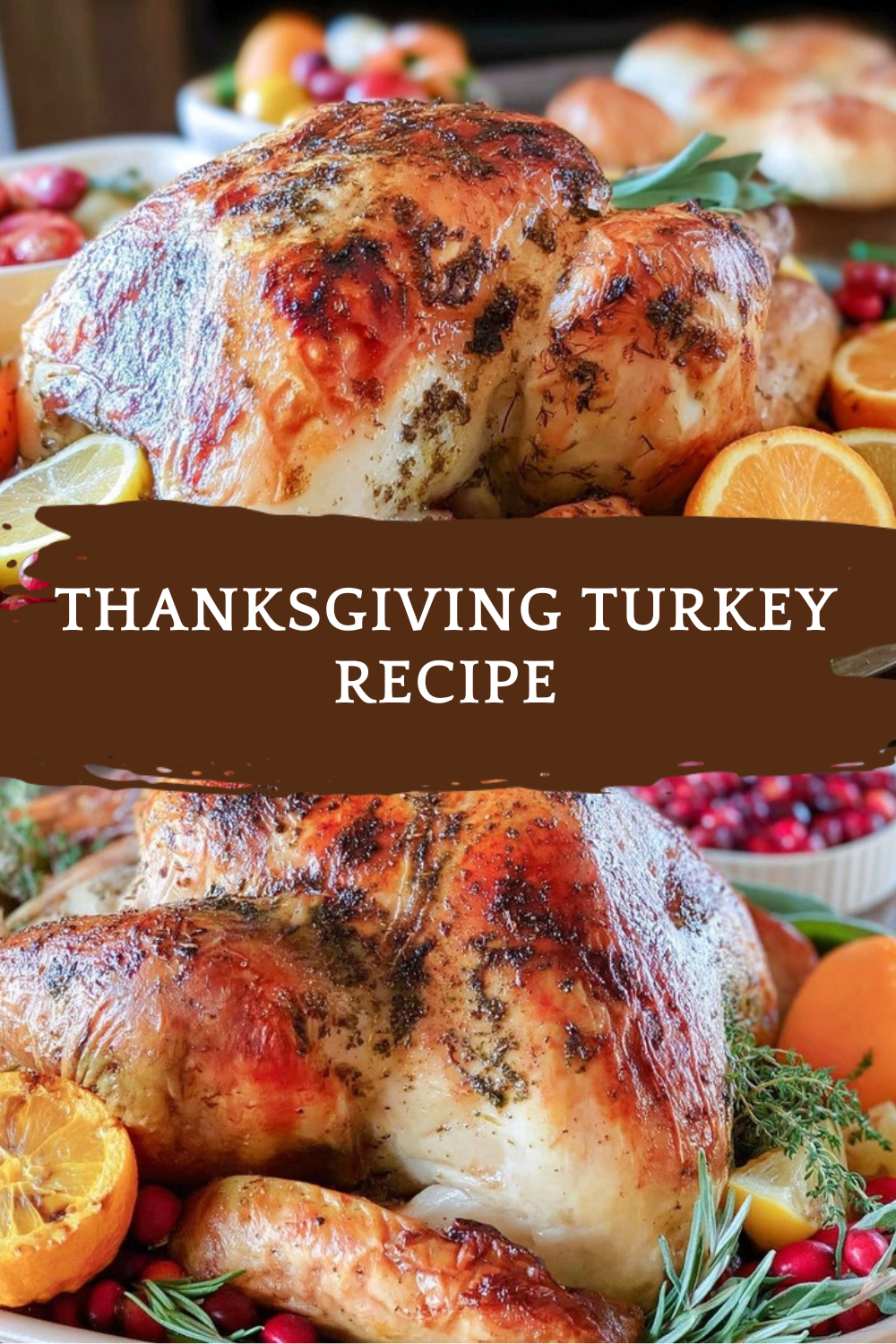
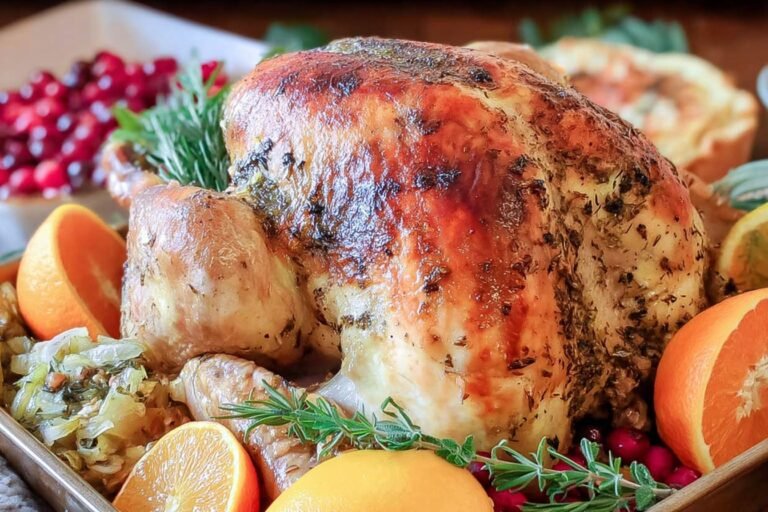
This is the kind of best Thanksgiving turkey recipe you can turn to year after year. It gives you a simple roast turkey Thanksgiving centerpiece with classic flavor, crisp skin, and juicy meat that fits beautifully on any holiday table.
Jump to:
- Why You’ll Love This Thanksgiving Turkey Recipe
- Essential Ingredients for Thanksgiving Turkey Recipe
- Main Turkey Ingredients
- Herb Butter Ingredients
- Optional Vegetables for Roasting Bed
- Special Dietary Options
- How to Prepare the Perfect Thanksgiving Turkey Recipe: Step-by-Step Guide
- First Step: Bring the turkey to room temperature
- Second Step: Preheat the oven and prep the bird
- Third Step: Mix the herb butter
- Fourth Step: Season under and over the skin
- Fifth Step: Set up the roasting pan
- Sixth Step: Roast low and steady
- Seventh Step: Rest before carving
- Dietary Substitutions to Customize Your Thanksgiving Turkey Recipe
- Protein and Main Component Alternatives
- Vegetable, Sauce, and Seasoning Modifications
- Mastering Thanksgiving Turkey Recipe: Advanced Tips and Variations
- Pro cooking techniques
- Flavor variations
- Presentation tips
- Make-ahead options
- How to Store Thanksgiving Turkey Recipe: Best Practices
- Refrigeration
- Freezing
- Reheating
- Meal prep considerations
- FAQs: Frequently Asked Questions About Thanksgiving Turkey Recipe
- What temperature should I set my oven to for roasting a Thanksgiving turkey?
- Why isn’t the herb butter sticking to my turkey and how do I fix it?
- What if my turkey skin is burning but it’s not done inside yet?
- Is it safe to eat turkey if there’s pink near the joints even at 165°F?
- How do I cook a turkey ahead and reheat it for Thanksgiving at someone else’s house?
- Thanksgiving Turkey Recipe
- Ingredients
- Instructions
- Last Step:
- Notes
- Nutrition
- Did you make this recipe?
Essential Ingredients for Thanksgiving Turkey Recipe
Below is the full ingredient list for this easy Thanksgiving turkey recipe. Every item is listed with its exact measurement so you can prep with confidence.
Main Turkey Ingredients
- 1 whole turkey, 12 to 18 pounds, fully thawed – The star of the recipe and the main source of juicy meat for your holiday table.
- 1 onion, peeled and quartered – Adds savory flavor to the turkey cavity as it roasts.
- 1 lemon, quartered – Brightens the flavor and helps balance the richness of the bird.
- 1 to 2 sprigs fresh rosemary – Gives the turkey a woodsy, holiday aroma.
- 1 to 2 sprigs fresh thyme – Adds a gentle herbal note that works well with roast turkey.
- 1 to 2 sprigs fresh sage – Brings classic Thanksgiving flavor to the cavity.
- Kosher salt, to taste for cavity – Seasons the inside of the bird so the flavor goes all the way through.
- Black pepper, to taste for cavity – Adds warmth and depth.
Herb Butter Ingredients
- 3/4 cup unsalted butter, room temperature – Helps the skin brown beautifully and keeps the meat moist.
- 6 cloves garlic, minced – Adds savory flavor and a rich aroma.
- 1 teaspoon kosher salt – Seasons the butter mixture evenly.
- 1/2 teaspoon black pepper – Adds a mild bite.
- 1 tablespoon finely chopped fresh rosemary – Boosts the herb flavor in every bite.
- 1 tablespoon finely chopped fresh thyme – Balances the garlic and butter with fresh herbal notes.
Optional Vegetables for Roasting Bed
- 1 onion, peeled and quartered – Helps flavor the drippings and adds depth to the pan.
- 3 celery ribs, roughly chopped – Adds aroma and gives the turkey a better roasting base.
- 2 carrots, roughly chopped – Brings gentle sweetness and helps build rich pan juices.
Special Dietary Options
- Vegan: This recipe centers on turkey, so a plant-based main would need a different base such as a roasted cauliflower crown or a store-bought vegan roast. The herb butter can be swapped with vegan butter.
- Gluten-free: The recipe is naturally gluten-free as written, as long as your broth, if used for reheating, is also gluten-free.
- Low-calorie: Use a little less herb butter under the skin and on top, and skip extra pan drippings when serving.
How to Prepare the Perfect Thanksgiving Turkey Recipe: Step-by-Step Guide
Making a juicy turkey does not have to feel complicated. The key is steady heat, a dry bird, and good seasoning. If you follow these steps, you will have a beautiful thanksgiving recipe that looks impressive and tastes even better.
First Step: Bring the turkey to room temperature
Remove the turkey from the fridge about 1 hour before roasting. This takes the chill off the bird and helps it cook more evenly. While you wait, remove the giblets from the cavity if they are inside. This is also a good time to gather your roasting pan, thermometer, paper towels, foil, and herb butter ingredients.
Second Step: Preheat the oven and prep the bird
Set your oven to 325°F, which is 160°C. This temperature gives you steady roasting without drying the meat too fast. Next, pat the outside of the turkey dry with paper towels. Dry skin is important because it helps the butter cling to the bird and helps the skin crisp up instead of steaming.
Season the cavity generously with kosher salt and black pepper. Then fill it with the quartered onion, quartered lemon, and fresh rosemary, thyme, and sage sprigs. Do not pack the cavity tightly. You want the heat to move through the bird as it roasts.
Third Step: Mix the herb butter
In a bowl, combine 3/4 cup unsalted butter, 6 minced garlic cloves, 1 teaspoon kosher salt, 1/2 teaspoon black pepper, 1 tablespoon finely chopped fresh rosemary, and 1 tablespoon finely chopped fresh thyme. Stir until everything is fully mixed. The butter should be soft enough to spread easily. If it feels too firm, let it sit at room temperature a little longer.
Soft butter and dry turkey skin are two of the biggest secrets to a crisp, golden finish.
Fourth Step: Season under and over the skin
Carefully loosen the skin over the breast by sliding your fingers underneath it. Work slowly so you do not tear the skin. Spread about one-third of the herb butter under the skin, focusing on the breast meat, since that part can dry out faster than the dark meat.
Then rub the rest of the butter over the outside of the turkey. Make sure to coat the legs, thighs, wings, and breast. This is what gives the bird its rich flavor and golden color. If you like, you can save a small spoonful of butter for the top of the skin once the turkey is almost done.
Fifth Step: Set up the roasting pan
Place the turkey on a roasting rack set inside a pan, or place it on a bed of the optional chopped onion, celery, and carrots. The vegetables add flavor to the drippings and can give you a great base for gravy. Tuck the wing tips under the body so they do not burn. Avoid tying the legs together. Leaving them free helps air circulate around the bird and supports even cooking.
If you want another kitchen idea that fits a holiday spread, you might enjoy this comforting peach cobbler recipe for dessert later in the meal.
Sixth Step: Roast low and steady
Roast the turkey for about 15 minutes per pound. For a 14-pound turkey, the cook time is about 3 hours 30 minutes. Start checking the internal temperature after about 2.5 hours if your bird is on the smaller side, and keep checking every 15 to 20 minutes near the end. Insert an oven-safe thermometer into the thickest part of the thigh or breast, but do not touch the bone.
The turkey is ready when the internal temperature reaches 158°F to 160°F. That might sound a little lower than expected, but the temperature will rise as the turkey rests. If the skin starts browning too quickly, tent it loosely with aluminum foil. If the breast browns faster than the rest, move the rack lower in the oven for a more even roast.
Seventh Step: Rest before carving
When the turkey reaches temperature, remove it from the oven right away. Cover it loosely with foil and let it rest for 30 minutes. Resting gives the juices time to settle back into the meat, which means each slice stays moist instead of spilling onto the cutting board.
After resting, carve and serve with your favorite sides. You will have a juicy bird with crisp skin and strong herb flavor, which is exactly what people want from a foolproof Thanksgiving turkey.

Dietary Substitutions to Customize Your Thanksgiving Turkey Recipe
Protein and Main Component Alternatives
If you want to make this meal work for different needs, the main protein can be changed while keeping the same flavor style. The herb butter, lemon, onion, and fresh herbs work well with other roast-style mains too. For smaller gatherings, you can also use a smaller turkey and reduce the herb butter amounts.
- Smaller turkey: Use the same method for a 10 to 12 pound bird, but shorten the roast time and check the temperature earlier.
- Turkey breast: If you only want white meat, use a bone-in turkey breast and reduce the total cooking time.
- Plant-based roast: For a vegan holiday plate, use a vegetarian roast and brush it with vegan herb butter.
Vegetable, Sauce, and Seasoning Modifications
You can also switch up the vegetables and seasonings based on what you have. The basic structure stays the same, but the flavor can move in a few different directions.
- Vegetables: Swap carrots or celery for parsnips, fennel, or extra onions if you want a different pan flavor.
- Herbs: If rosemary is not your favorite, try more thyme or add a little parsley.
- Citrus: Replace lemon with orange for a slightly sweeter flavor.
- Lower dairy: Use less butter on the skin and more on the breast under the skin where it matters most.
- Pan gravy: Use the drippings from the vegetables and turkey for gravy, or keep the seasonings simple for a lighter finish.
For another fun treat after the holiday meal, you could pair dinner planning with a sweet snack idea like homemade pink popcorn for parties.
Mastering Thanksgiving Turkey Recipe: Advanced Tips and Variations
Pro cooking techniques
If you want to take your roast turkey to the next level, a few small habits make a big difference. First, always thaw the bird in the fridge for about 24 hours per 5 pounds, so a 14-pound turkey needs several days. Second, do not wash the turkey before cooking. Washing can splash bacteria around your sink, and the high heat of roasting will take care of the bird safely. Third, use an oven-safe thermometer so you can trust the temperature instead of guessing.
Another smart move is to keep the turkey uncovered in the fridge for part of the thawing process if you have room, since dry skin roasts better. Also, do not stuff the cavity with stuffing. Cook stuffing separately so both the turkey and the stuffing can reach safe temperatures without drying out the bird.
Flavor variations
You can change the flavor slightly without losing the holiday feel. Add a little smoked paprika to the herb butter for warmth, or use extra sage if you love a classic Thanksgiving taste. If you want a brighter flavor, add more lemon zest to the butter. For a deeper savory note, mix a small amount of chopped parsley into the herb butter right before spreading.
The best Thanksgiving turkey recipe is the one that fits your table, your time, and your taste.
Presentation tips
To make the bird look beautiful, let the skin brown naturally and avoid overhandling it while it roasts. Carve on a large board and arrange the slices in neat rows. Garnish with fresh rosemary sprigs, lemon wedges, or a few roasted vegetables from the pan. If you used the vegetables underneath the bird, spoon a little of the pan liquid over the slices right before serving for shine and flavor.
Make-ahead options
For busy days, mix the herb butter a day ahead and keep it chilled. You can also chop the vegetables and quarter the onion and lemon in advance. If you are cooking for a large group, calculate your turkey size with the rule of 1 pound per person, or 1 1/2 pounds per person if you want leftovers. That way, you are not rushing on the holiday itself.
How to Store Thanksgiving Turkey Recipe: Best Practices
Leftover turkey is one of the best parts of the holiday meal, and storing it the right way keeps it tasty for days. Let the turkey cool first, then move leftovers into shallow containers so they chill quickly. Refrigerate carved turkey within 2 hours of serving.
Refrigeration
Store cooked turkey in the refrigerator for up to 3 to 4 days. Keep it in airtight containers or wrap it tightly. If you plan to use the turkey for sandwiches, soups, or casseroles, slice it before storing so it is ready to go.
Freezing
For longer storage, freeze turkey in freezer-safe bags or containers for up to 2 to 3 months. Try to remove as much air as possible. If you have gravy, freeze that separately in a small container for better texture later.
Reheating
Reheat cooked turkey gently so it does not dry out. Cover it with foil, add a little broth to the pan, and warm it at 300°F until heated through. You can also reheat carved slices in short bursts in the microwave with a damp paper towel on top.
Meal prep considerations
If you are planning ahead for school lunches or work meals, portion the turkey into meal-sized containers with vegetables or rice. This makes it easy to grab protein-packed meals during the week. A well-stored roast turkey can turn into sandwiches, soups, casseroles, and salads without much effort.
FAQs: Frequently Asked Questions About Thanksgiving Turkey Recipe
What temperature should I set my oven to for roasting a Thanksgiving turkey?
Roast your Thanksgiving turkey at 325°F for even cooking and juicy results. Place the turkey on a rack in a roasting pan breast-side up. Start checking the internal temperature after 2.5 hours for a 12-14 pound bird—aim for 165°F in the thickest part of the breast and thigh without touching bone. Use an instant-read thermometer for accuracy. If the skin browns too quickly, tent with foil. This steady temperature prevents drying out while ensuring food safety. Total cook time varies by size: about 15 minutes per pound. Let it rest 20-30 minutes under foil before carving to redistribute juices. (78 words)
Why isn’t the herb butter sticking to my turkey and how do I fix it?
Butter won’t stick if the turkey is cold, wet from condensation, or the butter is too firm. Let the turkey sit at room temperature for 1 hour, then pat it completely dry with paper towels inside and out. Soften the butter in the microwave for 5-10 seconds until spreadable. Apply generously under the skin and on top for flavor infusion. This prep ensures even coverage, crispy skin, and moist meat. For best results, mix in herbs, garlic, and salt ahead of time. Dry skin is key to browning without steaming. (92 words)
What if my turkey skin is burning but it’s not done inside yet?
If the skin burns while the inside isn’t at 165°F, your oven runs hot—lower the temperature to 300°F and loosely tent the turkey with aluminum foil to shield it. Invest in an oven thermometer to verify actual temps, as built-in dials can be off by 25-50°F. Baste with pan juices every 30 minutes to keep skin moist. Position the rack in the lower third of the oven for balanced heat. This saves the bird from over-browning while finishing cooking safely. Remove foil the last 30 minutes for crispiness. (96 words)
Is it safe to eat turkey if there’s pink near the joints even at 165°F?
Yes, some pink near bones or joints is normal and safe if the turkey reaches 165°F internally. This happens due to myoglobin in young birds or slow-roasting effects—always rely on temperature, not color, per USDA guidelines. Insert the thermometer into the thickest breast and thigh parts, avoiding bone. Resting 20 minutes helps juices settle without pink spreading. For reassurance, juices should run clear. Overcooking to avoid pink dries the meat, so trust your thermometer for perfect Thanksgiving turkey every time. (89 words)
How do I cook a turkey ahead and reheat it for Thanksgiving at someone else’s house?
Fully cook the turkey to 165°F, then cool and store covered in the fridge up to 2 days. To reheat, place in a pan at 300°F, tightly covered with foil, adding ½ cup broth or water to the bottom for moisture—warm until 165°F internally, about 10-15 minutes per pound. Alternatively, carve into slices, wrap in foil with broth, and reheat in the oven or microwave in short bursts. This keeps it juicy without drying. Avoid room temperature holding over 2 hours for safety. (94 words)
Thanksgiving Turkey Recipe
🦃 Master stress-free holidays with juicy, golden turkey infused with garlic-herb butter, crispy skin, and foolproof roasting for unforgettable feasts!
🦃 Bring to room temp first for even cooking, rest to lock in juices—this never-fails method ensures moist meat every time with minimal effort.
- Total Time: 4 hours
- Yield: 12 servings
Ingredients
– 1 whole turkey, 12 to 18 pounds, fully thawed
– 1 onion, peeled and quartered
– 1 lemon, quartered
– 1 to 2 sprigs fresh rosemary
– 1 to 2 sprigs fresh thyme
– 1 to 2 sprigs fresh sage
– Kosher salt, to taste for cavity
– Black pepper, to taste for cavity
– 3/4 cup unsalted butter, room temperature
– 6 cloves garlic, minced
– 1 teaspoon kosher salt
– 1/2 teaspoon black pepper
– 1 tablespoon finely chopped fresh rosemary
– 1 tablespoon finely chopped fresh thyme
– 1 onion, peeled and quartered
– 3 celery ribs, roughly chopped
– 2 carrots, roughly chopped
Instructions
1-First Step: Bring the turkey to room temperature Remove the turkey from the fridge about 1 hour before roasting. This takes the chill off the bird and helps it cook more evenly. While you wait, remove the giblets from the cavity if they are inside. This is also a good time to gather your roasting pan, thermometer, paper towels, foil, and herb butter ingredients.
2-Second Step: Preheat the oven and prep the bird Set your oven to 325°F, which is 160°C. This temperature gives you steady roasting without drying the meat too fast. Next, pat the outside of the turkey dry with paper towels. Dry skin is important because it helps the butter cling to the bird and helps the skin crisp up instead of steaming. Season the cavity generously with kosher salt and black pepper. Then fill it with the quartered onion, quartered lemon, and fresh rosemary, thyme, and sage sprigs. Do not pack the cavity tightly. You want the heat to move through the bird as it roasts.
3-Third Step: Mix the herb butter In a bowl, combine 3/4 cup unsalted butter, 6 minced garlic cloves, 1 teaspoon kosher salt, 1/2 teaspoon black pepper, 1 tablespoon finely chopped fresh rosemary, and 1 tablespoon finely chopped fresh thyme. Stir until everything is fully mixed. The butter should be soft enough to spread easily. If it feels too firm, let it sit at room temperature a little longer.
4-Fourth Step: Season under and over the skin Carefully loosen the skin over the breast by sliding your fingers underneath it. Work slowly so you do not tear the skin. Spread about one-third of the herb butter under the skin, focusing on the breast meat, since that part can dry out faster than the dark meat. Then rub the rest of the butter over the outside of the turkey. Make sure to coat the legs, thighs, wings, and breast. This is what gives the bird its rich flavor and golden color. If you like, you can save a small spoonful of butter for the top of the skin once the turkey is almost done.
5-Fifth Step: Set up the roasting pan Place the turkey on a roasting rack set inside a pan, or place it on a bed of the optional chopped onion, celery, and carrots. The vegetables add flavor to the drippings and can give you a great base for gravy. Tuck the wing tips under the body so they do not burn. Avoid tying the legs together. Leaving them free helps air circulate around the bird and supports even cooking.
6-Sixth Step: Roast low and steady Roast the turkey for about 15 minutes per pound. For a 14-pound turkey, the cook time is about 3 hours 30 minutes. Start checking the internal temperature after about 2.5 hours if your bird is on the smaller side, and keep checking every 15 to 20 minutes near the end. Insert an oven-safe thermometer into the thickest part of the thigh or breast, but do not touch the bone. The turkey is ready when the internal temperature reaches 158°F to 160°F. That might sound a little lower than expected, but the temperature will rise as the turkey rests. If the skin starts browning too quickly, tent it loosely with aluminum foil. If the breast browns faster than the rest, move the rack lower in the oven for a more even roast.
7-Seventh Step: Rest before carving When the turkey reaches temperature, remove it from the oven right away. Cover it loosely with foil and let it rest for 30 minutes. Resting gives the juices time to settle back into the meat, which means each slice stays moist instead of spilling onto the cutting board. After resting, carve and serve with your favorite sides. You will have a juicy bird with crisp skin and strong herb flavor, which is exactly what people want from a foolproof Thanksgiving turkey.
Last Step:
Please leave a rating and comment letting us know how you liked this recipe! This helps our business to thrive and continue providing free, high-quality recipes for you.Notes
🧊 Never wash turkey; pat dry to kill bacteria during roasting.
🌡️ Use thermometer in thickest part for precise 160°F doneness.
😴 Rest 30 minutes to redistribute juices for maximum moistness.
- Prep Time: 30 minutes
- Resting Time: 30 minutes
- Cook Time: 3 hours 30 minutes
- Category: Main Dishes
- Method: Roasted
- Cuisine: American
- Diet: Gluten Free
Nutrition
- Serving Size: 1 serving
- Calories: 515 kcal
- Sugar: 1g
- Sodium: 528mg
- Fat: 25g
- Saturated Fat: 9g
- Unsaturated Fat: 13g
- Trans Fat: 1g
- Carbohydrates: 1g
- Fiber: 1g
- Protein: 70g
- Cholesterol: 249mg