Why You’ll Love This Sauerkraut Soup
Sauerkraut soup, a classic kapustnyak recipe, is a go-to for anyone seeking a quick and comforting meal. This version keeps things simple while packing in rich, traditional kapustnyak flavors that warm you up on chilly days. Whether you’re a busy parent or a student looking for an easy dinner, this soup checks all the boxes for taste and nutrition.
One of the best parts about this sauerkraut soup is how fast it comes together, making it ideal for weeknights when time is short. It uses basic ingredients like vegetables, beans, and bacon to create a filling dish that’s both hearty and healthy. Plus, it’s versatile enough to fit different diets, so everyone at the table can enjoy it.
With its tangy twist from fermented sauerkraut, this soup stands out from regular vegetable soups and offers a boost of gut-friendly probiotics. Imagine coming home to a bowl that’s not only delicious but also helps support your overall wellness. That’s why kapustnyak has been a favorite among food enthusiasts for generations.
Key Benefits and Features
- Ease of preparation: This sauerkraut soup recipe is quick and simple to make, perfect for busy weeknights with minimal chopping and straightforward steps to get dinner on the table fast.
- Health benefits: Loaded with probiotics from fermented sauerkraut, it supports gut health and boosts immunity while being rich in vitamins and low in calories for a smart wellness choice.
- Versatility: You can adapt it for various diets like vegan or gluten-free by swapping ingredients, all without losing the bold traditional kapustnyak flavors.
- Distinctive flavor: The tangy sauerkraut pairs with spices and other veggies to make a unique, memorable dish that’s far from ordinary.
For more on how fermented foods like sauerkraut can improve your meals, check out this guide to gut health benefits. It’s a great way to see why this soup is such a winner.
Jump to:
- Why You’ll Love This Sauerkraut Soup
- Key Benefits and Features
- Essential Ingredients for Sauerkraut Soup
- Main Ingredients List
- How to Prepare the Perfect Sauerkraut Soup: Step-by-Step Guide
- Dietary Substitutions to Customize Your Sauerkraut Soup
- Protein and Main Component Alternatives
- Vegetable, Sauce, and Seasoning Modifications
- Mastering Sauerkraut Soup: Advanced Tips and Variations
- Pro Cooking Techniques
- Flavor Variations
- Presentation and Storage Ideas
- How to Store Sauerkraut Soup: Best Practices
- FAQs: Frequently Asked Questions About Sauerkraut Soup
- What ingredients do I need to make traditional Sauerkraut Soup?
- How do I prepare Sauerkraut Soup step-by-step?
- Should I rinse sauerkraut before adding it to the soup?
- Can I make Sauerkraut Soup without bacon?
- How should I serve Sauerkraut Soup for the best experience?
- Sauerkraut Soup
- Ingredients
- Instructions
- Last Step:
- Notes
- Nutrition
- Did you make this recipe?
Essential Ingredients for Sauerkraut Soup
When making sauerkraut soup or traditional kapustnyak, choosing the right ingredients is key to nailing that hearty flavor. This section covers everything you need, drawing from a classic recipe that’s simple yet packed with nutrients. Let’s break it down so you can shop and prep with ease.
Here are the exact ingredients required, based on a reliable kapustnyak recipe. Remember, using precise measurements ensures your soup turns out just right every time. For added variety in your cooking, you might try recipes like a refreshing dessert from our site check out our easy peach cobbler for a sweet contrast to this savory soup.
Main Ingredients List
Below is a structured list of all the ingredients needed for this sauerkraut soup. Each one is listed with its precise measurement to make your cooking straightforward and accurate:
- 1 tablespoon olive oil
- 8 ounces bacon, chopped
- 1 stick celery, finely diced
- 1 medium onion, finely diced
- 2 medium carrots, thinly sliced
- 3 medium (1 pound) potatoes, peeled and sliced into 1/3-inch thick pieces
- 1/4 cup quinoa, rinsed (optional)
- 2 to 3 cups sauerkraut, triple rinsed and drained (about 3 cups or 2 pounds used)
- 8 cups low-sodium broth
- 2 cups water, or to taste
- 1 (15-ounce) can white beans, with juice
- Salt, pepper, and seasoning, to taste
- 1 bay leaf
This list covers all the essentials for a robust kapustnyak, including options like quinoa for extra texture. If you’re curious about quinoa in other dishes, visit this quinoa resource for more ideas.
How to Prepare the Perfect Sauerkraut Soup: Step-by-Step Guide
Getting sauerkraut soup right means following a clear, step-by-step process that brings out those authentic kapustnyak flavors. This guide uses simple techniques to turn basic ingredients into a delicious meal in no time. Whether you’re a beginner or a pro, you’ll find this easy to follow.
Start by gathering all your ingredients and tools to keep things smooth. The total prep time is just 15 minutes, with cooking taking about 35 minutes, so you can have this ready in under an hour. It’s perfect for busy schedules or when you want something homemade without much fuss.
- First, heat the olive oil in a large soup pot or Dutch oven over medium heat.
- Add the chopped bacon and sauté until browned, then remove with a slotted spoon and set half aside for garnish.
- Next, add the finely diced celery and onion, and sauté until softened and golden, about 5 minutes.
- Add the sliced carrots, potatoes, quinoa (if using), broth, and water. Bring to a boil, then reduce heat and simmer for 15 minutes.
- Stir in the sauerkraut, reserved cooked bacon, white beans with juice, and bay leaf. Continue cooking until the potatoes are tender, about 10 minutes.
- Finally, season with salt, pepper, and seasoning to taste. Serve hot with fresh crusty bread for a complete meal.
This method ensures the soup is flavorful and well-balanced, highlighting the traditional kapustnyak taste.

Dietary Substitutions to Customize Your Sauerkraut Soup
Sauerkraut soup is incredibly flexible, letting you tweak it for different needs while keeping those beloved kapustnyak flavors intact. If you’re watching your diet or have preferences, small changes can make a big difference. This section covers easy swaps to suit everyone from vegans to those cutting calories.
For instance, if you’re aiming for a lighter version, try reducing the oil or choosing low-sodium options. These adjustments keep the soup hearty without overwhelming your daily routine. Let’s dive into specific ideas to make your kapustnyak just how you like it.
Protein and Main Component Alternatives
- Replace potatoes with sweet potatoes for a sweeter, nutrient-rich option.
- Use tempeh or tofu as a plant-based protein add-in for vegans.
- For meat eaters, shredded chicken or sausage can be incorporated.
Vegetable, Sauce, and Seasoning Modifications
- Swap carrots for parsnips or turnips to vary flavor profiles.
- Add smoked paprika or caraway seeds for a different spice dimension.
- Use low-sodium broth or homemade stock to cater to dietary sodium limits.
- Substitute olive oil with avocado oil or coconut oil based on preference.
These tips help maintain the core essence of traditional kapustnyak while making it adaptable.
Mastering Sauerkraut Soup: Advanced Tips and Variations
Once you’re comfortable with the basics of sauerkraut soup, you can level up with some pro tips to enhance those traditional kapustnyak flavors. Little tricks like proper sautéing or adding extras can turn a simple soup into something special. This is where your creativity shines, especially if you’re a food enthusiast experimenting in the kitchen.
For example, roasting veggies ahead of time adds a deeper taste that pairs well with the sauerkraut’s tang. You can also play with flavors by including things like apples for sweetness or different herbs for a fresh twist. Remember, the goal is to keep it fun and approachable.
Pro Cooking Techniques
Sauté onions and garlic slowly to build a rich base. This step helps develop flavors that make your kapustnyak stand out, turning simple ingredients into a comforting classic.
Flavor Variations
- Experiment with adding apples for a touch of sweetness or cayenne pepper for heat.
- Try mixing in different fermented vegetables for added complexity, keeping the traditional kapustnyak spirit alive.
Presentation and Storage Ideas
Serve the soup in rustic bowls with a swirl of sour cream or vegan yogurt, topped with fresh herbs. For make-ahead meals, prepare the base in advance and add sauerkraut later to keep its probiotics fresh.
How to Store Sauerkraut Soup: Best Practices
Proper storage keeps your sauerkraut soup tasting great for days, making it a smart choice for meal prep. This kapustnyak favorite holds up well in the fridge or freezer, so you can enjoy it whenever. Follow these steps to avoid waste and keep flavors intact.
First, let the soup cool completely before storing to prevent bacterial growth. Use airtight containers to lock in freshness, and always label them with dates. This way, your traditional kapustnyak stays as delicious as when it was first made.
| Storage Method | Duration | Tips |
|---|---|---|
| Refrigeration | Up to 4 days | Store in an airtight container to maintain freshness. |
| Freezing | Up to 3 months | Use freezer-safe bags and label with dates for easy tracking. |
When reheating, warm gently on the stovetop or in the microwave, stirring to keep the texture just right. It’s perfect for planning ahead with family favorites like this sauerkraut soup.
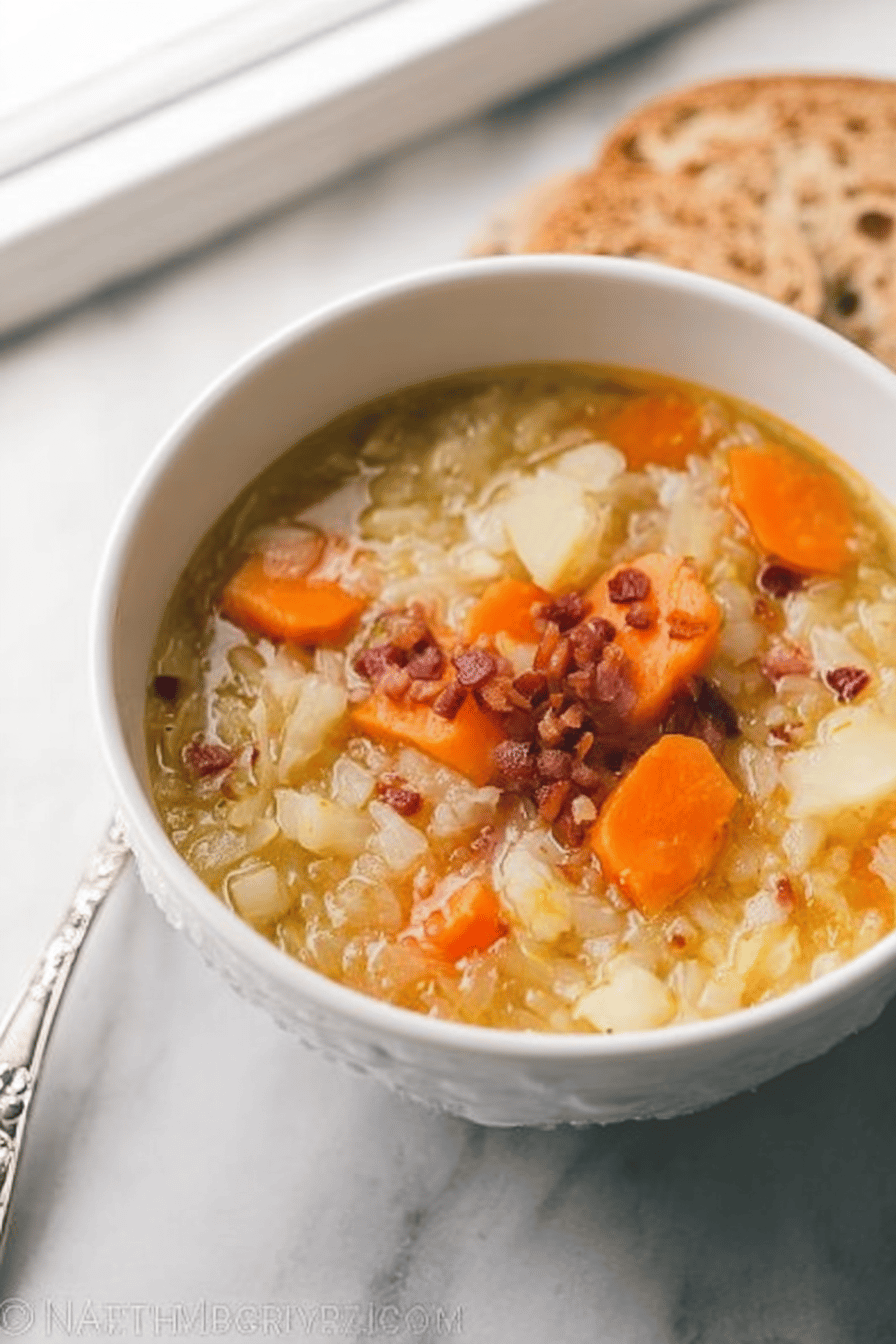
FAQs: Frequently Asked Questions About Sauerkraut Soup
What ingredients do I need to make traditional Sauerkraut Soup?
To make traditional Sauerkraut Soup, you’ll need olive oil, chopped bacon, diced celery, onion, thinly sliced carrots, peeled and sliced potatoes, sauerkraut (rinsed and drained), low sodium broth, water, white beans, salt, pepper, and optional seasoning like Mrs. Dash. Quinoa can be added but is not required. These ingredients combine to create the soup’s distinctive tangy and hearty flavor.
How do I prepare Sauerkraut Soup step-by-step?
Start by heating olive oil in a pot and browning the chopped bacon, then set bacon aside. Sauté celery and onion until soft, then add carrots, potatoes, broth, and water; bring to a boil. After simmering, add sauerkraut, half the bacon, white beans, and a bay leaf. Continue cooking until potatoes are tender. Finally, season with salt, pepper, and preferred herbs. Serve hot with fresh crusty bread for a complete meal.
Should I rinse sauerkraut before adding it to the soup?
Rinsing sauerkraut before adding it to soup is optional but often recommended to reduce its sourness and excess salt. Triple rinsing and draining can mellow the flavor, making the soup more balanced. However, some prefer to skip rinsing to keep the full tangy taste and preserve probiotic benefits. Adjust based on your taste preference and the sauerkraut’s saltiness.
Can I make Sauerkraut Soup without bacon?
Yes, Sauerkraut Soup can be made without bacon. To keep a smoky depth of flavor, you can substitute with smoked paprika, smoked sausage, or smoked tofu if you avoid meat. These alternatives provide a similar savory note. If you prefer a vegetarian version, simply omit bacon and use vegetable broth to maintain a rich taste.
How should I serve Sauerkraut Soup for the best experience?
Sauerkraut Soup is best served hot with fresh crusty bread, like a baguette or rye, which helps soak up the broth. Adding a dollop of sour cream or a sprinkle of fresh herbs such as dill or parsley can enhance the flavor. This soup pairs well with a light salad or pickled vegetables for a wholesome meal.
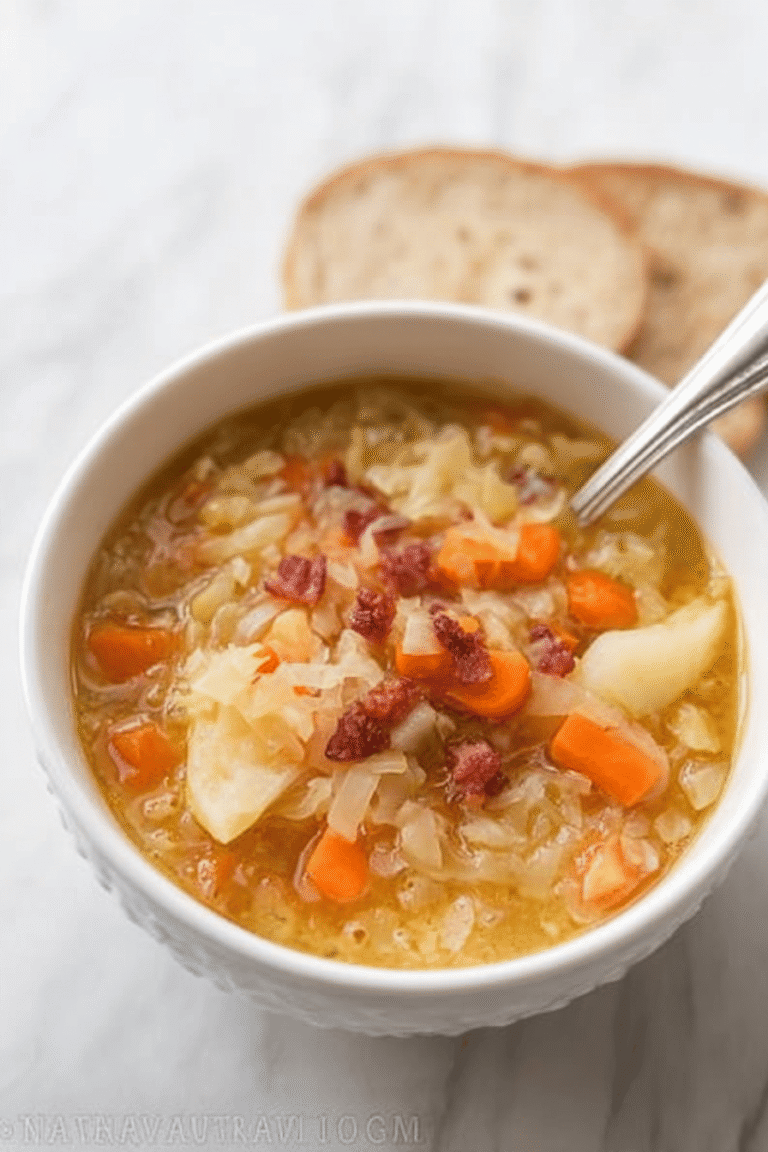
Sauerkraut Soup
🥣 Warm up with the hearty and filling flavors of traditional Sauerkraut Soup, packed with vegetables, beans, and bacon.
🍞 This Kapustnyak recipe is easy to prepare and perfect for a complete meal served alongside crusty bread.
- Total Time: 50 minutes
- Yield: 6 servings
Ingredients
– 1 tablespoon olive oil
– 8 ounces bacon, chopped
– 1 stick celery, finely diced
– 1 medium onion, finely diced
– 2 medium carrots, thinly sliced
– 3 medium (1 pound) potatoes, peeled and sliced into 1/3-inch thick pieces
– 1/4 cup quinoa, rinsed (optional)
– 2 to 3 cups sauerkraut, triple rinsed and drained (about 3 cups or 2 pounds used)
– 8 cups low-sodium broth
– 2 cups water, or to taste
– 1 (15-ounce) can white beans, with juice
– Salt, pepper, and seasoning, to taste
– 1 bay leaf
Instructions
1-First, heat the olive oil in a large soup pot or Dutch oven over medium heat.
2-Add the chopped bacon and sauté until browned, then remove with a slotted spoon and set half aside for garnish.
3-Next, add the finely diced celery and onion, and sauté until softened and golden, about 5 minutes.
4-Add the sliced carrots, potatoes, quinoa (if using), broth, and water. Bring to a boil, then reduce heat and simmer for 15 minutes.
5-Stir in the sauerkraut, reserved cooked bacon, white beans with juice, and bay leaf. Continue cooking until the potatoes are tender, about 10 minutes.
6-Finally, season with salt, pepper, and seasoning to taste. Serve hot with fresh crusty bread for a complete meal.
Last Step:
Please leave a rating and comment letting us know how you liked this recipe! This helps our business to thrive and continue providing free, high-quality recipes for you.Notes
🧂 Rinse and drain sauerkraut thoroughly to reduce saltiness and maintain texture.
🌾 Quinoa is optional; omit if you prefer a thinner soup.
🌿 Fresh dill can be added to enhance flavor.
- Prep Time: 15 minutes
- Cook Time: 35 minutes
- Category: Soup
- Method: Simmering,Sautéing
- Cuisine: Eastern European
Nutrition
- Serving Size: 1 bowl